How does Gerbera propagate? A detailed explanation of common propagation methods
1. Sowing method
Usually each Gerbera flower can produce twenty or thirty seeds, which can be sown in spring or autumn. Spring sowing is generally carried out in March and May of the year, while autumn sowing is carried out in September and October of the year. Sowing must be done immediately after the seeds mature, because the lifespan of the seeds is relatively short and they cannot be stored for a long time. It is also best to carry out artificial supplementary pollination during the flowering period, because the seed germination rate is only about 50%. After sowing, cover with paper to prevent direct sunlight, keep the temperature at 20-25°C, and germination will occur within about two weeks. Sixty to seventy days after sowing, when the seedlings have three or four true leaves, transplant them into flower pots or plant them in the open field. With proper cultivation, flowering can be seen in two to three months. Gerbera propagation methods. Gerbera propagation methods. This method is relatively common and also relatively easy to carry out.
2. Test-tube seedling method
In places with the necessary conditions, if test-tube seedling cultivation can be implemented, it will be more beneficial for accelerating the propagation and promotion of superior varieties. This method is currently not very common in our country, but it is relatively commonly used in countries such as the Netherlands, the United States, Japan, and West Germany. This method can better propagate more Gerberas.
3. Division method
Division propagation is mostly carried out in March and April. First dig out the mother plant and divide it into several daughter plants. The daughter plants must have buds and roots, and they should not be divided too small. When potting, they should not be planted too deep. It is best to plant them in holes in groups of two plants each, as this helps increase the number of flowers.
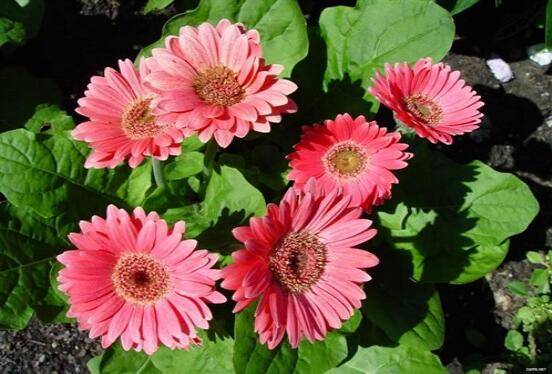
I believe that after reading the editor's introduction, you will definitely be able to grow healthier and more beautiful Gerberas!
How does Gerbera propagate? Gerbera propagation methods
Gerbera has large flowers, is elegant and upright, graceful and refined, with brilliant flower colors and noble charm, giving people a feeling of warmth, peace, and enthusiasm. It also has strong decorative value, withstands long-distance transportation, and lasts a long time in water, making it an ideal cut flower material. So, do you understand how Gerbera should be propagated? Let us continue with Gerbera propagation methods:
Gerbera propagation methods: commonly used are sowing, division, cuttings, and tissue culture propagation.
1. Sowing propagation: Gerbera is a cross-pollinated plant and is self-incompatible, so its seed offspring will inevitably vary. Sowing propagation is often used for breeding. Spring sowing is from March to May, and autumn sowing is from September to October. It is best to sow immediately after the seeds mature. The suitable germination temperature is 18-20°C. Germination occurs 7-10 days after sowing, the seed germination rate is about 50%, and the seed lifespan is short. If the potting soil is too wet, the seedlings are prone to disease and collapse. Sixty to seventy days after sowing, when the seedlings have 2-3 true leaves, transplant them into 10 cm pots. Flowering can be seen 2-3 months after planting.
2. Division propagation: carried out from March to May. First take out the mother plant and divide the underground stem into several daughter plants. Each daughter plant must have new roots and new buds. When potting, it should not be planted too deep, and the root buds must be exposed above the soil surface. New buds without roots are difficult to survive.
Cuttings propagation: Dig out a healthy plant, cut off the thick part of the root, remove the leaves, cut off the growing point, retain the root crown, and plant it in peat. Keep the room temperature at 22-24°C and relative humidity at 70%-80%. Leaf buds and adventitious buds will grow from the root crown to form cuttings. One mother plant can be repeatedly cut for cuttings 3-4 times, and 10-20 cuttings can be taken. Insert them into a sand bed, and they can root in about 3-4 weeks. New plants from cuttings in the same year can bloom in the same year.
3. Tissue culture propagation: Currently, countries such as the Netherlands, the United States, Japan, and Germany use materials such as leaves, unfertilized ovules, flower buds, stem tips, and rhizomes as explants. The bud differentiation medium uses MS medium plus 2 mg/L 6-benzylaminopurine and 0.5 mg/L indoleacetic acid. The subculture proliferation medium uses MS plus 10 mg/L kinetin, and the rooting medium is 1/2 MS plus 0.03 mg/L naphthaleneacetic acid. After Gerbera explants induce buds, after 4-5 months of test-tube proliferation, they can be propagated into batches of test-tube seedlings and put into large-scale production.
Regarding Gerbera propagation methods, everyone should understand them now. I hope the Gerbera propagation methods introduced above by the editor can be helpful for everyone in cultivating Gerberas!
Gerbera - Gerbera cultivation methods | Gerbera pictures | Gerbera flower language
Gerbera
Gerbera, Asteraceae, (English names: Gerbera, Barberton daisy, etc.), also known as Furlang flower, sunflower, orangutan chrysanthemum, sun flower, etc. It is a perennial herbaceous plant with terminal inflorescences, and the flower colors include red, white, yellow, orange, purple, etc. Propagation is by sowing or division. Its place of origin is South Africa.Gerbera flower language
The flower language of Gerbera is: eternal happiness. It symbolizes mystery, mutual respect and love, perseverance, and fearlessness of hardship.
The most commonly used flower language in China: elegant, noble, reclusive.
Gerbera meaning: liking to pursue a rich life.
Gerbera cultivation methods
1. Soil: Gerbera is very sensitive to water, so use a medium with good air permeability and drainage performance. It is best to use a substrate mixed with peat and perlite. A pH value of 5.5 to 6.0 and an EC value of 0.7 to 1.0 are beneficial for the absorption of trace elements.
2. Watering: Potted Gerbera is very sensitive to moisture, so the correct watering time must be ensured. Water in the morning or evening, and keep the plant relatively dry at nightfall. When the plant begins to grow roots, it must be watered from below, and a bottom infiltration method can be used; during high temperatures, it can be watered from above the plant, but care must be taken to prevent fungal mold starting from the center of the plant.
How to grow Gerbera
Sunlight: Prefers a sunny, well-ventilated environment.
Temperature: Prefers warmth and is a semi-cold-tolerant flower. The suitable temperature during the growing period is 20-25°C, and the suitable winter temperature is 12-15°C. Growth stops below 10°C, and it can tolerate short-term low temperatures of 0°C.
Soil: Prefers loose, fertile, humus-rich, well-drained sandy loam, avoids heavy clay soil, and prefers slightly acidic soil.
Moisture: Avoid waterlogging.
Gerbera cultivation techniques
Cultivation points: Use a deep pot for potting. The potting soil is made by mixing 4 parts leaf mold, 3 parts garden soil, 2 parts compost, and 1 part sand. When planting, the root crown should be slightly exposed above the soil surface. During the seedling stage, keep the potting soil moist and carry out seedling hardening. During the peak growth period, keep the water supply sufficient. When watering during the flowering period, do not let water touch the center of the leaf cluster, to prevent flower bud rot. The suitable ratio of nitrogen, phosphorus, and potassium is 15:18:25. Begin applying dilute liquid fertilizer 10 days after potting, then apply dilute cake fertilizer water plus potassium dihydrogen phosphate every 10-15 days, and spray 2-3 times with 0.1% boric acid. Before flowering, apply additional 1% potassium dihydrogen phosphate.
Gerbera disease prevention and control
Gerbera diseases: 1. Gray mold
Treatment techniques: Controlling humidity is the key to preventing and controlling gray mold. Thin out densely planted and overly dense leaves; increase ventilation and air permeability, and keep air humidity at 75-85%; water from below the plant crown; to prevent water vapor from condensing on the flowers, after 10 a.m. on sunny days, gradually open the side shed to avoid a sharp rise in temperature inside the shed; in the early stage of the disease, spray the leaves with 1500 times diluted 70% thiophanate-methyl, and combine with smoke agents for prevention and control.
Gerbera feng shui effect
1. The lucky flower for people whose Five Elements belong to fire. For people whose Five Elements belong to fire, Gerbera is their lucky flower. In Chinese feng shui, it is believed that the types, properties, and placement positions of some plants can affect a person's fate. Plants also have yin-yang and Five Elements distinctions. Properly using them in different directions and environments can produce unexpected regulating effects. In geomancy, it is believed that plants are spiritual and can help people in various aspects to a certain extent. Therefore, plants are often used to regulate the environmental aura. There are many types of plants and their properties vary greatly, so there are also many particularities when using them. Such plants are called feng shui plants. People whose Five Elements belong to fire should choose red as the main color, because red is the original color of fire, or choose green, the original color of wood, as the main color, because green wood generates and prospers red fire. From the perspective of feng shui, this can bring prosperity and good luck to the homeowner and their family. Of course, besides red, Gerbera also has many other colors, so Gerbera is the lucky star of many people. As the color of Gerbera changes, the group of people it blesses is different.
What is the current price of Gerbera
Compared with the general rise in the prices of other flowers, the price of Gerbera has not changed much, but since entering the second half of the year, the price of Gerbera has remained high. The main reason is still that the production scale of the two major production areas in the north and south has recovered relatively slowly, resulting in insufficient market supply. After entering winter, the quality of Gerbera is also getting better and better. Low temperatures reduce its flower output by about 30%. The increase in winter consumption is also the main reason for the stable price of Gerbera.
Related encyclopedia
Pocket scale non-woven bag lamp grass bamboo shoot crab claw Redmi Note 3 YKK zipper YBS zipper Prunus sargentii climbing rose wild senna wintersweet green pine wristwatch Omega Longines famous watch children's building blocks flint cymbidium club moss soursop