Gerbera Cultivation Methods and Daily Care Tips
1. Temperature management
You must control the environmental temperature for gerbera growth well. Indoor temperature is best kept between 15-25 degrees, and must never exceed 30 degrees. If it exceeds 30 degrees, the gerbera may die. At the same time, do a good job of ventilation to strengthen air circulation.
2. Light requirements
Gerbera is a light-loving flower. In winter it needs full sunlight, but in summer you should pay attention to providing appropriate shade and strengthen ventilation to lower the temperature and prevent dormancy caused by high temperatures. Take special care in summer, because summer temperatures are very high, and you must protect gerberas from scorching sun to prevent them from withering and dying.
3. Watering management
Do not give gerberas too much water, and control the amount of watering well. Too much or too little is not good. Mainly judge how much to water based on the season. In summer, water once every three or four days, while in winter, water about once every half month.
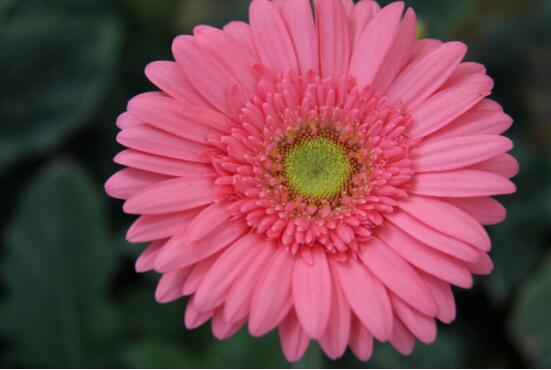
What are the cultivation methods for gerbera? What are the precautions for cultivating gerbera?
Basic information about gerbera:Gerbera, of the Asteraceae family, also known as Transvaal daisy, sun flower, gerbera, and African daisy, is a perennial herbaceous plant with terminal flower heads. Flower colors include red, white, yellow, orange, purple, and so on. Propagation is by sowing or division. Its place of origin is South Africa.
Because gerbera originates from South Africa, it prefers an environment that is warm in winter and cool in summer, with air circulation and plenty of sunlight. It is not cold-tolerant and dislikes intense heat. Gerbera is a light-loving flower. In winter it needs full sunlight, but in summer you should pay attention to providing appropriate shade and strengthen ventilation. The suitable growing temperature is 20C--25C during the day and about 16C at night, and the suitable flowering temperature is not lower than 15C. It prefers fertile, loose, well-drained sandy loam rich in humus, dislikes heavy clay soil, and prefers slightly acidic soil. The optimum pH for growth is 6.0-9.0.
What are the cultivation methods for gerbera:Because gerbera has brilliant flower colors and is inexpensive, it has become the first choice for home fresh-cut flowers in vases. Gerbera requires loose, fertile, well-drained, humus-rich, deep, slightly acidic sandy loam. In summer you should pay attention to providing appropriate shade and strengthen ventilation to lower the temperature and prevent dormancy caused by high temperatures. It is not sensitive to photoperiod, and the length of natural daylight has no effect on flower count or flower quality.
Gerbera cultivation method 1, Soil: Gerbera prefers sandy loam rich in humus, well-drained, with a pH value of 6-6.5. For pot cultivation, use slightly acidic culture soil; for ground cultivation, be sure to use well-drained fertile soil. You can use 3 parts garden soil, 3 parts peat soil, 3 parts leaf mold, and 2 parts sand, or 4 parts peat soil, 3 parts leaf mold, 2 parts sand, and 1 part perlite.
Gerbera cultivation method 2, Temperature: The suitable growing temperature is 20-25 degrees, the suitable germination temperature is 18-20C, and the suitable winter dormancy temperature is 12-15C. Growth stops below 7C.
Gerbera cultivation method 3, Light: Whether potted or planted in the ground, it should be placed in a bright location so it can grow robustly and have vivid flower colors. With insufficient light, development is poor, and flowers are small and pale.
Gerbera cultivation method 4, Watering: Gerbera likes moist soil, fears waterlogging, and fears drought. During the growing periods from March to June and from September to October, water more, but do not let water accumulate; keep it moist as appropriate. When the winter temperature is below 12C, water less, and slightly on the dry side is better.
Gerbera cultivation method 5, Fertilizer: Gerbera greatly likes fertilizer. When fertilizer is sufficient, growth and flowering are vigorous. Therefore, apply sufficient base fertilizer before planting, and after planting from June to October, apply 1 time of dilute decomposed cake fertilizer water every half month.
Gerbera cultivation method 6, Pests and diseases: Gerbera diseases include leaf spot, powdery mildew, and viral disease. For leaf spot, spray with 70% thiophanate-methyl wettable powder at 800-**** times dilution or 50% carbendazim wettable powder at 500 times dilution. For powdery mildew, use 70% thiophanate-methyl at 1500 times dilution or 75% triadimefon wettable powder at 1000-1200 times dilution for control, once every 7-10 days, spraying two to three times continuously.
Gerbera cultivation method 7, Pruning: The lower leaves of the basal leaf cluster of gerbera easily turn yellow and age, and should be removed promptly. This not only helps the sprouting of new leaves and new flower buds, but also helps ventilation and enhances plant vigor. In addition, if the branches and leaves are too dense and shade each other so that air cannot pass through, you may appropriately remove some leaves.
Precautions for cultivating gerbera:Precaution 1 for cultivating gerbera: When fertilizing, do not let the fertilizer solution spread to the center of the gerbera, otherwise the growing point at the center is prone to rotting and dying. Also do not let the fertilizer solution splash onto the leaf surface, otherwise the leaves will be burned.
Precaution 2 for cultivating gerbera: Gerbera is relatively sensitive to temperature and light intensity. In summer, keep the soil moist and not drought-stricken, cover with a shade net with 50% light transmittance, and spray the leaf surface to increase air humidity and lower the temperature.
Precaution 3 for cultivating gerbera: In winter, do sufficient work to keep it warm and prevent freezing. The nighttime temperature should not be lower than 10C, and the daytime temperature should not be lower than 15C. These are all very beneficial for improving the vividness of gerbera.
Related articles
What are the cultivation methods for calla lily? What precautions are there for cultivating calla lily?
Which plants are better for removing formaldehyde in a new home? What are the methods for removing formaldehyde in a new home?
Cultivation methods for lucky bamboo: Is it better to grow lucky bamboo in water or in soil?
What are the cultivation methods for Echeveria? What precautions are there for cultivating Echeveria?
What feng shui considerations are there for bedroom plants?
What flowers and plants are generally placed at home to bring wealth? What are wealth-bringing plants?
How do you care for a Serissa japonica bonsai? What are the cultivation methods for Serissa japonica?
What are the cultivation methods for gladiolus? What precautions are there for cultivating gladiolus?