What shade-loving plants are suitable for growing indoors
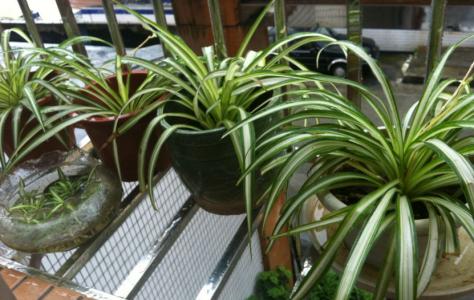
1. Spider plant
Spider plant is a very common shade-loving indoor plant with ornamental value.
2. Chinese evergreen
Chinese evergreen likes water and is suitable for hydroponics; it stays green all year round and is very suitable for growing indoors.
3. Maranta
Maranta is a plant that loves shade and water and does not particularly like sunlight, but it is also very suitable for growing indoors.
4. Chinese evergreen (Aglaonema)
Chinese evergreen (Aglaonema) is a hydroponic plant suitable for placement in dark indoor spaces.
5. Cast-iron plant
Cast-iron plant is a plant very well suited to dark, low-light environments and is very easy to keep alive.
6. Peace lily
Peace lily likes water and is suitable for hydroponics; it can be placed indoors for growing.
Plants suitable for growing indoors and taboos for placing indoor plants
Plants can carry out photosynthesis, provide people with fresh air, reduce the radiation from various electrical appliances, regulate the atmosphere, and fill people's lives with vitality. But does anyone know which plants are suitable for growing in the home? Today, let's introduce plants suitable for growing indoors as well as the taboos for placing plants.
Plants suitable for growing indoors
Plant name: Silver King, aliases: Silver King Aglaonema, Silver King Chinese evergreen, Silver King Chinese evergreen.
Family and genus: Araceae, Aglaonema.
Morphological characteristics: Perennial evergreen herb, with an extremely short stem, plant height 40-50 cm, leaves densely clustered, 20-25 cm long, 5-7 cm wide, lanceolate, leaves dark green, leaf surface densely covered with silver-gray patches, leaf underside grayish green. The petiole has grayish green spots, and the base of the petiole is sheath-like and clasps the stem.
Plant name: Silver Queen, aliases: Silver Queen Chinese evergreen, Silver Queen Aglaonema, Silver Queen Aglaonema.
Family and genus: Araceae, Aglaonema.
Morphological characteristics: A perennial herbaceous plant. Plant height 30-40 cm, stem upright and unbranched, internodes obvious. Leaves alternate, petioles long, base enlarged into a sheath shape, leaves narrow and long, light green, leaf surface with grayish green stripes, relatively large in area.
Plant name: Brazil iron, aliases: Brazilian millefolium, golden-edged fragrant dragon tree, Brazil wood.
Family and genus: Liliaceae, Dracaena.
Morphological characteristics. An evergreen tree of Liliaceae, potted height 50 cm-150 cm, with branches; leaves clustered at the top of the stem, 40 cm-90 cm long, 6 cm-10 cm wide, curved in an arch shape, bright green and glossy; flowers small and inconspicuous, fragrant.
Plant name: Sago palm, aliases: iron tree, phoenix-tail banana, phoenix-tail pine, fire-avoiding banana.
Family and genus: Cycadaceae, Cycas.
Morphological characteristics: Evergreen palm-like woody plant; stem cylindrical, unbranched; the stem is densely covered with persistent leaf bases and leaf scars, and is scale-like; leaves arranged spirally, leaves growing from the top of the stem, leaves have 2 types, foliage leaves and scale leaves, foliage leaves pinnate, large, scale leaves short and small; leaflets linear, rolled inward when young, later spreading obliquely upward, slightly "V"-shaped, margins markedly revolute downward, thickly leathery, hard, glossy.
Plant name: Black beauty, aliases: spring grass, spreading justice.
Family and genus: Acanthaceae.
Morphological characteristics: Perennial herb, plant low and short, only 5-10 cm tall. Leaves opposite, heart-shaped or broadly ovate, slightly wrinkled and curled, closely resembling black people's hair, hence the name; mature plants grow in clumps, branches and leaves dense and not easily messy.
Plant name: Dwarf coconut, aliases: dwarf coconut, miniature palm, dwarf palm.
Family and genus: Arecaceae, Chamaedorea.
Morphological characteristics: When potted, the dwarf coconut's plant height does not exceed 1 m; its stem is slender, upright, unbranched, dark green, with irregular ring patterns on it. Leaves grow from the top of the stem, pinnately compound, fully divided, segments broadly lanceolate, pinnate leaflets 20-40, sickle-shaped, dark green, glossy.
Plant name: Peace lily, aliases: white crane taro, spathe-leaf taro, peace taro.
Family and genus: Araceae, Spathiphyllum.
Morphological characteristics: Perennial evergreen herbaceous foliage plant.
Plant height 40-60 cm, with short rhizomes, mostly clumping. Leaves oblong or nearly lanceolate, tapering at both ends, base wedge-shaped. The flower is a spathe, slightly fragrant, leaf-like, closely resembling a palm, hence the name peace lily.
Plant name: Pothos, aliases: devil's ivy, stone tangerine, bamboo-leaf grass.
Family and genus: Araceae, Epipremnum.
Morphological characteristics: Pothos vines grow several meters long; in tropical regions they often climb and grow on rocks and tree trunks in rainforests, with aerial roots at the nodes; as the plant ages, the stem thickens and the leaves also become larger and larger, and it can grow into a huge vine plant; a few leaves may also carry slight yellow or white mottling.
Plant name: Green emerald, aliases: long heart-leaf philodendron, green emerald philodendron.
Family and genus: Araceae, Philodendron.
Morphological characteristics: Green emerald philodendron is a climbing species, with a stout stem and aerial roots at the nodes; leaves long heart-shaped, 25-35 cm long and 12-18 cm wide, abruptly pointed at the tip, deeply heart-shaped at the base, green, entire, glossy. Young shoots and leaf sheaths are both green.
Plant name: Green emperor, aliases: green emperor philodendron, emperor.
Family and genus: Araceae, Philodendron.
Morphological characteristics: The green emperor's stem internodes are short, with spacing of about 1-2 cm; adventitious aerial roots often grow at the internodes; the stem can be 2-4 cm thick, light brown, and poor at standing upright; leaves large, clustered in a rosette, gradually changing from yellow-green to green or dark green, glossy.
Plant name: Lucky bamboo, aliases: longevity bamboo, distance-flower longevity bamboo, fortune bamboo, fortune tower, bamboo tower, tower bamboo.
Family and genus: Agavaceae, Dracaena.
Morphological characteristics: Evergreen subshrub-like plant; plant height over 1 m, plant slender, upright with branches on the upper part; rhizome horizontal, nodular; leaves alternate or nearly opposite, papery, leaves long lanceolate, with obvious 3-7 main veins, with short petioles, deep green; umbel inflorescence with 3-10 flowers borne in leaf axils or opposite the upper leaves, corolla bell-shaped, purple; berries black.
Plant name: Snake plant, aliases: tiger skin orchid, brocade orchid, golden-edged snake plant, silver-veined snake plant.
Family and genus: Agavaceae, Sansevieria.
Morphological characteristics: Underground stem unbranched, leaves clustered, lower part tubular, middle and upper part flat, sword leaves stiffly upright, plant height 50 cm to 70 cm, leaf width 3 cm to 5 cm, leaf margins entire, surface alternating milky white, pale yellow and dark green, with horizontal banded markings.
Plant name: Sun god, aliases: dense-leaf cordyline, green dense dragon tree, Apollo millefolium, dense-leaf dragon tree.
Family and genus: Agavaceae, Dracaena.
Morphological characteristics: Evergreen small tree, dwarf species. Stem upright, unbranched, leaves densely whorled, leaves long elliptic-lanceolate, 10-15 cm long, 2-4 cm wide, deep green.
Taboos for placing indoor plants
1. If there are children at home, do not choose thorny plants, such as roses, golden barrel cactus, cactus, etc.
2. If the home space is too small, do not choose plants with luxuriant branches and leaves. Such as money tree, Monstera deliciosa, etc.
3. Plants that give off a strong fragrance are not suitable for the bedroom; smelling them for a long time can cause dry mouth and sore throat.
4. For hydroponic plants, bonsai, flower arrangements, etc., pay attention to changes in water quality. Muddy water can breed bacteria.
5. Plants with a certain degree of toxicity should not easily be placed in the dining room, kitchen, or children's room.
6. Pay attention to the various attributes of plants, such as shade-loving, sun-loving, drought-tolerant, cold-tolerant, etc., and place them selectively.
7. Pay attention to whether family members have symptoms of pollen allergy, and carefully choose plants with too much pollen. Such as lilies, roses, etc.
8. Do not rely entirely on plants to absorb harmful gases such as formaldehyde; the effect is limited.
Placement of green plants in the bedroom
Plants are not always purifying the air. When there is no sunlight, plants release carbon dioxide and absorb oxygen. So do not place broad-leaved plants in the bedroom. Such as: Monstera deliciosa, money tree, pothos, etc.
In addition, the fragrance of plants is used to attract insects for pollination, so the scent contains some biological substances, and smelling it for a long time can make people restless, dizzy, and cause difficulty breathing, etc. It is not easy to place them in the bedroom. Such as tulips, roses, lilies, night-blooming cestrum, etc. You can place some smaller bonsai types or aquatic plants. Such as: snake plant, etc.
Placement of green plants in the living room
The placement of plants in the living room can follow the principles of being simple, natural, casual, and paying attention to feng shui. The living room is the main space for appreciating plants, but be sure not to place too many or too densely, letting them overpower the host.
The asparagus fern on the bookshelf, the lily on the TV cabinet, the spider plant on the wine cabinet - seemingly casual arrangements, yet they have a touch of inspired brilliance.
Living room plants need attention to care and frequent pruning. Broken fallen leaves or withered flowers can make people feel sorrowful and bring bad moods.
Plants in the living room are generally placed in corridors, corners of staircases, and at the entrance. Or on windowsills, cabinets, and tables. Commonly placed plants include: chrysanthemums, kumquats, narcissus, lucky bamboo, orchids, etc. However, toxic plants such as oleander and tulips are recommended to be placed indoors with good ventilation or outdoors.
Placement of green plants in the kitchen and dining room
In the kitchen and dining room, it is easy to place plants with warm-colored flowers such as orange and yellow to increase appetite and regulate mood. Generally, flower arrangements are the main choice. Such as Franco, carnations, various orchids, chrysanthemums, etc. In addition, spider plant has the property of absorbing cooking fumes, so it can be placed in the kitchen.
Placement of green plants in the study
The study is a quiet space, so green-leaf plants should be the main choice, and it is not easy to place overly gaudy or fragrant flowers.
Plants commonly used in the study include: Chinese evergreen, asparagus fern, Monstera deliciosa, peace lily, ornamental bamboo, reeds, or various bonsai.
The above are the plants suitable for growing indoors shared with everyone, as well as the taboos for placing indoor plants. I hope they can be helpful to everyone.
Introduction to the growth habits and cultivation methods of the shade-loving plant bird's nest fern
Bird's nest fern is also known as nest fern, mountain sushua, crown fern, etc. It is a perennial shade-loving herbaceous foliage plant of the genus Asplenium in the family Aspleniaceae, with extremely high ornamental value. Hung indoors, it also has a distinctive tropical mood; planted under tropical garden trees or on rockeries and rocks, small potted plants are used to decorate bright living rooms, meeting rooms, studies, and bedrooms. Now let's take a look at the cultivation methods and precautions for bird's nest fern!
Growth habits of bird's nest fern
Bird's nest fern is distributed in many tropical regions, growing epiphytically on tree trunks, rock walls, and other places. A large amount of fallen leaves of other tree species often accumulate at the base, making its shape resemble a bird's nest, hence the name. The rhizome of bird's nest fern is short and thick; the fronds grow in clusters from the underground stem and spread out from the center to form a nest shape. It likes high temperatures and cannot tolerate strong light, and especially likes to attach to tree trunks in Yulin or monsoon forests or rocks under the forest.
Propagation methods of bird's nest fern
1. Sowing: In spring, first mix fine sand and humus soil evenly, sterilize at high temperature, put it into a sowing pot and flatten it, evenly scatter mature spores on the pot soil, then immerse the whole pot in shallow water, using osmosis to make the pot soil fully moist, cover with glass to retain moisture, and place it in a warm, moist, cool place. The spores can germinate in 7 to 10 days, and after about 1 month, green prothallium will grow. After 3 months, when several true leaves have grown, they can be potted for cultivation.
2. Division: Division propagation of bird's nest fern is generally carried out in mid-to-late April. Select robust plants, cut the rhizome together with leaves and root clumps into several pieces, or pull off small side-growing plants, cut off 1/2 of the leaves, pot them separately, cover with a small amount of leaf mold soil, and create a small environment that is moist, ventilated, and well-drained for them. The environmental temperature should be controlled at around 25°C. The survival rate is relatively high. Note that the pot soil must not be too wet, so as to avoid root rot.
Cultivation methods of bird's nest fern
1. Temperature: For bird's nest fern, whether as a home potted plant or for production cultivation, it is best to maintain a greenhouse temperature above 15°C in winter so that it can continue to grow. When conditions do not allow, at least maintain a greenhouse temperature not lower than 5°C. If the temperature is too low, it can easily cause its leaf margins to turn brown, and it may even cause the plant to die from cold damage.
2. Light: The native environment of bird's nest fern is moist jungle, and it is mostly epiphytic, so it can grow normally with only a small amount of scattered light. Therefore, potted plants can be kept year-round in a bright indoor location for care. If placed outdoors for a short period in spring and autumn under tree shade or in a greenhouse, it is even more conducive to its growth and can increase the gloss of the leaf surface.
3. Water: During the growing season, bird's nest fern should be watered thoroughly. Especially in summer, in addition to frequently watering the growing medium thoroughly, it must also be rinsed on the leaf surface 2 to 3 times a day. At the same time, sprinkle water on the surrounding ground to increase humidity and maintain relatively high air humidity in the local environment. This can both increase the gloss of the leaf surface and is also very beneficial to the germination of spore leaves.
4. Soil: The potting medium for bird's nest fern can be mainly leaf mold soil or peat soil, vermiculite, etc., mixed with a small amount of river sand. It can also be made by evenly mixing fern roots, crushed bark, moss, or crushed brick particles with a small amount of humus soil. In addition, in spring each year, adding a little crushed lime to the pot is beneficial to the growth and development of its side-growing plantlets.
5. Fertilizer: For potted bird's nest fern, during its vigorous growth season, it is advisable to apply a thin fertilizer with balanced nitrogen, phosphorus, and potassium once every half month, which can promote it to continuously grow a large number of new leaves. If the plant lacks fertilizer, the leaf margins will also turn brown. When the summer temperature is above 32°C and the winter greenhouse temperature is below 15°C, all forms of topdressing should be stopped.
Precautions for bird's nest fern
1. Bird's nest fern is suitable for growing in peat soil or leaf mold soil. The suitable temperature for the growth of bird's nest fern is 22-27°C.
2. Under conditions of high temperature and high humidity in summer, the growth of new leaves of bird's nest fern requires more spraying to maintain air humidity.
3. The cultivation of bird's nest fern does not require too much sunlight; it can grow normally with only a small amount of scattered light.
4. During the growing season, bird's nest fern should be watered thoroughly. When the winter room temperature is low, keep the pot soil moist.