How to care for daisies after sowing? A detailed guide to practical methods
1. After sowing, keep the temperature at around 20°C, keep the soil moist, and avoid strong light; they will sprout and grow in about another week. After sprouting, also keep them moist and give them an appropriate amount of light; in summer, pay attention to shading.
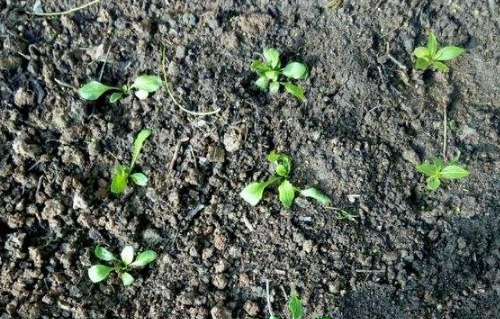
2. Wait for their roots to penetrate the medium and absorb nutrients to support the growth of their cotyledons. Once true leaves grow, you can fertilize, mainly with water-soluble fertilizer.
3. The seedlings begin to grow rapidly. Due to the influence of temperature and transpiration, generally apply liquid fertilizer once every 2 to 3 days, and do not water. Wait until the seedlings have two or three pairs of true leaves and the root system has basically developed completely.
4. Once the seedling root system has grown well, pay special attention to controlling moisture, and also ensure sufficient sunlight and ventilation, so the plant will grow better.
Now everyone should be clear about how to plant daisy seeds, right? Friends who like daisies must not miss out.
How to care for bamboo palm (Guanyin bamboo)
1. Pruning
First, prune off the leaves at the base of the bamboo palm's stems, and cut the base into a slanted shape to help the plant absorb nutrients better.
2. Changing the water
Before the bamboo palm develops roots, change the water once every two days. After roots grow, simply add water; it is not advisable to change the water frequently, otherwise the leaves will turn yellow.
3. Placement
Before the bamboo palm develops roots, it is relatively delicate, so it is best not to move them, as this will prevent the plant from adapting to the new environment.
4. Pest prevention
Bamboo palm is harmed by scale insects and aphids. You can choose to spray a 40% omethoate 1000-fold solution to kill the insects.
Alright, that is all about how to propagate bamboo palm. I hope it can be of some help to everyone.
How to care for the golden pothos (Jinzuan)
1. Light
The golden pothos is a semi-sun plant. It likes soft light and is afraid of strong summer light, so it is best to cultivate it in a semi-shaded environment. You can move its position appropriately so it receives some sunlight; otherwise, if it cannot get light for a long time, the leaves will turn yellow and wither.
2. Temperature
The golden pothos relatively likes a warm environment. The suitable growing temperature is 20°C-30°C. In winter, the overwintering temperature must not be lower than 5°C, and it will begin to grow above 10 degrees.
3. Moisture
The golden pothos likes a moist environment, so watering should be controlled flexibly. In summer, water demand is high, but do not overwater or leave standing water. Try to keep the soil in a moist state. In autumn and winter, just keep it slightly moist with a tendency to dry out, as this is more conducive to plant growth.
4. Fertilizing
Generally, do not apply a large amount of fertilizer all at once, otherwise it will be difficult to absorb. During the peak growth period, sufficient fertilizer is needed, mainly nitrogen fertilizer; applying a thin fertilizer once a month is enough.
5. Repotting and changing the soil
Usually in spring, the plant needs to be repotted, but be careful not to damage the root system. By the way, properly prune old roots and branches and leaves to promote the growth of new shoots. You can use a mixed soil of leaf mold, peat soil, and garden soil to replace most of the old soil, so the plant has sufficient nutrients.
The above is an introduction to whether the golden pothos can bloom and how to care for it. Do you understand? Also, a reminder to everyone: the golden pothos is best kept away from air conditioning, heating, and blowing wind, otherwise the leaves can easily dry out.