What to do when the leaves of bamboo palm (Guanyin bamboo) turn yellow? A few practical methods to teach you
1. Improper lighting
Cause: Although bamboo palm is a semi-shade plant, if the plant receives too much light, the leaf edges and stems will shrivel, the leaf tips and leaf margins will dry up, and yellow spots will appear on the parts facing the sun. If there is insufficient light for a long time, the plant cannot carry out photosynthesis, and the leaves will turn yellow and then fall off.
Solution: You can move the plant into the sun for 3 hours each day, but in summer provide shade to avoid strong exposure, and then you can move the plant to a cool place for care.
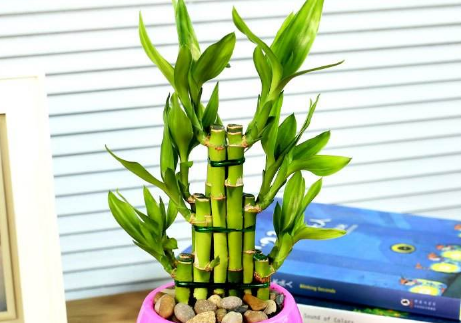
2. Improper watering
Cause: Bamboo palm likes a humid environment, but the amount of water given to the plant must be controlled. If watered too much, the new leaves of bamboo palm become pale yellow and lack luster, the stems shrivel, and the plant grows poorly. However, if it lacks water, the leaf edges dry up, which also makes the leaves turn yellow, and then the leaves begin to fall off.
Treatment: In the case of overwatering, take the plant out of the potting soil, let the soil dry in a ventilated place, then move it to a cool place and replant it. If it lacks water, replenish it in time, but be careful only to keep the soil moist.
3. Excessive fertilizing
Cause: Applying too much fertilizer or fertilizer that is too concentrated can also cause the leaves to turn yellow, usually with the tips of new leaves turning dry brown, the leaf surface thick and lusterless, the leaf surface uneven, and the old leaves scorched yellow and falling off.
Solution: At this point stop fertilizing, and you can use an appropriate amount of water to rinse the roots; in severe cases, change the soil.
4. Root rot
Cause: If bamboo palm is grown in water, poor water quality will breed bacteria, then cause the roots to rot and the leaves to become scorched yellow.
Treatment: Change to clean water in time; you can use tap water that has been left standing for several days or directly use cooled boiled water. Then cut off the rotten roots and spray some fungicide to disinfect.
What to do when the leaves of bamboo palm turn yellow: solutions for yellowing leaves of bamboo palm
Many friends, especially beginners, encounter the problem of yellowing leaves when growing bamboo palm, so what should be done when the leaves of bamboo palm turn yellow? Follow along below to take a look at the solutions for yellowing leaves of bamboo palm.
1. Water-induced yellowing: young leaves are dull yellow and lusterless, old leaves show no obvious change, stems are thin and yellow-green, and new shoots shrivel and stop growing, indicating overwatering. Take the plant out of the pot, place it in a ventilated and cool place to let the root ball dry on its own, then put it back in the pot.
2. Drought-induced yellowing: the yellowing from lack of water is different from the yellowing from too much water. The yellowing from lack of water means the leaf tips or margins dry up and become parched, and the old leaves turn scorched yellow and fall off from the bottom upward, but the new leaves grow relatively normally. Just be careful to water thoroughly and give enough water.
3. Scorch-induced yellowing: strong direct sunlight falling on some shade-loving flowers (such as spider plant, hosta, etc.) easily causes the leaf tips and leaf margins of the flowers to dry up, and yellow spots appear on the parts of the leaves facing the sun. Just move them to a shaded place.
4. Light-deficiency yellowing: being placed in a shaded environment for a long time, the leaves cannot get enough sunlight and cannot form chlorophyll, so the whole plant's leaves turn yellow and then fall off. Supplementing light can prevent this problem.
5. Fertilizer-induced yellowing: flower yellowing caused by too much fertilizer or fertilizer that is too concentrated shows as dry brown tips on new leaves; generally the leaf surface is thick and lusterless, and uneven and not spread out, while the old leaves are scorched yellow and fall off. Stop fertilizing immediately, and in severe cases use a large amount of water to rinse away part of the fertilizer.
6. Nutrient-deficiency yellowing: shows as the color of young leaves becoming lighter, appearing yellow or pale green, while the old leaves are relatively normal or gradually turn from green to yellow. Check the potting soil; if there is caking, change the soil. Usually apply light fertilizer frequently and water with some alum water at the right time (bamboo palm is a foliage plant, so fertilizer mainly based on nitrogen fertilizer should be applied).
7. Root-pruning yellowing: do not cut off the roots in winter, otherwise they cannot absorb water and the leaves will naturally turn yellow.
Small common-sense points to note when growing bamboo palm:
1. Water use: when we use water to grow bamboo palm, when changing the water we should add two-thirds water and keep one-third of the old water; do not pour out all the water.
2. Water depth: the water should not be too deep; only one-half or three-fifths water is enough. We suggest using a transparent vase to grow bamboo palm, so you can know the water height and observe the root growth.
3. Peeling leaves: before putting it into the vase, peel the leaves down to the mouth of the vase, and at the same time also peel off the leaves attached to the stems, until a ring of bamboo nodes is exposed. This does not mean picking off or cutting off the leaves. When you see the green-yellow skin, it can be considered cleanly peeled, which can prevent the water from easily becoming smelly later when changing it, and at the same time the stems will not have that slippery feeling. After the leaves are peeled clean, you can use a knife to cut the base into a slanted opening to help it absorb water and nutrients.
What to do when the leaves of fernleaf hedge bamboo turn yellow
Water-induced yellowing of fernleaf hedge bamboo
It shows as the young leaves of fernleaf hedge bamboo being lusterless, the old leaves showing no obvious change, the stems gradually becoming thin, and the new shoots wilting.
Solution
Place the plant in a dry and ventilated place for care, and when it has dried somewhat, put it back into the potting soil.
Drought-induced yellowing of fernleaf hedge bamboo
Too little watering of fernleaf hedge bamboo can also cause the leaves to turn yellow. With too little watering, the leaf margins dry up, and the old leaves gradually turn yellow and fall off from top to bottom, but the new leaves still grow relatively normally.
Solution
Be careful to water more, just water thoroughly.
Scorch-induced yellowing of fernleaf hedge bamboo
Exposure to strong sunlight can cause the leaves to turn yellow, showing as drying of the leaf tips and leaf margins, and discolored spots appearing on parts of the leaves.
Solution
Just place the sunburned fernleaf hedge bamboo in a cool, dry place.
Fertilizer-induced yellowing of fernleaf hedge bamboo
Applying too much fertilizer to the plant can also cause the flowers to turn yellow, mainly showing as brown tips on the plant's leaves; generally the leaf surface is thick and lusterless, and uneven, and the old leaves turn scorched yellow and fall off.
Solution
Stop fertilizing the fernleaf hedge bamboo. If the problem is severe, you can water with clean water and drain it, gradually reducing the fertilizer concentration.