Reasons for Yellowing Leaves on Bird's Nest Fern and Solutions
1. Temperature
Ensure the plant's normal growing temperature, around 22-27°C, and never below 5°C, otherwise the leaves will be frostbitten, become scorched and withered, and the plant will die.
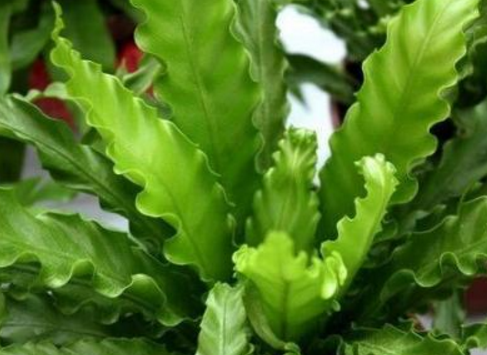
2. Humidity
To prevent the leaves from turning yellow and drying up, regularly spray water on the leaf surface to keep it clean, and also sprinkle water around the area to keep the environment moist.
3. Sunlight
Bird's nest fern should not be exposed to direct sunlight for long periods. Generally, let the plant receive indirect light, indoors is fine, but there must be good ventilation. Of course, growing the plant under tree shade is even better for its growth, and receiving partial light will keep the leaves tender green and glossy.
The above is the detailed watering method for bird's nest fern. We hope it helps everyone take better care of their bird's nest fern plants.
What to Do When Bird's Nest Fern Leaves Turn Yellow
Bird's nest fern, also known as nest fern, mountain asparagus flower, and crown fern, is a perennial shade-loving herbaceous foliage plant of the genus Asplenium in the family Aspleniaceae. Many gardening enthusiasts encounter yellowing leaves when growing bird's nest fern. This article explains what to do when bird's nest fern leaves turn yellow.
What to Do When Bird's Nest Fern Leaves Turn Yellow
Bird's nest fern often grows epiphytically on tree trunks or rocks beneath the canopy in rainforests or monsoon forests, and it is not tolerant of strong light, being a shade-loving plant. In many enthusiasts' growing environments, especially in the north, the air is dry and the light is intense, so bird's nest fern develops dry, cracked leaf edges.
Once you know the cause, you can know how to avoid it. First, try to ensure the growing environment is shady and moist. You can place it in a shaded spot for care, not on a balcony or windowsill or other bright locations. Especially in summer, absolutely avoid direct sunlight, and spray water frequently to maintain humidity. Being shade-loving does not mean you can water without limit; just keep the substrate moist!
Growth Habits of Bird's Nest Fern
Bird's nest fern often grows epiphytically on tree trunks or rocks beneath the canopy in rainforests or monsoon forests. The nest-like clusters can catch large amounts of dead branches and fallen leaves, bird droppings, and rainwater. These materials are converted into humus, which can serve as its own nutrients and also provide settling conditions for other tropical epiphytes, such as orchids and other tropical epiphytic ferns. Its ecological habits are a preference for high temperature and humidity, and intolerance of strong light.
The above introduced the reasons for yellowing leaves on bird's nest fern and the solutions, and also covered the growth habits of bird's nest fern. We hope it can help gardening enthusiasts solve their current difficulties!
What to Do When Bird's Nest Fern Leaves Turn Yellow, and Can Bird's Nest Fern Absorb Formaldehyde?
Bird's nest fern, also known as nest fern, mountain asparagus flower, and crown fern, is a perennial shade-loving herbaceous foliage plant of the genus Asplenium in the family Aspleniaceae. Many people like to grow bird's nest fern in offices or living rooms, so do you know what to do when bird's nest fern leaves turn yellow? Can bird's nest fern absorb formaldehyde? Next, follow along to find out the answers.
What to Do When Bird's Nest Fern Leaves Turn Yellow
Reasons for Yellowing Leaves on Bird's Nest Fern
Bird's nest fern often grows epiphytically on tree trunks or rocks beneath the canopy in rainforests or monsoon forests, and it is not tolerant of strong light, being a shade-loving plant. If the light is too strong, the leaves of bird's nest fern will turn yellow. Growing environment and improper care may also cause bird's nest fern leaves to turn yellow. Especially in the north, the air is dry and the light is intense, and bird's nest fern develops dry, cracked leaf edges.
Solutions for Yellowing Leaves on Bird's Nest Fern
Once you know the cause, you can know how to prevent bird's nest fern leaves from turning yellow. First, try to ensure the growing environment is shady and moist. You can place it in a shaded spot for care, not on a balcony or windowsill or other bright locations. Especially in summer, absolutely avoid direct sunlight, and spray water frequently to maintain humidity. Being shade-loving does not mean you can water without limit; just keep the growing substrate for bird's nest fern moist! You should also understand the growth habits of bird's nest fern. Once you understand its habits, you can adjust your plant care routine according to those habits to prevent bird's nest fern leaves from turning yellow.
Can Bird's Nest Fern Absorb Formaldehyde?
Bird's nest fern can absorb formaldehyde. Placing bird's nest fern and other ferns indoors can purify the air. Generally speaking, spider plant is the plant commonly used by residents to absorb formaldehyde, but ferns are noticeably better at absorbing formaldehyde than it.
The experiment selected 5 kinds of indoor ornamental ferns to study their formaldehyde absorption capacity. The results showed that all 5 selected ornamental ferns had strong formaldehyde absorption capacity. Under specific experimental conditions, their formaldehyde absorption capacity was measured as: spider brake (Pteris multifida) > Boston fern (Nephrolepis exaltata) > bird's nest fern (Asplenium nidus) > maidenhair fern (Adiantum) > Dryopteris bissetiana. This has great practical significance for discovering efficient and safe ornamental ferns for formaldehyde removal.