Detailed Guide to Hydroponic Growing Methods and Steps for Philodendron 'Golden Diamond'
1. Removing from the pot
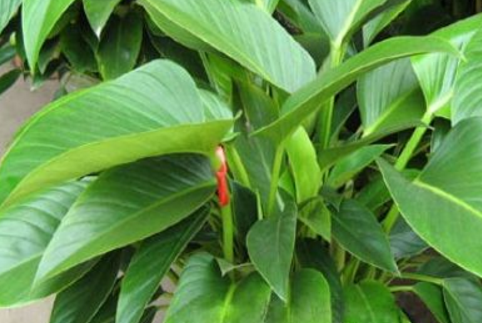
First take the soil-cultured Philodendron 'Golden Diamond' plant out of the potting soil, remove the soil and rotten roots, and rinse it clean. But be careful to protect the root system so as not to affect the normal growth of the plant.
2. Disinfection
Soak the plant's roots in prepared potassium permanganate to disinfect for thirty minutes, then rinse once more; also wash the pebbles and the planting basket well.
3. Planting
Then place the roots of the Philodendron 'Golden Diamond' plant into the planting basket, add pebbles to secure them, and finally put it into a container filled with nutrient solution. The solution should cover half of the roots, leaving some roots exposed to the air, and then it can be grown normally.
I believe everyone is now clear about the feng shui role of the Philodendron 'Golden Diamond', and I hope everyone can enjoy the pleasure it brings.
How to Grow Philodendron 'Golden Diamond' Hydroponically
Hydroponic Method for Philodendron 'Golden Diamond'
The hydroponic method for Philodendron 'Golden Diamond' is very simple and can be done at home.
Removing from the pot
First take the soil-cultured Philodendron 'Golden Diamond' out of the flower pot, remove the soil and rotten roots, and rinse it clean. During this process, be careful not to damage the root system of the Philodendron 'Golden Diamond', so as not to affect its normal growth.
Disinfection
Soak the roots of the Philodendron 'Golden Diamond' in prepared potassium permanganate to disinfect for thirty minutes, then wash the stones and the planting basket well.
Planting
Place the roots of the Philodendron 'Golden Diamond' into the planting basket, add stones to secure them, and finally put it into a hydroponic container filled with nutrient solution. The roots of the Philodendron 'Golden Diamond' should be submerged in the solution to 1/2-2/3, leaving a portion exposed to the air. In this way, the hydroponic Philodendron 'Golden Diamond' is ready.
Care Methods for Hydroponic Philodendron 'Golden Diamond'
Change the water frequently
In the early stage of hydroponics, pay more attention to changing the water. At the beginning, there are still black soil roots, and the water tends to turn black easily. Later, water roots will gradually grow, and the water will gradually become clear. At this point, you can change the water once every one or two months; when the water volume decreases, just top it up.
Water temperature requirements
For growing Philodendron 'Golden Diamond', you can choose purified water or tap water, but note that when the weather is colder, the water temperature is lower than room temperature, so let the tap water sit for a while before use to keep the root temperature stable. Alternatively, when changing the water, use the half-change method: pour out half of the water in the original bottle and add half fresh water to keep the water temperature constant.
Controlling the water volume in the container
The water in the container should not be too much; let the bottom roots enter the water to 2/3, keeping some roots in the air. When using a planting basket for hydroponics, it is best that the planting basket does not touch the water.
Fertilizing
After hydroponic growing, you can appropriately apply some liquid fertilizer, or add nutrient granules to the water so they slowly dissolve and release nutrients. This is both attractive and ensures the nutrients the plant needs.
Hydroponic environment requirements
Philodendron 'Golden Diamond' likes a warm and humid environment, fears severe cold, and avoids strong light. Place the hydroponic Philodendron 'Golden Diamond' in a well-ventilated semi-shady environment or a bright place without direct sunlight, to prevent its leaves from turning yellow.
The growing temperature for Philodendron 'Golden Diamond' should not be too low; the suitable growing temperature is 20°C-30°C. Ensure the environmental humidity needed for its life. When the weather is dry, you can spray water on the leaves, or spray water on the ground, to increase environmental humidity.
Growing Methods and Precautions for Philodendron 'Golden Diamond' and Hydroponic Method for Philodendron 'Golden Diamond'
Flower Bonsai Network introduction: Today, the editor of Flower Bonsai Network brings you an article about the growing methods and precautions for Philodendron 'Golden Diamond' and the hydroponic method for Philodendron 'Golden Diamond'. Let's take a look together!
Philodendron 'Golden Diamond' is a relatively common indoor foliage plant. Its leaves are emerald green and broad, giving a very lively and energetic feeling, and placing it in the home also has a good beautifying effect. So what are the growing methods and precautions for Philodendron 'Golden Diamond'? The editor will introduce them to you one by one in this article!
Growing Methods for Philodendron 'Golden Diamond'
Loose soil
Philodendron 'Golden Diamond' is not strict about soil requirements for growing. Sandy loam rich in humus and with good drainage is better. For potted plants, a mix of peat and perlite is generally used.
Water in time
Philodendron 'Golden Diamond' originates from tropical rainforests and likes a humid environment. In addition, its leaves are broad, so it has relatively high water requirements. Therefore, keep the potting soil moist during the growing period, especially during the high-temperature period in summer when it must not lack water. But do not water too much either; water accumulation in the potting soil can easily cause root rot and death of the Philodendron 'Golden Diamond' plant.
Provide appropriate shade
Philodendron 'Golden Diamond' is shade-tolerant and not strict about light, but if it grows in a shaded environment for a long time, otherwise it will cause the leaf color to become lighter, the petioles to lengthen, and the leaves to droop, reducing ornamental value. During care, also avoid direct strong light, otherwise the leaves are prone to dry tips, scorched leaf margins, whitened leaf color, and loss of luster. Therefore, to ensure healthy growth of Philodendron 'Golden Diamond', the potted plant should be placed in a semi-shady environment or one with sufficient scattered light for care.
Sufficient fertilization
Philodendron 'Golden Diamond' likes fertilizer. During vigorous growth, it needs to be provided with sufficient fertilizer, preferably mainly nitrogen fertilizer. At the same time, note that too much fertilizer cannot be applied at one time; it is best to apply thin fertilizer frequently. Usually pay attention to the growth of Philodendron 'Golden Diamond' and fertilize reasonably. If leaf yellowing is caused by fertilizer deficiency, nitrogen fertilizer should be supplemented in time.
After entering autumn, pay attention to controlling the amount of fertilization to facilitate overwintering. When the temperature is below 20°C, stop fertilizing.
Proper pruning
After being grown for a period of time, Philodendron 'Golden Diamond' will show yellowing and scorched leaves. At this time, if factors such as improper care or pests and diseases are ruled out, it can be determined to be normal metabolism of the Philodendron 'Golden Diamond', and old leaves need to be pruned in time. When pruning, cut off yellowed leaves and overly dense, thin branches to reduce the loss of plant nutrients. When pruning, note to use sharp tools to reduce wounds on the plant.
Precautions for Growing Philodendron 'Golden Diamond'
Temperature and humidity should be suitable
Philodendron 'Golden Diamond' likes a warm climate. In terms of temperature, it needs to be kept at around 20°C, not lower than 10°C, and it should also avoid being exposed to heating, air conditioning, and cold wind.
Philodendron 'Golden Diamond' comes from tropical rainforests and has relatively large water needs. Generally, air humidity should be kept between 50-75%. Below 50%, leaves are prone to yellowing and dry edges. Air humidity can be increased by spraying water or sprinkling water.
Watering Philodendron 'Golden Diamond' is best done when the surface of the potting soil looks dry. In the high-temperature period in summer, it can be kept moist. In winter, if the environmental temperature is below 15°C, watering needs to alternate between dry and wet.
Likes light but fears strong light
Philodendron 'Golden Diamond' likes light, but also avoids direct strong light. The care environment is best semi-shady or a place with sufficient scattered light. It cannot be grown in a shaded environment for a long time, otherwise the leaves are prone to yellowing. Light also cannot be too strong, lest the leaves whiten and lose luster.
How to Grow Philodendron 'Golden Diamond' Hydroponically
The leaves of Philodendron 'Golden Diamond' are emerald green and upright, thick and glossy, making it a favorite foliage plant for everyone. Philodendron 'Golden Diamond' has strong vitality and good adaptability to the environment. It can also be grown hydroponically, which is convenient and hygienic and gives a fresh feeling. Let's take a look at the hydroponic method for Philodendron 'Golden Diamond'!
Hydroponic Method for Philodendron 'Golden Diamond'
The hydroponic method for Philodendron 'Golden Diamond' is very simple and can be done at home.
Removing from the pot
First take the soil-cultured Philodendron 'Golden Diamond' out of the flower pot, remove the soil and rotten roots, and rinse it clean. During this process, be careful not to damage the root system of the Philodendron 'Golden Diamond', so as not to affect its normal growth.
Disinfection
Soak the roots of the Philodendron 'Golden Diamond' in prepared potassium permanganate to disinfect for thirty minutes, then wash the stones and the planting basket well.
Planting
Place the roots of the Philodendron 'Golden Diamond' into the planting basket, add stones to secure them, and finally put it into a hydroponic container filled with nutrient solution. The roots of the Philodendron 'Golden Diamond' should be submerged in the solution to 1/2-2/3, leaving a portion exposed to the air. In this way, the hydroponic Philodendron 'Golden Diamond' is ready.
Four-Season Care Methods for Philodendron 'Golden Diamond'
The leaves of Philodendron 'Golden Diamond' are emerald green and firm, with high ornamental value. In fact, growing Philodendron 'Golden Diamond' is not difficult. With proper care throughout the four seasons and care adjusted according to environmental changes in each season, keeping the leaves tender green is no problem. The editor gives you a tip!
Spring Care for Philodendron 'Golden Diamond'
Repot in time
In spring, Philodendron 'Golden Diamond' is in a transitional stage from dormancy to the growing period. It is in a recovery period, with slow metabolism and new roots not yet developed, so it is suitable for repotting. Philodendron 'Golden Diamond' is usually repotted once every 2-3 years, carried out in February to March, at the latest April. You can change it into ordinary new soil and add sufficient base fertilizer. This reserves nutrients for the growing period.
Moderate watering
The plant has just resumed growth, so it should not be watered too much; keep the potting soil slightly moist. Water once every 10-15 days, choosing morning or evening for watering.
Sufficient sunlight
In early spring, the temperature is slightly lower, so pay attention to keeping Philodendron 'Golden Diamond' warm. You can move the plant to a balcony or windowside and give it full-day sunlight every day. At night, move the plant indoors. If there are continuous rainy days, artificial light supplementation can be used.
Summer Care for Philodendron 'Golden Diamond'
Water in time
Midsummer is the vigorous growth stage of Philodendron 'Golden Diamond'. It needs relatively high air humidity and sufficient water, which is very beneficial for promoting its growth. At this time, the principle for watering is to keep the soil moist but not allow water accumulation. Usually spray water on the leaf surface more often, which can both clean the leaf surface and create a good microclimate.
Avoid direct sunlight
Philodendron 'Golden Diamond' likes sufficient scattered light and avoids strong summer light. When sunlight is strong in summer and autumn, appropriate shading is needed. If it is kept in a shaded indoor place for too long, it needs to be regularly taken to a place with sufficient light, otherwise the leaves will grow poorly and are prone to yellowing and withering.
Autumn Care for Philodendron 'Golden Diamond'
After autumn when the weather turns cooler, you can place Philodendron 'Golden Diamond' in a bright and relatively warm place for care, and control watering. If it stays waterlogged for a long time plus low temperature, the leaves are prone to yellowing, and in severe cases root rot can cause plant death.
Winter Care for Philodendron 'Golden Diamond'
Raise the temperature
Philodendron 'Golden Diamond' is not cold-tolerant. In winter, the room temperature should preferably be kept above 10°C, and at the lowest not below 5°C, otherwise the leaves are prone to damaged patches, turning yellow and falling off, reducing ornamental value.
Reduce watering
When the winter room temperature is relatively low, watering should be controlled and fertilization stopped. In winter, watering should adhere to the principle of preferring dry over wet. Philodendron 'Golden Diamond' is in a dormant period. If watered too much, it is prone to root rot, leading to slow growth or stopped growth.
Care Methods for Hydroponic Philodendron 'Golden Diamond'
Change the water frequently
In the early stage of hydroponics, pay more attention to changing the water. At the beginning, there are still black soil roots, and the water tends to turn black easily. Later, water roots will gradually grow, and the water will gradually become clear. At this point, you can change the water once every one or two months; when the water volume decreases, just top it up.
Water temperature requirements
For growing Philodendron 'Golden Diamond', you can choose purified water or tap water, but note that when the weather is colder, the water temperature is lower than room temperature, so let the tap water sit for a while before use to keep the root temperature stable. Alternatively, when changing the water, use the half-change method: pour out half of the water in the original bottle and add half fresh water to keep the water temperature constant.
Controlling the water volume in the container
The water in the container should not be too much; let the bottom roots enter the water to 2/3, keeping some roots in the air. When using a planting basket for hydroponics, it is best that the planting basket does not touch the water.
Fertilizing
After hydroponic growing, you can appropriately apply some liquid fertilizer, or add nutrient granules to the water so they slowly dissolve and release nutrients. This is both attractive and ensures the nutrients the plant needs.
Hydroponic environment requirements
Philodendron 'Golden Diamond' likes a warm and humid environment, fears severe cold, and avoids strong light. Place the hydroponic Philodendron 'Golden Diamond' in a well-ventilated semi-shady environment or a bright place without direct sunlight, to prevent its leaves from turning yellow.
The growing temperature for Philodendron 'Golden Diamond' should not be too low; the suitable growing temperature is 20°C-30°C. Ensure the environmental humidity needed for its life. When the weather is dry, you can spray water on the leaves, or spray water on the ground, to increase environmental humidity.
How to Propagate Philodendron 'Golden Diamond'
The propagation methods for Philodendron 'Golden Diamond' mostly use cutting, sowing, and division. At home, it is best to use cutting and division, as the operations are relatively simpler. Below, the editor introduces the propagation methods for Philodendron 'Golden Diamond'!
Cutting Propagation of Philodendron 'Golden Diamond'
Cutting time
Philodendron 'Golden Diamond' can be propagated in both spring and autumn, with May to September being most suitable. But in early spring, you need to start preparing, strengthening care, controlling water and fertilizing, and raising the mother plant to be plump and the branches strong.
Cutting method
To use cutting propagation, first you need a robustly growing mother plant.
In spring, select healthy Philodendron 'Golden Diamond' branches and cut 12-15 cm. Make sure the cut is smooth. After cutting, place the branches in a cool place to dry naturally, then insert them for cutting.
Prepare the cutting container, with the soil using a mix of vermiculite and river sand. One day before cutting, water thoroughly.
Insert the prepared branches into the soil, with a depth of 4-6 cm being suitable. If the soil is still relatively moist, there is no need to water. If the potting soil is dry, water thoroughly until water flows out from the bottom of the flower pot.
After cutting, spray water on the leaf surface and surrounding environment 2-3 times a day to ensure air humidity. Keep the indoor temperature at around 22°C. After 4 weeks, roots and sprouts can form. Once new leaves grow, normal care can be carried out.
Division Propagation of Philodendron 'Golden Diamond'
Division time
Miniature Philodendron 'Golden Diamond' can also use the division propagation method. It is generally carried out from May to July. At this time, both temperature and light are favorable for the growth of Philodendron 'Golden Diamond'.
The necessary condition for division is that the mother plant has already grown for 2-3 years and several small plants have sprouted around it.
Division method
Take the Philodendron 'Golden Diamond' out of the pot and prune the messy root system. Check the growth of the surrounding small plants; if they are growing normally, division can be carried out.
Use a sharp knife to cut off the small plants growing from the base of the plant. When cutting, avoid repeated operations and do it in one step to reduce wounds. After separation, place the small plants in a cool place to dry for 1-2 hours, and plant them after the wounds have dried.
Choose a suitable flower pot to plant the small plants. After new leaves grow, pay attention to shaping. Use fine string to tie up the spread-out leaves, and gradually loosen the binding after the leaves grow well, so as to prevent the leaves from spreading too much and taking up space.
What to Do If the Leaves of Philodendron 'Golden Diamond' Turn Yellow
Philodendron 'Golden Diamond' has a nice name and also looks good. Grown in an office or at home, it can purify the air and make you feel better. However, during growing, you may find that the leaves of Philodendron 'Golden Diamond' turn yellow. This article introduces the causes and solutions for yellowing leaves of Philodendron 'Golden Diamond'.
Causes of Yellowing Leaves in Philodendron 'Golden Diamond'
Potting soil reasons
If the soil chosen is not good, it will affect the growth of Philodendron 'Golden Diamond'. When the soil lacks trace elements such as nitrogen, phosphorus, potassium, and magnesium, it will cause the leaves to turn yellow.
Nitrogen deficiency in potting soil: leaves are small, leaf color is pale yellow, lower leaves turn yellow first, gradually the whole plant loses green, and the lower part becomes more yellow and pale.
Phosphorus deficiency in potting soil: leaves curl, leaf color is dark green, and the areas between the veins of lower leaves turn yellow.
Potassium deficiency in potting soil: the edges of lower leaves turn brown and the plant easily lodges.
Magnesium deficiency in potting soil: the edges and centers of leaves turn from green to white, progressing from the bottom upward.
Iron deficiency in potting soil: scorched brown spots appear on the leaves and they dry up.
Improper watering
Both overwatering and underwatering can cause leaves to turn yellow, but the symptoms differ slightly.
When a Philodendron 'Golden Diamond' (golden pothos) is overwatered, the young leaves turn dull yellow and lose their gloss, the stems become thin, and new shoots grow slowly; when underwatered, the leaf tips and edges dry up, and the old leaves turn yellow from the top down and drop off, while the new leaves still grow normally.
Improper lighting
Philodendron 'Golden Diamond' is a shade-loving plant that grows well with just appropriate indirect light. If the light is too strong, the leaves become scorched and yellow; if it is kept in a shady spot without light for a long time, the plant turns yellow because its growth slows down.
Pests and diseases
Philodendron 'Golden Diamond' is a foliage plant, and pests and diseases mainly damage the leaves, slowing the plant's growth and leaving the leaves dull and lusterless; in severe cases the whole plant dies.
How to prevent and treat yellowing leaves on Philodendron 'Golden Diamond'
Control temperature and increase humidity
Philodendron 'Golden Diamond' likes a warm, humid environment. Keep the temperature at around 20°C, and no lower than 10°C. Also, choose a spot that avoids heating, air conditioning, and cold drafts. Indoor humidity should also be raised relatively, kept between 50% and 70%; below 50%, Philodendron 'Golden Diamond' is prone to yellow leaves and dry edges. Air humidity can be increased by misting and sprinkling water.
Shade and fertilize
Philodendron 'Golden Diamond' likes light but dislikes strong direct sunlight. It is best to grow it under semi-shade or indirect light conditions, and it should not be placed in a shady environment for a long time, otherwise the leaves turn yellow very easily.
Fertilize on the principle of light, frequent applications, mainly with nitrogen fertilizer.
Control water appropriately
Watering is best done when the surface of the potting soil looks dry. During the high-temperature period in summer, keep it moist; in winter, if the ambient temperature is below 15°C, water alternately wet and dry.
Prevent pests
The main pest is the red spider mite, generally caused by dry air. Frequent misting and wiping of the leaves can effectively prevent it. When there is an infestation, apply a targeted pesticide for control, such as dicofol. Usually, as long as the environment is suitable, whatever pests and diseases there are will vanish into thin air!