Nine key points for field management of winter wheat at the seedling stage to ensure safe overwintering
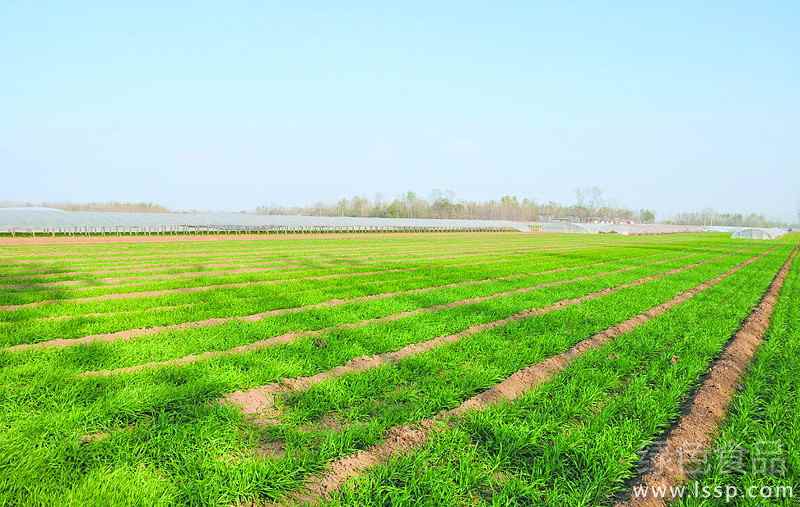
Nine key points for managing wheat at the seedling and overwintering stages
From emergence to overwintering, winter wheat's growth characteristics are growing roots, growing leaves, growing tillers, and completing the vernalization stage, that is, "three growths and one completion," with the growth center being tillering. The central task of field management is, on the basis of preserving seedlings, to promote roots and increase tillers, turn weak seedlings into strong ones, keep strong seedlings growing steadily, ensure the wheat seedlings overwinter safely, and lay a good foundation for more and larger ears the following year.
1. Check seedlings and replant. If missing seedlings or broken rows occur due to missed sowing, insufficient soil moisture, underground pests, and other reasons, check the seedlings and replant in time. Soak the replanting wheat seed in cold water for 24 hours, then dry it and sow, ensuring full and even stands.
2. Eliminate seedling-stage pests and diseases. Common seedling-stage pests and diseases include grasshoppers, planthoppers, underground pests, leaf rust, and so on. Once found, control them promptly.
⟧ 3. Press down the needle. After wheat enters the three-leaf stage, the nutrients in the seed endosperm are exhausted, and the seedlings must rely on their own photosynthesis to produce nutrients for growth and development. This is the key period for promoting roots and increasing tillers. Pressing down the needle is a powerful measure, that is, rolling once at the three-leaf stage, which controls the main stem, promotes tillering, controls aboveground growth, and promotes the root system.
4. Loosen the wheat soil by scratching. If rain occurs during the tillering stage, loosen the wheat soil by scratching in time, which helps break up crusting and promote root growth. For vigorous seedlings, scratch deeply (more than 7 cm), which can cut roots and control excessive vigor. For wheat on saline-alkali land, hoeing must be done after rain to prevent salt return from harming the wheat seedlings.
5. Water the winter water well. Apply additional fertilizer as appropriate. Winter irrigation should be timely, generally starting when the average temperature is 7°C to 8°C and ending at around 5°C, exactly when it freezes at night and thaws during the day. The amount of winter irrigation water should not be too large; it is best if it can soak through and infiltrate completely the same day. Avoid flood irrigation. For wheat fields with insufficient basic seedlings, early-sown vigorous seedlings that have lost fertility, or fields without enough basal fertilizer, combine winter irrigation with fertilization, applying 5 kg to 10 kg of urea per 667 sq m to promote early green-up of wheat, consolidate pre-winter tillers, increase the rate of tillers forming ears, and make winter fertilizer serve spring use.
6. Winter urine application must strictly prevent damage to wheat seedlings. Urine can be applied from overwintering to before green-up, applied as it is collected. Generally, about 500 kg of urine is applied per 667 sq m. Urine should not be applied on saline-alkali land or when there is snow cover in the wheat field. Urine application has a significant yield-increasing effect; about 15 kg of fresh urine can increase yield by 1 kg.
7. Cover with a blanket. As the farming proverb says: "Wheat eats the twelfth-month soil." This shows that covering with a blanket has the effect of preventing cold and protecting seedlings. Technical points: carry it out after wheat enters the overwintering stage. If too early, the wheat seedlings will be smothered yellow; if too late, the leaves will be frozen, operation is also difficult, and the expected effect cannot be achieved. After winter irrigation, on the basis of loosening the wheat soil by scratching, use a bamboo rake in the wide rows along the ridges to rake soil over the wheat seedlings, covering with about 2 cm of soil. This technical measure can stabilize soil temperature, reduce soil moisture evaporation, ensure wheat overwinters with green leaves, reduce ground cracking, and fill cracks.
8. Rolling. After covering and before green-up, roll the wheat 1 to 2 times to crush clods, making the soil fine and compact, which helps eliminate crusting and cracking, preserve heat and moisture, and can also pull soil to fill cracks and prevent soil from leaking air. This is an important measure for overwintering management of wheat in water-deficient fields, and another important means of preserving seedlings against drought and cold.
9. Grazing and nibbling green wheat in wheat fields is strictly prohibited. The green leaves retained during overwintering can carry out photosynthesis after green-up, and they are the main source of nutrients needed when growth just resumes. Winter grazing will cause extensive damage to this green leaf area, weaken cold resistance, and reduce yield.