Five situations in which pesticide use on cotton is wasteful and pollutes the environment
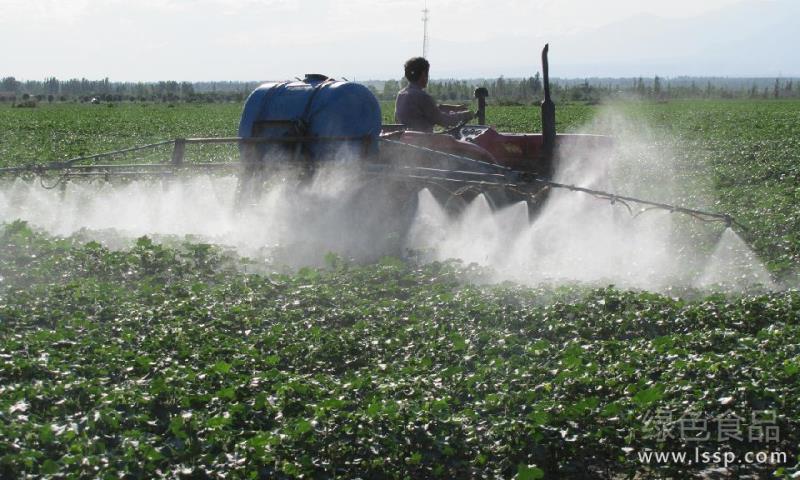
Cotton spraying
Pesticide waste is a common phenomenon in rural areas. Right now is a critical period for pesticide use on cotton, and many cotton farmers use pesticides carelessly in pursuit of a good harvest, leading to pesticide waste. Not only does this fail to have the intended effect on cotton, it also seriously pollutes the environment. The pesticide editor has briefly summarized it: pesticide waste is mainly manifested in the following five situations:
First, some cotton farmers, when diluting pesticides, use the pesticide bottle cap as a measuring device and estimate the mixing by feel. The pesticide mixed this way is very inaccurate, being either too much or too little. Too much will cause phytotoxicity to crops such as cotton and rice, resulting in excessive pesticide residues and affecting the quality of agricultural products, while too little will have no effect and fail to achieve pest control.
Second, large cotton growers mistakenly believe that the higher the concentration of pesticide used, the better it is for controlling pests and diseases such as cotton bollworm, pink bollworm, tobacco cutworm, cotton red spider, cotton aphid and Fusarium wilt in the middle and late stages of cotton. Therefore, they arbitrarily increase the concentration of pesticide used, some even using two to three times the normal concentration.
Third, some cotton farmers do not understand the relationship between pests and diseases and pesticide control, and are rather blind when using pesticides, often resulting in the wrong pesticide being used, making it very difficult to achieve effective pest and disease control.
Fourth, some cotton farmers always like to mix pesticides that cannot be mixed, directly destroying the active ingredients of the pesticides. This not only artificially causes pesticide waste, but also very easily causes a certain degree of phytotoxicity to high-quality cotton varieties and cotton crops.
Fifth, some cotton farmers, when using manual sprayers, do not spray every other row, but spray in the cotton field at noon when there are strong winds and high temperatures. Some cotton farmers, when using the Gongnong 16-type hand-cranked sprayer, do not carefully check before spraying whether the device leaks or is clogged, and fill the sprayer tank too full with pesticide solution, wasting the pesticide while spraying.
⟧ The above five situations of waste in pesticide use cannot fail to attract the attention of the vast number of farmers in key cotton-producing areas. Plant protection technicians in cotton areas should also carry out publicity in this regard and strengthen technical guidance for cotton farmers on disease prevention and pest control, improve the level of scientific pesticide use among the vast number of cotton farmers, promote scientific dilution of pesticides, save money, prevent waste and ensure pesticide efficacy. After consulting the data, the editor has obtained the following figures, for the reference of cotton farmer friends only: the cap of a 1000-gram pesticide bottle has a volume of 13 ml; the cap of a 500-gram pesticide bottle has a volume of about 12.5 ml; the cap of a 250-gram pesticide bottle has a volume of 6 ml; the cap of a 100-gram pesticide bottle has a volume of about 3.5 ml. Right now is a period of frequent pests and diseases for crops such as cotton in the south. The author suggests that relevant agricultural departments, when introducing pesticide dosage and mixing, give away simple disposable measuring devices, briefly introduce how to use them and provide a written document, so as to facilitate the scientific mixing and dilution of pesticides by the vast number of cotton farmers.