Pumpkin Cultivation and Management Techniques: From Seedling Raising and Transplanting to Direct Seeding and Gap Filling
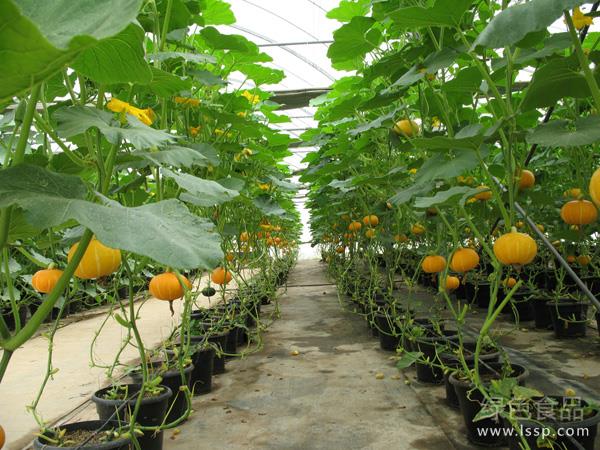
Pumpkin
Pumpkin is an annual dicotyledonous herbaceous plant of the genus Cucurbita in the gourd family (Cucurbitaceae). It can produce trailing vines, and the cross-section of its stem is pentagonal. The leaves are heart-shaped, and the flowers are yellow. The fruit is generally oblate or pear-shaped, green when young and reddish-brown when ripe. The fruit can be used as a vegetable, and the seeds can be eaten. It is known by different names depending on the place of origin, also called maigua, fangua, wogua, and golden winter melon; in Taiwanese Hokkien it is called golden melon. It originated in North America.
The suitable sowing period in different regions should be determined according to local climatic conditions, seedling-raising facility conditions, cultivation methods, planting time, and market demand.
Pumpkins can be cultivated by raising seedlings and transplanting, or by direct seeding.
For seedling raising and transplanting, first prepare a seedbed or seedling cups, water them thoroughly, and sow the seeds flat on the soil or with the sprout tip facing down, sowing 1 seed per seedling cup. After sowing, cover with 2-3 cm of soil. Keep the seedbed or seedling cup temperature at 20°C-25°C; seedlings will emerge in 3-5 days. During pumpkin emergence, be careful to gently remove the seed shells at any time to help the cotyledons unfold. During the seedling stage, properly control soil moisture and the temperature between seedlings to prevent the seedlings from growing leggy. To promote pumpkin root development and help with hardening the seedlings, one transplanting can be carried out. When the seedlings have 2-3 true leaves, they can be planted.
For direct seeding, sow 2-3 seeds per hole, and prevent mice from eating all the seeds and causing gaps in the stand. After gap filling, because the seedlings' growth periods are not uniform, it is not conducive to field management and operations.
Pumpkin
Planting
Because climatic differences across regions are relatively large, the planting time for pumpkins also varies. As long as it can be ensured that pumpkin seedlings are not damaged by low-temperature freezing and can grow normally, they can be planted or direct-seeded. Note that when planting, it should not be too deep; it is best to let the cotyledons remain exposed above the ground. When watering to settle the roots, do not let water and soil stick to the seedling leaves, so as not to affect seedling recovery and survival.
Cultivation and Weeding
Carry out cultivation together with weeding, from shallow to deep. Note that when weeding, do not move the seedlings or damage the seedlings or root system. To promote root development, when cultivating, earth up soil toward the roots. During the entire pumpkin growth period, cultivation and weeding are generally carried out 2-3 times. Note that when cultivating, do not damage the pumpkin plants and leaves.
Irrigation and Topdressing
After pumpkins are planted, if soil moisture is good, generally no irrigation is needed. During this stage, carry out cultivation multiple times, and at the same time raise soil temperature to promote root development and help the seedlings grow strong. After the vines extend, open a furrow 15-20 cm from the roots and apply fertilizer, applying decomposed manure, and combine it with spraying photosynthetic nutrient fertilizer, which can help plants absorb large amounts of light energy and sunlight and supply plant growth and development.
Pruning and Vine Pressing
When cultivating pumpkins, sometimes because branches and leaves are too vigorous, fruit drop is easily caused. Therefore, generally spray Chuhuawang No. 3 on their branches and vines to inhibit main shoot growth, encourage more flowering and more fruit setting, and promote pumpkin development. Pumpkin side vines should not be retained in too great a number. If there are special cultivation needs, then carry out pruning and vine training and retain side vines as needed.
Pollination
If pumpkins are cultivated in facilities or cultivated in the open field (when the flowering period encounters rainy days), in order to improve the pumpkin fruit-setting rate and yield and prevent stunted buds and stunted fruit, spray Chuhuawang No. 3 on them to improve pollen fertilization quality and increase pumpkin yield.