How to Save Late-Sown Wheat? Master the Foliar Fertilization Technique
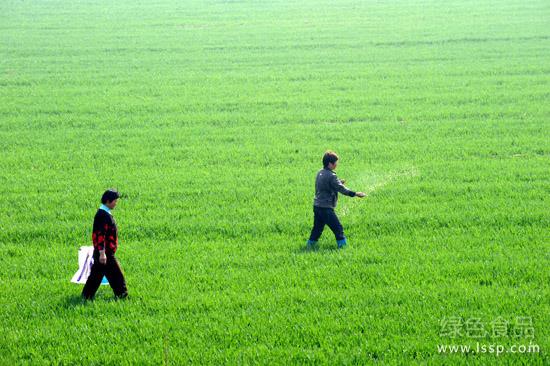
Fertilizing wheat
As early as 2010, China had already put foliar fertilization technology to great use in the double-high winter wheat planting system. This is a fact, and also experience. Now we need to look back and summarize the background conditions for applying this measure, its technical content, and its potential and benefits in the winter wheat production system striving for "double high," which is very necessary for applying foliar fertilization technology more rationally in the future.
If winter wheat encounters persistent low-temperature weather in spring, plus insufficient light due to cloudy and rainy conditions, it is very unfavorable for the normal growth of wheat seedlings after green-up, and the growth period will be delayed by a few days. For example, premature senescence may shorten the wheat grain-filling period, which will reduce the thousand-grain weight, etc.
In order to mitigate the impact of disastrous weather, the Ministry of Agriculture will require strengthening mid-to-late stage wheat field management. In terms of fertilization, targeting the characteristics and contradictions of declining root nutrient and water absorption capacity in late-stage wheat, and seizing the critical period of wheat yield formation from flowering to grain filling, the "one spray, three preventions" technical measure has been promoted on a large scale, that is, spraying potassium dihydrogen phosphate and urea on the leaves, supplying nutrients through the wheat leaf surface to compensate for the losses caused by declining root absorption capacity in the late stage, achieving the technique of delaying wheat plant senescence, reducing damage from dry hot winds, increasing wheat grain-filling intensity, increasing grain weight, and maintaining yield.
Based on extensive production application experience, experts give the following recommendations:
1. In the double-high wheat production system, the late growth period from flowering to grain filling is crucial for maintaining yield. Late-stage water and fertilizer management must not be relaxed. Especially for modern high-yield varieties, late-stage water and fertilizer management is the key to achieving high yields. As the farming proverb says: "A good wheat harvest needs three things: many ears, large ears, and plump grains," indicating that late-stage water and fertilizer management is critical to yield formation. Whether excessive vegetative growth with delayed ripening or premature senescence occurs, both will lead to reduced yield. At this point, the goal of water and fertilizer management is to maintain root vitality, extend leaf functional period, promote translocation of photosynthetic products to grains, and strive for grain weight. Since the decline in root vitality in the late stage is an inevitable trend, opening the pathway of extra-root supplementation is the correct choice for strengthening late-stage nutritional regulation. In the late stage, leaf area is large, and direct nutrient supply through foliar fertilization is fast, avoiding nutrient fixation and degradation in the soil, so nutrient use efficiency is higher than soil fertilization.
2. Under conditions of abnormal climate and environmental deterioration, to strive for double-high wheat, in addition to root fertilization, foliar fertilization technology should also be fully and scientifically utilized, especially during high-temperature dry seasons when the topsoil is dry and there are no irrigation conditions, effective nutrient transport in the rhizosphere soil is poor; or in waterlogged plots, where crop roots lack oxygen, causing special circumstances where crops cannot absorb normally, foliar fertilization methods should be adopted.
3. Late-stage foliar fertilization of winter wheat as a routine measure in the double-high production system, generally for wheat fields with larger populations and normal seedling conditions, in order to prevent possible lodging caused by late-stage dry hot winds, spray 2 to 3 times from flowering to grain-filling stage, with a mixture containing 1% to 2% fulvic acid, 0.5% to 1% urea, and 0.2% to 0.3% potassium dihydrogen phosphate. In areas with demand and conditions, the components of late-stage wheat foliar fertilization can also include boron fertilizer and silicon fertilizer.
In summary, rational use of foliar fertilizer helps maintain wheat thousand-grain weight, and by regulating transpiration, increases plant adaptability to dry hot winds, reduces lodging caused by dry hot winds before harvest, and helps stabilize yield.