How to prevent and control pests and diseases in fruit trees without spraying pesticides to reduce chemical pollution
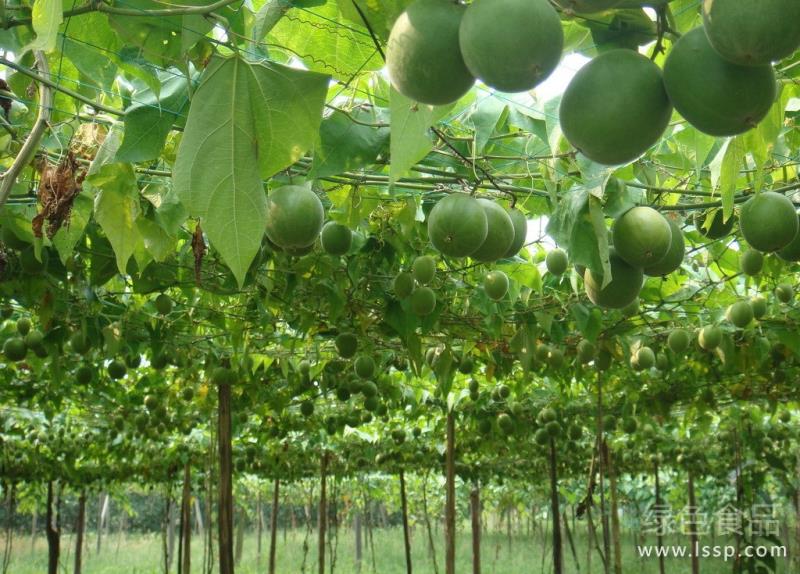
Fruit trees
Chemical control is the main measure used in production to control fruit tree pests and diseases, but as a supplementary means, combining some agricultural, physical, biological and manual measures with chemical control can not only achieve twice the result with half the effort, but also greatly reduce the cost of pest control and reduce pesticide pollution of the environment. It is an important path and inevitable choice for building a resource-conserving and environment-friendly society in rural areas.
Covering with insect-proof nets
Covering with insect-proof nets can not only prevent insects, but also protect against heavy rain, hail and strong wind, and provide moderate shading. However, due to the relatively high cost, it is mostly used in protected fruit tree cultivation in production.
Cleaning the orchard
During the growing season, promptly removing or picking up damaged fruit, branches and leaves and handling them in a centralized way can effectively reduce the sources of pests (and pathogens) for the next generation. In autumn and winter, in conjunction with pruning, cut off diseased shoots and pest-infested shoots, and clear away weeds and fallen dead branches and leaves in the orchard and its surroundings, then burn or bury them deeply in a centralized way, which can eliminate a large number of overwintering pests.
Manual removal and control
During the growing season, promptly remove egg masses of the pine moth, break open the hard cocoons of the yellow-striped slug moth on tree trunks and branches, scrape off egg masses of the gypsy moth on tree trunks, and dig out longhorn beetle eggs on branches and trunks. When scale insects occur severely, use a hard-bristled brush to brush off the larvae and egg sacs attached to the branches. For leaf roller pests, promptly cut off infested branches; for powdery mildew, promptly cut off diseased shoots; for bagworm pests, promptly cut off egg sacs; for the apple branch longhorn beetle, promptly cut off damaged branches and burn them in a centralized way.
Shaking off and capturing
During the growing season of fruit trees, for some pests with a habit of feigning death, such as scarab beetles, leaf beetles, longhorn beetles and chestnut weevils, they can be shaken off the trees and then captured in a centralized way. In winter, when rime weather occurs, beating the branches can shake off scale insects.
Scraping bark in winter
Scraping bark from fruit trees is an important measure in winter orchard management. It not only helps strengthen tree vigor, but can also eliminate pathogens and pests, reduce the overwintering population base, and control or reduce the occurrence and damage of some pests and diseases in the coming year, thereby achieving the control effect of "no pesticide applied, yet better than applying pesticide." Winter bark scraping of fruit trees can be carried out from after leaf fall until before bud break the following spring, mainly to scrape off the rough bark and peeling bark on the main trunk and main branches. The scraping depth should be such that the light brown bark layer is removed to reveal green but not white. When scraping, spread a plastic sheet under the tree to collect the scraped bark and debris, and bury or burn them deeply in a centralized way. For fruit trees with rot disease or dieback disease, after scraping, apply asomate or lime sulfur mixture for control.
Orchard
Whitewashing tree trunks
Whitewashing tree trunks in winter can not only prevent sunscald and freezing injury in fruit trees, but also eliminate a large number of pathogens and pests overwintering on the trunks. The preparation ratio of the whitewash is generally: quicklime 10 parts, lime sulfur mixture 2 parts, salt 1-2 parts, clay 2 parts, water 35-40 parts. It is best to apply the whitewash twice, the first time after leaf fall and before the soil freezes, and the second time in early spring.
Bagging fruit
Bagging fruit can effectively reduce or avoid damage by fruit-boring pests such as fruit moths. Plowing and turning the tree disk
Deep plowing of the tree disk is not only an important measure for improving soil and promoting increased fruit tree yields, but also an effective method for eliminating overwintering pests and diseases. Through deep plowing, pests that overwinter in the soil (such as the peach fruit moth and peach pyralid moth) and pathogens can be turned up to the surface and killed by freezing, drying out, or being pecked by natural enemies, while some pathogens and pests that overwinter in fallen branches, rolled leaves and weeds on the ground (such as leaf rollers, aphids and red spiders) are buried deeply underground and suffocate because they cannot emerge normally, thereby reducing the overwintering population base.
Light trapping and killing
By utilizing the phototaxis of fruit tree pests, black light lamps, high-pressure mercury lamps and frequency-vibration insect traps can be set up in orchards for trapping and killing. This method has obvious control effects on the peach fruit moth, apple leaf roller, golden-striped leaf miner, peach pyralid moth, cotton leafworm, gypsy moth, flea beetles and mole crickets.