Wheat no-till seeding technology saves time and labor and increases income
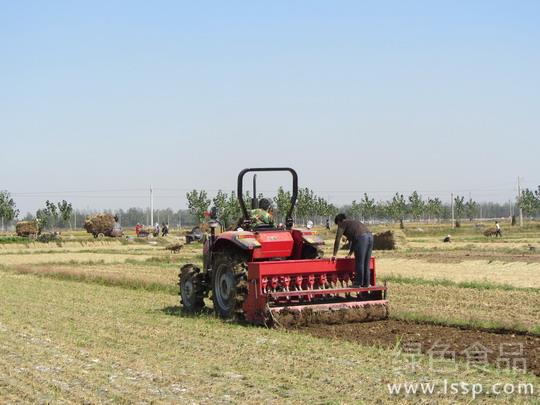
Wheat no-till seeding
Wheat "no-till seeding" technology refers to crushing corn stalks after the corn harvest and evenly spreading them on the soil surface, without rotary tillage or deep loosening and plowing, and using special seeding machinery to sow seed and fertilizer together during the suitable wheat sowing period. After many years of trials, the following advantages of this technology have been summarized:
1. Achieves the "four savings": no rotary tillage or deep loosening and plowing is carried out before wheat sowing, which reduces the number of operations and reduces power consumption, saving labor, time, effort and money, and can save 50 yuan per mu in plowing operation costs.
2. Saves water and resists drought: the stalks are spread on the soil surface, so there is no soil cracking in winter and spring, the soil is firm, and evaporation and loss of soil moisture are reduced.
3. Resists cold and increases temperature: stalk mulching is like covering the wheat seedlings and soil with a quilt, which helps the wheat seedlings overwinter safely and reduces winterkill of seedlings; in spring, the ground temperature rises quickly, and the growth period can be advanced by 2~3 days.
4. Improves fertilizer efficiency: sowing and fertilizing are completed in one pass, achieving concentrated deep application, effectively avoiding volatilization and leaching loss of fertilizer, and improving fertilizer use efficiency.
⟧ 5. Ventilation and light transmission: no-till planting uses uniform-row sowing with a 5 cm sowing width, widening the row spacing and increasing space for tillering, so wheat tillers more, ventilation and light transmission between rows are good, and pests and diseases occur less.
6. Increases yield and income: no-till planted wheat has strong comprehensive resistance, fewer pests and diseases, thick and sturdy stems, large spikes and many grains, a delayed maturity period, and a grain-filling period extended by 3~4 days, with yield increased by 5%~10%, and cost savings and efficiency gains of 150~200 yuan per mu.