Advancing Scientific Soil-free Vegetable Cultivation: Aeroponics
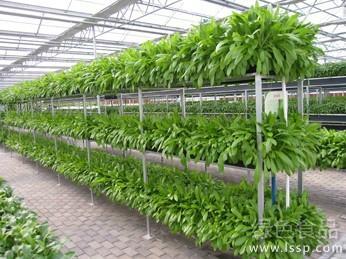
Aeroponics
Aeroponics is currently the most advanced cultivation model in agricultural production. It can achieve rapid growth and development of plants in a short period of time and is of great significance to agricultural production. Especially in the cultivation that maximizes plant potential, aeroponics is the best model. At present, this model has begun to be used in the construction of high-tech demonstration parks or sightseeing parks, playing a very good role in demonstration and science popularization. So why does it produce such amazing effects? Let us analyze it from the factors required for plant growth. Through the analysis of growth factors, we can understand why this new cultivation model is so rapid.
1. Aeroponics suspends plants in a atomized space, changing the way their root systems obtain water, oxygen and nutrients. It uses pressurized atomization or ultrasonic atomization to create the best environmental conditions for the root zone, including the temperature, water, air and nutrients of the root environment. These four factors are the four main factors affecting plant root absorption and growth. How to optimize these four factors is the key path to solving the problem of plant growth speed.
Aeroponic cultivation
2. Soil cultivation is the main method of current agricultural production. Roots are rooted in the soil environment, and the fertilizer, water and air contained in the soil create growth conditions for the root system. The soil is composed of solid soil particles, while fertilizer, water and air are plant growth factors that fill the soil medium or are adsorbed in the soil. Soil plays an anchoring role for plant growth and provides nutrients, water and air for plant growth. Therefore, in traditional concepts, soil is the indispensable and most basic element for plant growth. Without soil, there would be no plant growth and no agricultural production. It is the most basic factor of production. However, with the development of science and technology, people's exploration and research on plant growth factors have shown that as long as the above factors required for plant growth can be satisfied, plant cultivation can be carried out. Thus people innovatively developed soil-free cultivation techniques, including artificial substrate cultivation, hydroponics and aeroponics. But no matter which cultivation model it is, the technical design revolves around supplying sufficient water, mineral nutrients and oxygen. Being able to supply the root system with the most sufficient water, nutrients and oxygen can maximize the growth rate. Therefore, when comparing the four cultivation models of traditional soil cultivation, substrate cultivation, hydroponics and aeroponics, it is found that the aeroponic model provides the most sufficient supply of water, nutrients and oxygen.
Soil cultivation makes it difficult to optimize the management of water, fertilizer and air. When too much water is applied or when water naturally accumulates, it will cause an oxygen-deficient environment and lead to root rot caused by anaerobic respiration. Even if there are sufficient nutrients in the soil, they cannot be absorbed. When the soil is in a dry state, although there is sufficient oxygen, the water absorption and metabolism of the root system cannot be guaranteed, and the mineral ions in the soil are also in a bound state where they cannot be dissolved and absorbed due to drought. All of these cause poor plant growth.
Under the condition of using artificial nutrient solution, combined with scientific drip irrigation management, artificial substrate cultivation can optimize the root environment and create a suitable fertilizer-water-air environment for root growth. However, there is a certain degree of technical difficulty in management. How to make the supply of fertilizer, water and air non-conflicting requires relatively highly experienced management or reliance on computer control technology to achieve. When there is more water, there is less air; when there is less air, there is more water. The two are called the water phase and the air phase. These two phases are often in a dynamic contradiction, and optimal control is always somewhat difficult. However, compared with soil, it has more flexible controllability and adjustability, so growth will be better than in traditional soil cultivation.
The hydroponic model also has its advantages and disadvantages. Its advantage is that the root system is directly immersed in the nutrient solution, so the root system absorbs fertilizer and water very directly. However, it is also unavoidable that oxygen deficiency and root rot may occur. Therefore, various models in hydroponic technology are all developed around technologies for increasing dissolved oxygen in water. As long as sufficient oxygen is dissolved into the water, the maximum growth potential of plants can be brought into play. However, the variability of dissolved oxygen in water and the limited saturation value also create bottlenecks in the implementation of some technologies in production. Especially under conditions of high temperature or low atmospheric pressure, if oxygen-increasing measures cannot be guaranteed, oxygen deficiency and root rot will affect growth.
The most advanced aeroponics can overcome all the above limiting factors and allow the root environment to be in the best water-air-fertilizer environment. In this model, the root system is suspended in the air, oxygen supply is maximized, and fertilizer water is provided through atomization. The absorption of mineral ions and water can be fully guaranteed. Under an oxygen-rich environment, the roots can achieve the maximum energy conversion rate, so the speed of ion exchange and absorption is faster than by any other method, enabling plants to exert their greatest growth potential. This is the core of the rapid growth of the aeroponic model.
Aeroponic cultivation
3. In soil cultivation and substrate cultivation, roots grow through a solid environment, and they will always encounter more or less growth resistance from soil particles and artificial substrate particles. In order to overcome resistance, plants will slow root growth or thicken the root epidermal tissue to form unique land roots. The absorption efficiency and growth speed of this kind of root are far slower than those of water roots or the aerial roots of aeroponics. Therefore, aerial roots or water roots are mostly much more developed than land roots, and there is no thickening of the root epidermis or cortex, so they can maintain long-lasting whiteness and strong metabolic activity. All of these create the best physiological foundation for the root system in the aeroponic model, and this is also one of the reasons for its rapid growth.
4. Current status: the use of aeroponics in growth will also become more and more widespread. It has been effectively proven in both production and scientific research. It is a new cultivation model with great growth potential. Whether for woody, herbaceous or vine plants, it can enable their growth to exert the greatest developmental potential, achieving rapid growth, high quality and high yield in crop cultivation without changing genes. It greatly improves production efficiency and reduces management input. It is the most advanced cultivation model in future agriculture.