High-Yield Cultivation Techniques for Broad Bean, a Spring Seasonal Vegetable
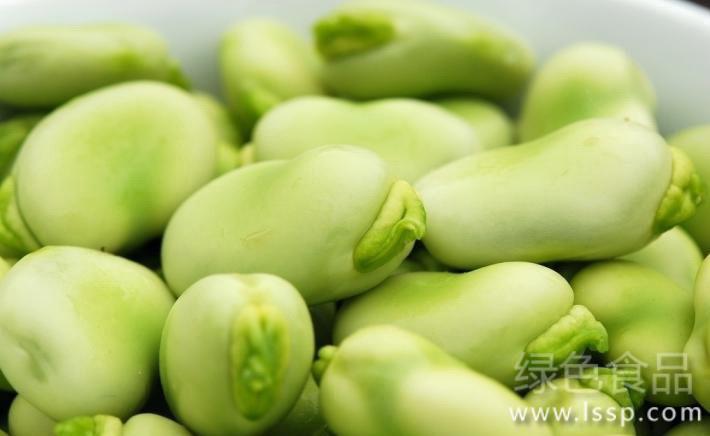
Broad bean
Broad beans are rich in nutrients, containing calcium, zinc, manganese, phospholipids and abundant choline, which are important components for regulating the brain and nervous tissue, and have a brain-boosting effect that enhances memory. The calcium in broad beans is beneficial for bone calcium absorption and calcification, and can promote the growth and development of human bones. Broad beans are also rich in protein and vitamins, and modern people also believe that broad beans have anti-cancer effects and can prevent colon cancer.
Broad bean is a delicious spring seasonal vegetable. Green broad beans are liked by more and more people, and green broad beans as a vegetable are increasingly entering the vegetable basket, greatly enriching people's dining tables. Due to the broad prospects of broad beans being consumed as a fresh vegetable, the planting area of broad beans has increased compared with previous years, and the requirements for broad bean cultivation and management are also getting higher and higher. In response to the requests of the majority of growers, the high-yield and high-quality cultivation techniques for broad beans are summarized as follows:
I. Land preparation and fertilization.
The roots of broad beans go deep into the soil and the root system spreads wide. To achieve high yield, deep ploughing should be carried out. Generally, the ploughing depth is required to be more than 20cm. After ploughing, open furrows, form ridges, break up clods, and level the ground. The bed width is 200cm—250cm, and the ditch depth is 18—20cm. For fields with a relatively high groundwater table, ridge cultivation should be adopted, with a ridge surface width of 80cm—100cm, a ditch depth of 25cm—30cm, and a ditch width of 40cm. The ditches are required to be connected so that they can be irrigated and drained quickly, preventing waterlogging from rotting the seeds. Before ploughing, 2500kg—3000kg of decomposed organic fertilizer should be broadcast per mu, and 30—40kg of calcium superphosphate, 10kg of potassium sulfate, and 3—5kg of urea should be mixed evenly and broadcast on top of the farmyard manure, then deep-ploughed 25—30cm. After that, open furrows and form ridges, break up clods and level the ground.
II. Selection of good varieties and careful seed selection.
Good varieties are the internal cause of increased yield, and selecting good varieties according to local conditions is the basis for achieving high and stable yields. Our town mainly plants the Fengdou series varieties, as well as Kunming large white beans, etc. Before sowing, the seeds should be carefully selected. After seed selection, sun the seeds for 2—3 days before sowing, and dress the seeds with two-thousandths ammonium molybdate or boric acid.
III. Timely sowing, ensuring full stands, promoting strong seedlings, and avoiding damage from heavy frost.
⟧ Sowing of vegetable broad beans in our town should be completed before early November, and the best sowing period is October 25—30. Sowing too early makes them susceptible to freezing damage during the flowering period, while sowing too late affects yield due to insufficient vegetative growth.
IV. Reasonable close planting and proper regulation of the population structure.
The size of the broad bean population is greatly affected by variety, cultivation conditions and climatic factors. Generally, the plant-row spacing is (4x4), the basic seedling number is 23,000—28,000 seedlings, and the effective stems and branches are 40,000—45,000 branches. The seed rate per mu is 45—50 jin.
V. Strengthen field management and carry out timely pruning to prevent diseases.
1. Irrigation.
During the entire growth period of broad beans, timely irrigation should be carried out according to soil moisture content: water at budding and flowering, water at full flowering and pod setting, and water at grain filling and pod bulking. (That is: irrigate three times.)
2. Timely pruning.
In mid-to-late February, when 1—2 branches have formed at the base of the broad bean, pinch off the growing tip to remove the main branch, and promptly cover the plant center with soil to promote separation of side branches, which is good for ventilation and light penetration and promotes flowering and pod setting. After that, gradually remove diseased and weak branches, frozen broken-top branches and senescent branches. Around Qingming Festival, starting from the basal leaves, gradually remove leaves; at the end of flowering, cut off the bean tips, so that the microclimate, humidity, temperature and light conditions in the broad bean field become better and more reasonable. At the same time, this helps reduce nutrient consumption, concentrate nutrients for pod growth, and increase 100-seed weight.
3. Timely prevention and control of diseases and insect pests.
The main diseases and insect pests of broad beans are broad bean stem blight and aphids. For broad bean stem blight, on the basis of seed replacement, crop rotation, application of phosphorus and potassium fertilizers, and health cultivation, appropriate medication should be used for control. Mainly use 72% agricultural streptomycin sulfate soluble powder or Xinzhiromycin 4000-fold solution; 50% copper bis(dihydrogen phosphate) wettable powder 500-fold solution; 30% basic copper sulfate suspension 400-fold solution; 77% Kocide wettable powder 500—600-fold solution. Apply a second control after 7—10 days, for 2—3 applications. Aphids are mainly controlled by chemical agents. Generally, Yibianjing or 2.5% tralomethrin 3000-fold—4000-fold solution can be used for spray control.
VI. Timely harvesting.
It is most suitable to harvest when the pods are plump, the seeds are light in color, soft, and before the hilum turns black. At this time, the taste is tender and sweet, and it is most suitable for cooking and eating.