Technical recommendations for vegetable management given the large temperature fluctuations in winter
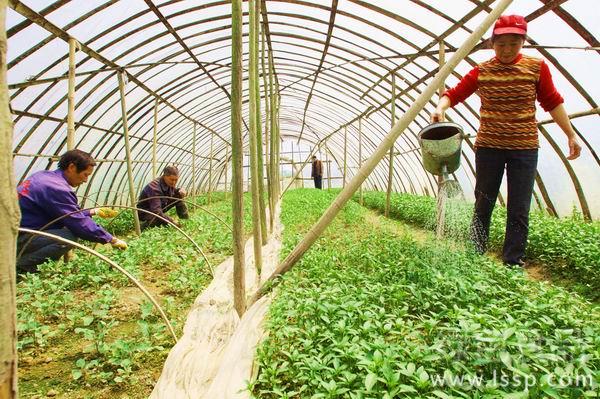
Greenhouse vegetables
Since the start of autumn this year, temperatures have fluctuated widely, temperatures have been relatively low, and hazy and smoggy days have occurred more often. For greenhouse vegetables, solar greenhouse vegetables and open-field vegetables, growers should carry out the relevant cultivation and management work well.
I. Field management of autumn-winter greenhouse vegetables
Solanaceous and cucurbit vegetables grown in greenhouses under a two-crop-a-year system have already entered the mid-to-late stage of fruit harvest, so timely topdressing is needed to promote growth, applying 15-20 kg of diammonium phosphate per mu, either flushed with water or sprayed on the leaves with a mixed solution of 0.2% urea + 0.2% monopotassium phosphate. Greenhouse film should also be used for covering before the early frost arrives to avoid freeze damage. For greenhouse vegetables grown under a three-crop-a-year system, the second crop harvest is already nearing its end, and now is the key period for sowing overwintering spinach and fennel. Soil moisture should be adjusted to prevent the soil from drying out after sowing, and the time to bring the crop to market can be flexibly decided according to market conditions around New Year's Day to the Spring Festival.
II. Field management of solar greenhouse vegetables
The suitable temperature for root growth of fruit vegetables is around 25°C. For overwintering fruit vegetables in solar greenhouses, on the basis of thoroughly watering early on, the general rule is not to water unless there is drought. When watering, observe the weather and the seedlings, measure the soil temperature, and ventilate in time to remove excess moisture. Topdressing should be done in a timely manner according to the growth appearance of the crop and the length of the growing period, and in line with balanced fertilization requirements. Absolutely avoid applying ammonium bicarbonate to prevent ammonia damage. At the same time, micronutrient fertilizers should be sprayed in a targeted way. Solar greenhouse film easily attracts dust during use, or grass debris easily falls onto it when straw curtains are rolled and unrolled, thereby reducing the film's light transmittance. Especially in hazy and smoggy weather, manual dust removal should be carried out in time to improve the light transmittance of the greenhouse film, increase light, and raise the temperature.
III. Field management of open-field vegetables
This mainly refers to the field management of cool-season vegetables such as Chinese cabbage, radish, Welsh onion, spinach and celery. As temperatures gradually decline, autumn-winter vegetables grown in the open field are in a vigorous growth stage, and after November they enter the harvest stage. For Chinese cabbage and radish, chemical fertilizers should not be used in the late growth period, and watering should be reduced or stopped to lower the water content of the plants and make storage easier. Chinese cabbage should be harvested when the daily average temperature is 5°C-6°C, generally around "Minor Snow", that is, mid to late November; radish should be harvested when the daily average temperature is 7°C-9°C, generally around "Start of Winter", that is, early to mid November; celery is generally harvested in mid to late November. Welsh onion reaches its maximum fresh weight before frost. After severe frost, the onion leaves lose water and the weight of the onion decreases, but the weight of the white stalk does not decrease and may even increase. For Welsh onion stored over winter, harvest should be delayed as long as possible, until mid to late November when the soil is about to freeze.