Greenhouse vegetable gas damage is serious, how should it be prevented?
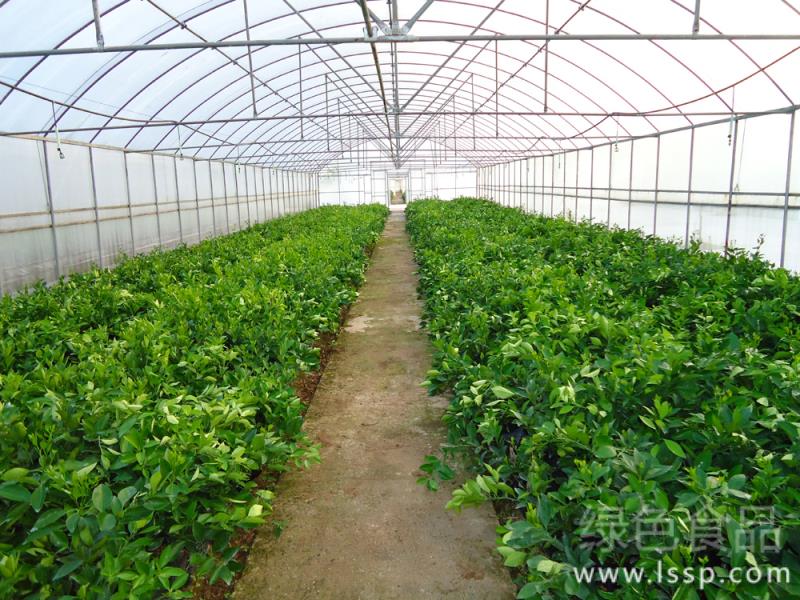
Greenhouse vegetables
In winter and spring, plastic greenhouses are airtight, with high temperatures and high humidity inside, and vigorously growing vegetables are prone to harm from harmful gases, causing poor growth and development of the vegetables, and in severe cases wilting and death. In this regard, many vegetable growers mistakenly believe it is a disease and blindly spray pesticides for control, resulting in great losses to vegetable production.
I. Types of harmful gases and their harm
1. Nitrous acid gas and ammonia gas: These two gases mainly come from the nitrogen fertilizers and organic fertilizers applied, especially when fertilization is excessive and the soil is dry, the fertilizer encounters the high temperature inside the greenhouse and will decompose within a short period (generally 3 to 4 days after fertilization) and produce a large amount of ammonia gas. When the ammonia concentration exceeds 5 ppm, some sensitive vegetables, such as cucumber, tomato, etc., will be harmed; at first the leaves look as if they have been scalded by boiling water, and after drying they turn brown; when the ammonia concentration reaches 4%, vegetable seedlings will die after 24 hours. When the content of nitrous acid gas in the air reaches 2 to 3 ppm, it will harm sensitive vegetables such as eggplant, tomato, and pepper; the symptoms mainly occur on leaves near the ground and rarely harm new leaves; at first they also look as if they have been scalded by boiling water, and afterward, due to the acidifying effect of nitrous acid, the areas between the leaf veins gradually turn white, and in severe cases only the leaf veins remain, with the leaf mesophyll bleached and dead; this situation mostly appears 10 to 15 days after fertilization. The simplest and most commonly used method to test whether ammonia gas and nitrous acid gas in a plastic greenhouse are excessive is to measure the pH value, that is, the acidity and alkalinity, of the water droplets dripping from the roof of the greenhouse: under normal conditions, the pH value of the water droplets is 7.0 to 7.2, that is, neutral or slightly alkaline; if the water droplets are alkaline, it indicates too much ammonia gas; if the water droplets are acidic, then there is too much nitrous acid gas, and a pH value below 5.5 will cause harm.
2. Carbon monoxide and sulfur dioxide gases: When plastic greenhouses use coal fires for heating, due to incomplete combustion or blocked flues, large amounts of carbon monoxide and sulfur dioxide gases are often produced. The harm of these two gases can be divided into three types: first, hidden poisoning, in which the vegetables themselves have no obvious visible symptoms of damage, but their assimilation function is reduced and quality deteriorates, generally with little effect on yield; second, chronic poisoning, in which the gas invades through the stomata on the underside of the leaves, brown spots appear on and around the stomata, and the surface turns yellow; third, acute poisoning, which produces bleaching symptoms similar to the harm from nitrous acid gas.
3. Toxic gases released by the plastic film itself: Some plastic films will produce some volatile substances during use, such as ethylene, chlorine gas, diisobutyl phthalate, etc., and can invade the interior of the plant through the stomata or water pores on the leaves, destroying cell tissues and chloroplasts, significantly weakening photosynthesis, and seriously affecting the yield and quality of vegetables. Some data show that when the amount of diisobutyl phthalate dissolved in the water droplets on the greenhouse film reaches 10 to 30 ppm, after the water droplets are atomized or absorbed by the vegetables through the roots and leaf surfaces, severe toxic effects will occur; when the concentration of chlorine gas in the air reaches 0.1 ppm, contact for 2 hours can harm radish, and when the concentration reaches 0.5 to 0.8 ppm, only 4 hours of contact can harm most vegetables; at first, white or light brown irregular dot-like or block-like spots appear between the leaf veins, and in severe cases the entire leaf turns white or even falls off; when the concentration of ethylene gas in protected cultivation reaches above 1 ppm, it can cause yellowing between the leaf margins and veins of vegetables, and then whitening until death. According to another experimental observation, ethylene can also cause the leaves of many vegetables to droop (this symptom is called "epinasty"), and has an inhibitory effect on tomato seedlings; within the concentration range of 0.1 to 3 ppm, tomato, eggplant, etc., will all show abnormal shedding of flowers, buds, young fruits, and leaves.
In addition, when smoke-generating pesticide formulations are burned excessively in greenhouses, they can also harm vegetables; for example, burning an excessive amount of chlorothalonil smoke formulation will cause the tip and edge tissues of vegetable leaves to wilt and die, especially under high temperature and high humidity conditions, where the damage is even more serious.
II. Prevention and control measures
The harmful gases in greenhouses not only affect the growth and development of vegetables, but also directly harm the health of vegetable growers. Therefore, active measures must be taken for prevention and control.
1. Scientific fertilization. For fertilizing greenhouse vegetables, high-quality farmyard manure should be the main fertilizer, with appropriate additional application of phosphorus and potassium fertilizers, as little nitrogen fertilizer as possible, and no application of cake fertilizer or human and animal excrement, and the principle of mainly using base fertilizer with supplementary topdressing should be adhered to. Topdressing should strictly follow the principle of "small amounts, many times" to prevent excessive fertilization; generally, when topdressing urea, it is suitable to use no more than 0.6 kg per 10 sq m. The topdressing method should adopt deep application in furrows, immediately covering firmly with soil after application, and watering promptly to dilute the fertilizer.
2. Timely ventilation and air exchange. When the temperature is relatively high at noon, open the ventilation openings to allow air circulation; even on cloudy or snowy days, short periods of ventilation and air exchange should still be carried out at noon to reduce harmful gases in the greenhouse as much as possible and lower air humidity.
3. Reduce sources of toxic gas. When plastic greenhouses use coal fires for heating, the fuel should be burned as fully as possible, and a chimney should be installed on the stove to guide harmful gases out of the greenhouse.
4. Choose non-toxic plastic film. Do not use plastic film containing a relatively large amount of plasticizer as greenhouse film.
5. Remedial measures. If greenhouse vegetables are found to be harmed by sulfur dioxide, promptly spray barium carbonate, limewater, lime-sulfur mixture, or 0.5% synthetic detergent solution; if cucumbers are harmed by ammonia gas, spraying a 1% vinegar solution on the underside of the leaves has obvious effects.