Detailed Explanation of the Key Technical Points for Rice Dry-Nursery "Baomu" Seedling Raising
Dry-Nursery Baomu
How to make farming easier for farmers, simplify the work process, lower costs, increase grain yields and make benefits more obvious has been a direction that agricultural technology departments have been committed to researching and exploring in recent years. The rice "Dry-Nursery Baomu" dry-nursery seedling technology is an advanced and practical technology currently being promoted that saves both labor and effort, reduces costs and increases efficiency, meets the needs of farmers in mountainous areas in the new era, and is good news brought to the vast number of farmer friends in the new year.
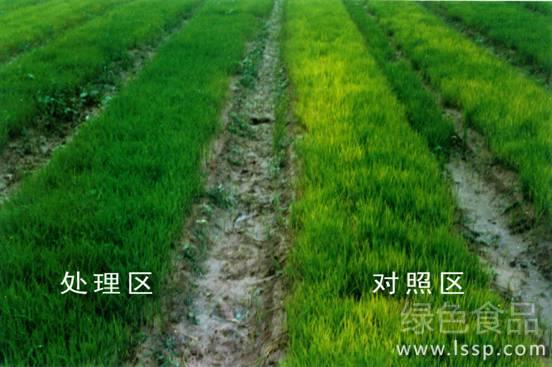
The rice "Dry-Nursery Baomu" dry-nursery technology is another major breakthrough and innovation in seedling-raising technology. Compared with simplified fertilized-bed seedling raising, this technology is simpler, and the seedling roots carry their own fertilizer, which facilitates soil-attached transplanting, and it can cultivate large strong seedlings. When using rice "Dry-Nursery Baomu" for seedling raising, the following technical points should be mastered:
1. Select the correct model. For application in dry-nursery hand transplanting, the dry-nursery type "Dry-Nursery Baomu" should be chosen; for application in dry-nursery seedling throwing, the seedling-throwing type "trayless Dry-Nursery Baomu" should be chosen.
2. Determine the dosage. For each mu of field, use one bag of "Dry-Nursery Baomu" (350 grams) mixed with 1-1.2 kg of rice seed.
3. Soak the grain seed well. Soak the carefully selected rice seed in clean water for 8-12 hours. When the temperature is low, the soaking time should be longer; when the temperature is high, the soaking time should be shorter.
4. Coat before sowing. Remove the soaked rice seed and drain until the rice seed no longer drips, then it can be coated. According to the ratio of one bag of "Dry-Nursery Baomu" to 1-1.2 kg of rice seed, first pour the seed coating agent into an enamel basin, then slowly add the drained soaked rice seed into the enamel basin and roll to coat, until the seed coating agent is entirely wrapped onto the seeds. After the grain seed coating is slightly air-dried, it can be sown.
5. Fertilize and prepare the bed. Choose a seedling-raising site close to a water source and convenient for management. The seedling bed prepared for dry-nursery seedling throwing should not be selected from soil with high sand content, but should be selected from fertile tea garden land with a certain stickiness, so that the seedlings raised are not only robust, but also have a large amount of soil attached to the roots, which facilitates throwing and standing of seedlings. Generally, for hilly paddy fields, each mu of field requires 25-30 sq m of seedling bed; for rapeseed or wheat stubble fields, 40-50 sq m of seedling bed is required. Turn over and dig to form beds, apply sufficient decomposed farmyard manure or splash sufficient manure water, and at the same time apply sufficient base fertilizer at the standard of 25 kg of compound fertilizer per mu. Before sowing, open furrows and form beds at a width of 1.5 m, with the bed furrow 35-40 cm wide and about 20 cm deep. Break up and rake the bed surface soil evenly so that soil and fertilizer are mixed uniformly, to facilitate sowing.
6. Water the base water sufficiently. Before sowing dry-nursery seedlings, the base water must be watered sufficiently and thoroughly, so that the moisture content of the layer within 10 cm of the seedling bed reaches a saturated state; this is the key to reducing early-stage management of the seedling bed.
7. Sow evenly and cover the seed. Evenly broadcast the coated seeds onto the seedling bed, lightly press, then use sieved fertilized soil to cover the grain seeds firmly.
8. Chemical weed control. After covering the seed, spray a dedicated dry-nursery herbicide, such as Hanyangqing, Hanyangjing, etc.
9. Post-sowing management. In the early stage after sowing, seal the ground firmly and tightly with plastic film to preserve heat and moisture, and promote early emergence and early uniform emergence of seedlings. After emergence, pay attention to gradually ventilating to promote seedling growth and prevent high-temperature burning of seedlings. After 2-3 leaves, pay attention to watering and fertilizing, and remove weeds. One day before transplanting, water the seedling bed thoroughly once, so that the seedling roots carry "moisture-absorbing mud balls", facilitating seedling development after transplanting. When pulling seedlings, pull up one or two seedlings as one clump.
10. Pest and disease control. This is basically the same as general dry-nursery seedling raising. When using rice "Dry-Nursery Baomu" for seedling raising, the following matters should also be noted:
(1) Control the amount of seed used. Using "Dry-Nursery Baomu" for seedling raising gives a high emergence rate, high seedling survival rate and many tillers, so the amount of seed needs to be appropriately reduced. For each mu of field, 1.0-1.2 kg of hybrid rice seed is sufficient.
(2) Control the moisture for soaking seed. After the grain seed is soaked, take it out and drain off the water droplets, then it can be mixed with the coating agent. If the rice seed is too dry, the seed coating agent will not adhere; if the rice seed is too wet, the seed coating agent will absorb water, swell and stick into clumps, and cannot be mixed evenly.
(3) For dry-nursery seedling throwing, the seedling-throwing technique should be mastered. For the seedling-throwing field, the field should be prepared with good bed furrows, and the bed surface should meet the standards of "shallow, level, muddy, clean", and high throwing and fixed-quantity uniform throwing should be implemented to increase the depth of seedling root penetration into the soil and improve the rate of upright seedlings and the degree of uniformity. After throwing, gather the seedlings in the bed furrows and spread them evenly onto the bed surface.
(4) Pay attention to water management. After transplanting, implement the irrigation technique of "no water layer for rooting, shallow water layer for supporting seedlings". Within 48 hours, only keep water in the bed furrows; after rooting, then irrigate with shallow water to promote full rooting and standing of seedlings.