Special Health Benefits and Cultivation Techniques of Black Peanuts
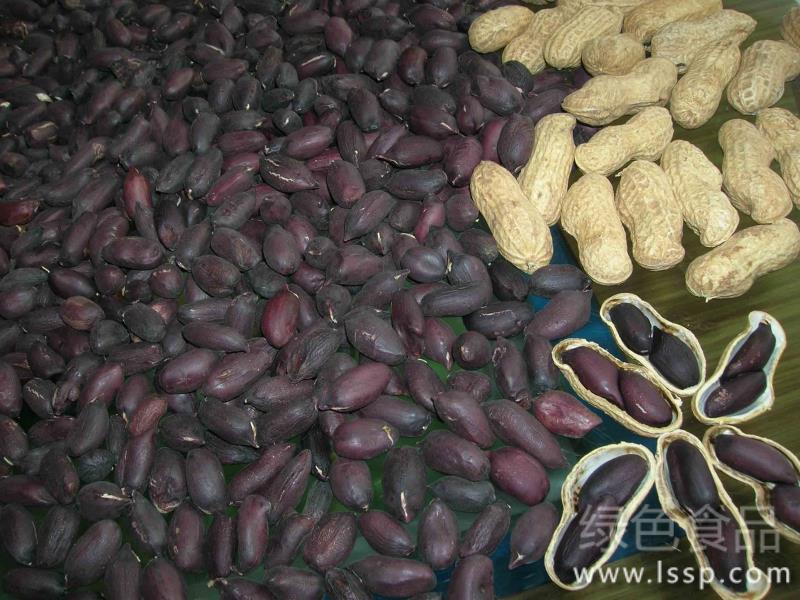
Black Peanuts
The black peanut is a rare gem in the peanut family, with extremely high nutritional value and special health benefits. Black peanuts are rich in nutrition, abundant in high-quality protein and unsaturated fatty acids, and also contain large amounts of selenium, potassium and other mineral elements. More importantly, the peanut skin also contains flavonoids, black peanut skin pigment, resveratrol and other bioactive compounds with unique functions. The following is an introduction to the cultivation techniques for black peanuts.
I. Selection of Planting Plot
Black peanuts are suitable for planting in various soils with a pH of 5.5-7.2. They grow best in soil that is deep, has an active plow layer, good soil properties and good drainage, with oily sandy soil being the best.
II. Cultivation Time
Sowing can be done when the soil temperature at 5 cm stabilizes above 15°C. Generally, planting can be done from early March to early May.
III. Seed Treatment
Before sowing, soak the seeds for 3 hours with "Shengwuling" nutrient solution, one vial diluted in 15 kg of water, to increase seed nutrients, and at the same time disinfect the seeds with 50 g of dimethoate. Mixing 150-250 g of 40%-50% carbendazim with 50 kg of seeds can prevent stem rot.
IV. Planting Methods
1. Drilling, with a row spacing of 30 cm.
2. Hole sowing: for spring sowing, a density of 9,000 holes per 667 sq m, with a row spacing of 39 cm × 18 cm. For summer sowing, a density of 11,000 holes per 667 sq m, with a row spacing of 35 cm × 16 cm, sowing 2 black peanut seeds per hole.
V. Rational Fertilization
Apply base fertilizer per 667 sq m: 2,000 kg of bio-fermented compost, 10 kg of urea, 35 kg of phosphate fertilizer, 30 kg of potassium sulfate, 0.5 kg of boron fertilizer and 1 kg of zinc fertilizer. At the 3-4 leaf stage, spray with 25-30 ml of chlormequat, once every 7 days for 3 consecutive sprays. At the early flowering stage, spray with nutrient solution, one vial diluted in 15 kg of water, once every 10 days for 3 consecutive sprays. At the full flowering stage, cover the base of the plants with soil so that the roots do not emerge, and spray with nutrient solution 7 days later.
VI. Weed Control
Before sowing, spray 700 g of acetochlor per 667 sq m diluted in water, or evenly spray the ground with 75 ml of 50% acetochlor emulsifiable concentrate diluted in 100-150 kg of water. At the 2-3 leaf stage of the peanuts, spray the ground with 100 g of gaike per 667 sq m diluted in water, and finally carry out manual weeding.
VII. Pest and Disease Control
At the seedling stage of peanuts, spray with 5% validamycin aqueous solution at 2,000 times dilution to control damping-off. For aphids that transmit viruses, when the aphid-infested plant rate reaches 5%-10%, spray with 10% imidacloprid wettable powder at 3,000 times dilution or 40% dimethoate emulsion at 1,000-1,500 times dilution. For brown spot, black spot, anthracnose and the like, spray at the early stage of disease with 50% carbendazim wettable powder at 1,000 times dilution or 80% mancozeb wettable powder at 500 times dilution, once every 7-10 days for 3 consecutive sprays. During the growing period, when the leaves turn yellow, check the roots promptly; if root rot is found, spray 50 g of root rot remedy per 667 sq m diluted in 15 kg of water, 3-5 times. To control ants, mix potassium chloride powder with the base fertilizer.
VIII. Field Management
Peanuts need a lot of water during the flowering and pegging stage and the pod-setting stage; if drought occurs, water promptly. Peanuts are susceptible to waterlogging, so drainage should be attended to during the rainy season, especially at the pod-setting stage, to prevent water accumulation and avoid rotten pods.
IX. Timely Harvest
Harvest when the leaves on the middle and lower parts of the plant have normally fallen off and the seed coat appears pink. After harvesting, dry promptly in the sun to prevent the black peanuts from becoming moldy.