Winter field management techniques for asparagus to lay a solid foundation for high yields
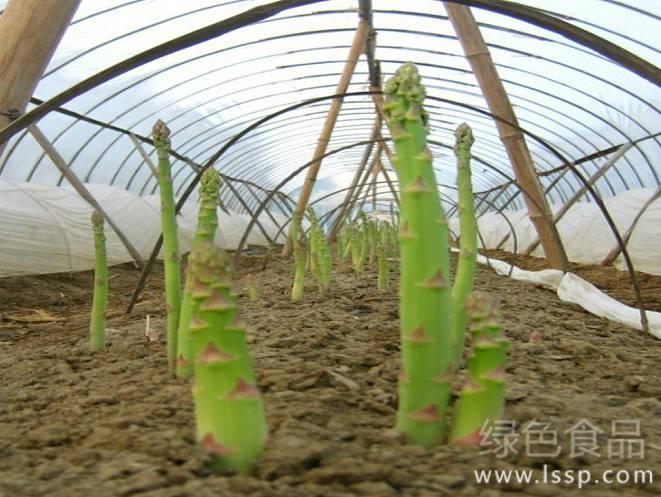
Asparagus
With the arrival of winter, the above-ground plants of asparagus gradually age and turn yellow, entering a dormant state, but the underground root system remains active and continues to accumulate nutrients. This period should be seized to carry out a series of field management measures such as clearing the field, watering, loosening the soil and disinfecting, so as to ensure that the asparagus overwinters safely and lay a solid foundation for high quality and high yield the following year.
1. Apply heavy overwintering fertilizer: after the autumn harvest of asparagus is finished, heavy overwintering fertilizer should be applied in several rounds to meet the needs of the underground root system's growth. After the autumn spears are harvested, first cut off the withered and yellow mother stems and carry them out of the field to be burned. Apply overwintering fertilizer twice, at "Start of Winter" and "Winter Solstice", mainly using organic fertilizer, each time using 1000-2000 kg of farmyard manure, 100-200 kg of calcium magnesium phosphate, 20-30 kg of ammonium bicarbonate per mu, mixed with peanut cake, bone meal, etc., and after full fermentation, apply it in furrows or holes along the edge of the bed, minimizing damage to the storage roots when opening furrows and digging holes. Apply fertilizer once more at "Start of Spring", using 20-31 kg of compound fertilizer per mu mixed with 2-3 kg of borax or potassium dihydrogen phosphate, or urea mixed with potassium chloride or 50-60 loads of farmyard manure, applied in holes to promote the emergence and growth of young spears. After each fertilization, watering must be carried out once; in dry seasons, irrigate once every 6-7 days.
2. Clear the field and disinfect. In winter, the above-ground stems and leaves of asparagus gradually wither. From "Great Cold" to "Start of Spring", depending on the degree of yellowing of the above-ground plants, cut the plants down one after another, thoroughly clean up dead branches, fallen leaves and weeds, and carry them out of the field to be burned, eliminating overwintering parasites and pathogens. When applying the first overwintering fertilizer, the soil mounded at the base of the plants can be appropriately pulled open; after the second fertilization, usually after "Start of Spring" (by which time the above-ground parts of the plants have all turned yellow and been cut off), take advantage of sunny weather to pull away all the mounded soil and clean out the remaining stems completely, taking care not to damage the bud clusters at the base; after exposure to sunlight for 1-2 days, broadcast 3 kg of Dichongshaxing per mu over the whole field, or spray the soil and roots with a 600-fold dilution of 40% asparagus-qing, to eliminate overwintering pathogens and reduce the pathogen base, thereby controlling the occurrence of diseases, and then cover with 5-6 cm of guest sand. In slightly acidic asparagus fields, 50-75 kg of quicklime per mu can be broadcast to neutralize soil acidity.
3. Clear ditches to prevent waterlogging: the root system of asparagus is a fleshy root. If the soil moisture content is too high, it is prone to freezing damage in winter or to root rot, which both affects asparagus yield and reduces asparagus quality. Therefore, ditches should be cleared in time to lower the groundwater level, so as to prevent waterlogging damage and the occurrence of root rot.
4. Control pests and diseases: the main pests and diseases during the overwintering period of asparagus are stem blight and aphids, cutworms, etc. To control stem blight, combine agronomic and chemical methods: clear ditches, lower the groundwater level, apply less nitrogen fertilizer, apply more phosphate fertilizer and farmyard manure, and at the same time spray a 600-800-fold dilution of 70% thiophanate-methyl or 50% carbendazim for control. For aphids, spray a 1000-fold dilution of 50% phoxim emulsifiable concentrate, or a 1000-fold dilution of 10% imidacloprid wettable powder for control. For cutworms, methods such as poison bait, grass-pile trapping or manual capture can be used for control.