How should rapeseed be managed before winter to achieve strong seedlings and safe overwintering?
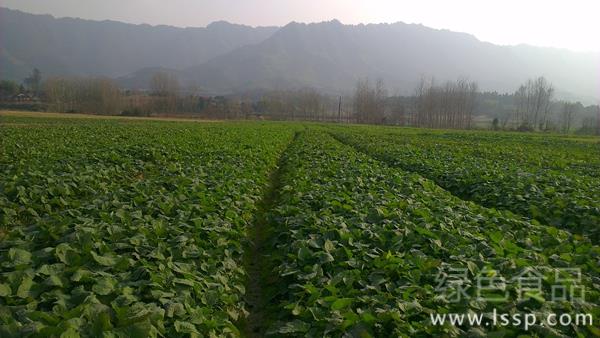
Rapeseed overwintering
At present, direct-seeded rapeseed is in the stage of rapid growth during the seedling period, and transplanted rapeseed is in the stage of seedling recovery growth. Farmers should carry out field management well to promote early and rapid growth of rapeseed and achieve strong seedlings for safe overwintering.
1. Clear the "three ditches" to drain water and reduce waterlogging. Because there is relatively more rain in autumn and winter, waterlogging damage is prone to occur in rapeseed fields. Farmers should clear the "three ditches" in the field as early as possible, achieve complete matching of the "three ditches," ensure smooth drainage, promote rapeseed growth and development, and reduce disease.
2. Thin and finalize seedlings, check seedlings and fill gaps. Direct-seeded rapeseed has a relatively large sowing rate. For fields with a high emergence rate and too many basic seedlings, thin the seedlings at the 2-3 true leaf stage and finalize the seedlings at the 4-5 leaf stage. The density should preferably be about 20,000-30,000 plants per mu. If there are missing seedlings, dense rapeseed seedlings can be used for transplanting with soil to fill the gaps, and after transplanting, water promptly to settle the roots.
3. Cultivate and loosen the soil, and apply additional fertilizer to promote seedling growth. Rapeseed generally needs 2-3 cultivations. The first should be carried out after seedling finalization or after transplanted plants survive, and the cultivation should be shallow at first, then gradually deepened. For leggy seedlings, earth up around the roots promptly to prevent freezing injury. At the same time, for direct-seeded rapeseed greatly affected by waterlogging or sown relatively late, apply seedling-promoting fertilizer promptly; for transplanted rapeseed, apply seedling-promoting fertilizer early after the plants survive, so that after the temperature drops the plants have a certain amount of vegetative mass to undergo low-temperature hardening and cultivate winter-strong seedlings with purple edges and green centers. Seedling-promoting fertilizer should follow the principles of being early, light, and quick-acting, and the application amount should account for about 20% of the total additional fertilizer. Generally, about 7.5 kg of urea per mu is used. By mid-to-late December, farmers with the means can spread plant ash, pour manure water, and so on, generally using 600-800 kg of human and livestock manure per mu. Increasing the application of phosphorus and potassium fertilizer can also improve the cold resistance of rapeseed.
4. Control diseases and pests, and weed at the right time. Before winter, rapeseed pest control is mainly aimed at aphids. Use 30 g of 10% imidacloprid wettable powder per mu, or 20 g of 25% pymetrozine wettable powder, mixed with 30 kg of water for spray control. To control weeds in rapeseed fields, at the 3-5 leaf stage of weeds, select one of the following suitable agents as appropriate, mix with 40 kg of water, and spray to control on a sunny day. To control grass weeds, use 40-50 ml of 20% haloxyfop-R-methyl EC per mu; to control broadleaf weeds, use 40-50 ml of 50% benazolin suspending agent per mu, at the 6-8 leaf stage for direct-seeded rapeseed, or after transplanted rapeseed turns green and weeds are at the 2-3 leaf stage; for fields where grass weeds and broadleaf weeds are mixed, at the 2-3 leaf stage of weeds, use 120-150 ml of 17.5% benazolin · quizalofop-p-ethyl EC (Kuaidao) per mu. Benazolin and benazolin compound agents are prohibited for white mustard type and mustard type rapeseed. Rapeseed fields. The use of bensulfuron-methyl and its compound agents is strictly prohibited.