Walnut Seedling Seed Propagation Technique: Direct Sowing and Raising Seedlings Method
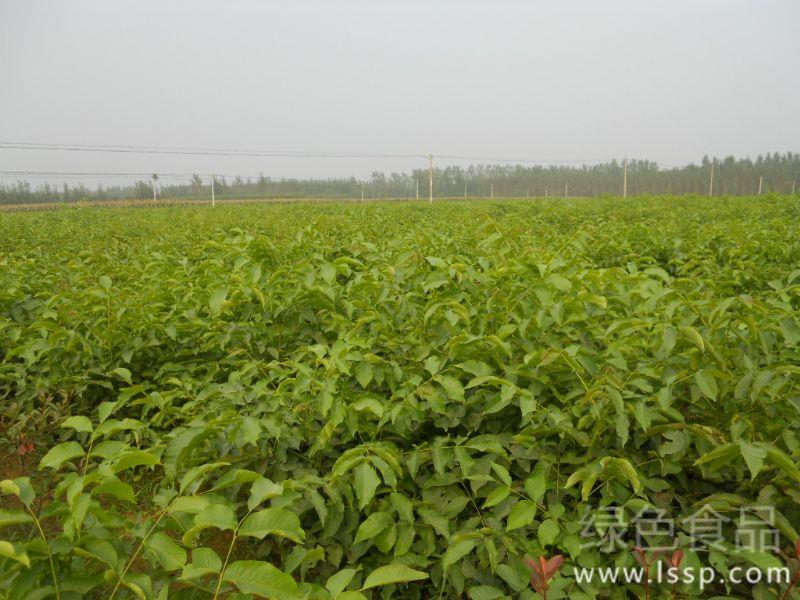
Walnut Seedling Seed Propagation
Seed propagation refers to the method of raising seedlings by directly sowing walnut seeds, but its offspring show few superior variations and many inferior ones, and it bears fruit slowly, so it is only used to cultivate rootstock for grafting. It is conventionally carried out in 6 steps: seed selection, seed treatment, nursery preparation, sowing, nursery management, and seedling lifting from the nursery.
1. Seed selection
Select plump, large, fully mature nuts free of pests and diseases as seeds.
2. Seed treatment
For autumn sowing, the seeds can be sown as soon as they are collected, that is, sown with the green husk still on. Spring sowing requires germination treatment: soak the seeds in cold water for 5~7 days, then place them under sunlight and expose them for 2 days; when most of the seeds have cracked open, they can be sown.
⟧ 3. Preparation of the nursery site
Generally, a sloping field with relatively thick soil layer, sufficient soil moisture and nutrients, and suitable temperature conditions is chosen as the nursery site, with a rational layout and intensive cultivation. The nursery site is treated for sterilization and insect killing. Formalin can be used as the fungicide, and Di Zhen Dan or trichlorfon crystals can be used as the insecticide.
4. Sowing
Sowing can be divided into autumn sowing and spring sowing. (1) For autumn sowing, sow as soon as the seeds mature; seedlings emerge early and relatively uniformly. (2) For spring sowing, carry it out from January to March. (3) Sowing method and density: first apply 100 kg/mu of compound fertilizer, then sow in holes, with a plant spacing of 10~15 cm and a row spacing of 25~35 cm; when sowing in holes, make the seed suture line perpendicular to the ground, place the seeds flat at the bottom of the furrow, cover with about 6 cm of soil, and then irrigate once thoroughly.
5. Nursery management
(1) Do a good job of rat prevention. (2) Irrigate promptly when the temperature rises in spring, keeping soil moisture at about 70%. (3) Cultivate and weed, apply additional chemical fertilizer, and improve growing conditions. (4) Strengthen pest and disease control. (5) Use a root-cutting shovel to insert obliquely at a 45° angle to the ground at a distance of 15~20 cm from the base of the seedlings, cutting the main root to promote the growth of lateral roots.