What to Do When Vegetable Garden Soil Degrades? Cause Analysis and Improvement Methods
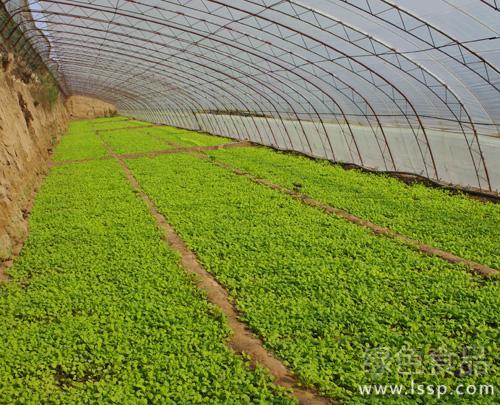
Vegetable plot
As the vegetable growing period lengthens, especially in some old vegetable production bases, varying degrees of vegetable plot soil degradation have appeared, such as soil compaction, trace element deficiency and pathogen accumulation, which must draw the attention of the broad community of vegetable growers.
I. Causes of Vegetable Garden Soil Degradation
1. Soil compaction. The heavy application of inorganic chemical fertilizers while neglecting the replenishment of organic fertilizer leaves the soil deficient in organic matter, with poor aeration, reduced activity of aerobic microorganisms and slow soil humification, so the soil becomes compacted and hard, hindering the normal extension of vegetable plant roots; at the same time, excessive application of chlorine-containing fertilizers produces toxic effects from salt ions, inhibiting the growth and development of vegetables.
2. Trace element deficiency. Vegetable plots are often cropped continuously for many years, with no supplementary application of organic fertilizer year after year, and most vegetable growers have no habit of applying trace element fertilizers either. As a result, trace elements such as zinc, boron, molybdenum, copper and manganese in the soil decline day by day, affecting the healthy growth of vegetables.
3. Accumulation of soil diseases and pests. Large-scale planting, continuous cropping of a single variety and unscientific management all cause pathogenic bacteria and pests in the soil to accumulate and increase year by year, worsening the harm to vegetables, often causing root rot and even the death of the whole plant.
4. The topsoil layer becoming thinner. Continuous cropping and intercropping, manual tilling, flood irrigation, and the absence of mechanical deep plowing or deep plowing with a plough - these cultivation practices make the soil's active topsoil layer thinner and shallower, so that roots find it hard to spread out and penetrate deeply into the active topsoil layer. Transplanting with too large a root ball makes the active topsoil layer even thinner and more barren.
5. Soil pollution. Soil pollution is caused by sewage irrigation, acid rain, excessive application of chemical fertilizers and pesticides, herbicides, and even dumping solid garbage and waste onto the soil. Soil pollution has the characteristics of accumulation, lag, concealment, irreversibility and being difficult to remediate. Once soil is polluted, it will ultimately lead to comprehensive soil degradation.
II. Measures for Improving Vegetable Garden Soil
1. Apply more organic fertilizer. Applying more organic fertilizer and returning litter to the soil, through the combined action of physical, chemical and biological factors in the soil, will form organic colloidal humus, making the soil loose and fertile and improving the soil's aggregate structure and physicochemical properties. This can both raise the soil's aeration and its water- and fertilizer-holding capacity, and also increase the soil's environmental capacity and self-purification ability, promoting vegetable root development and enhancing resistance.
2. Supplement trace element fertilizers. Since vegetables are high-yielding crops, many trace elements are carried away from the vegetable plot as commercial vegetables are shipped out. Trace element fertilizers can be applied either as a base fertilizer or as a foliar top dressing to supplement the shortage of trace elements in vegetable soil. For example, applying zinc sulfate, borax, ammonium molybdate, copper sulfate and manganese sulfate as a base fertilizer, or spraying them on the leaves during the growing period, can alleviate the deficiency of trace elements such as zinc, boron, molybdenum, copper and manganese.
3. Rotate crops between seasons. Since different kinds of vegetables take up soil nutrients differently, a single variety of vegetable should not be planted in the same vegetable plot year after year. Multiple kinds of crops can often be rotated between seasons, and mixed and three-dimensional planting should be used as much as possible to maintain biodiversity. Practicing crop rotation can make full use of soil fertility, reduce the occurrence of pests and diseases, help optimize the soil environment and lessen the toxic effects of toxins.
4. Deep plow the land. When growing vegetables, the interval between plantings should be used for deep plowing and turning of the soil. If intercropping prevents deep plowing with a ploughshare, a hoe or iron shovel should still be used to dig and turn the soil deeply. Efforts should be made to thicken the active topsoil layer of the vegetable plot. After each application of base fertilizer, the soil should be deep plowed more than 30 cm and thoroughly mixed, to increase the exchange between soil layers from top to bottom and enhance the soil's water storage and moisture conservation capacity.
5. Appropriate fallowing. After vegetable soil has been planted for many years, the right timing can be chosen to let it rest reasonably. For example, open-air vegetable plots can use the winter rest period for deep plowing, drying in the sun, winter freezing or planting green manure; greenhouse vegetable plots can use the summer rest period for flooding, covering with film and solarizing. These measures can effectively eliminate sources of pests and diseases and help the soil recover its fertility.
6. Biological remediation. Under the premise of strictly controlling pollutant emissions and rationally applying pesticides and chemical fertilizers, biological remediation is mainly used to treat soil that has already been polluted. Earthworms can improve the soil's self-purification capacity and can also process solid waste. Actively promoting the use of microbial agents that degrade pesticide pollution can also reduce pesticide residues.