Detailed Explanation of High-Yield Cultivation Techniques for Potatoes with Double-Row Ridging
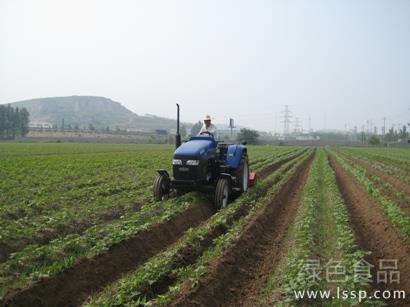
Potato Cultivation
The high-yield cultivation technique of double-row ridging for potatoes is a comprehensive potato cultivation measure that integrates deep loosening, ridging, deep fertilization and rational close planting in double rows. It increases yield by more than 15% compared with conventional flat-bed cultivation, and raises the marketable rate of qualified potatoes by more than 20%. The technical key points are introduced as follows:
1. Select suitable varieties. At present, early-to-mid maturing, high-yield and high-quality potato varieties such as Bashu No. 10, Zhongshu No. 3, Favorita and Kexin No. 4 are mainly promoted for planting.
2. Land selection, ditching and bed preparation, and ridging. Potatoes are not suitable for continuous cropping; the high-yield potato cultivation technique is suitable for rotation with legumes, cereal crops and rapeseed, etc. It is advisable to choose sandy loam or fluvo-sandy mud fields with fertile soil, deep soil layers, loose structure, good drainage and irrigation conditions, and strong water and fertilizer retention capacity for planting. After ploughing, level the land in time, so that the soil is fine, the ground is level and the soil moisture is sufficient. The bed surface should be leveled and finely prepared, and the side ditches and cross ditches should be opened well to facilitate drainage and prevent waterlogging. When ridging, the ridge surface width should be 60-66 cm, the ridge height about 20 cm, and the ridge spacing 33 cm.
3. Treat the seed. Before sowing, strictly select seed potatoes and remove diseased and rotten tubers. Seed potatoes must be whole tubers, free from pests and diseases, free from bruising and freezing injury, with smooth skin and fresh color. Large seed potatoes should be cut into pieces; when cutting, use 75% alcohol to disinfect the cutting tools and diseased potatoes to prevent virus (bacterial) infection. Each seed piece should have 1-2 robust buds, and the top buds should be used as much as possible; the weight of each piece should preferably be 25-50 g. Cutting should be done along with sowing; the seed rate is about 150 kg per mu.
4. Sow at the right time. In high-altitude areas, sowing should be done from early January to early February; in low-altitude areas it can be advanced to late December to early January. If the seed potatoes have already sprouted heavily, it is better to sow slightly later than too early, so as to ensure uniform emergence after the final frost.
5. Master the sowing method and density. Sow two rows of seed potatoes per ridge, with a row spacing of 33-36 cm, a plant spacing of 23-26 cm, and a distance of 15 cm between the sowing row and the ridge edge; sow 1 sprouted seed potato per hole. When sowing, place the seed potatoes directly on the ridge surface with the buds facing up, and press lightly so that the seed potatoes are in full contact with the soil. After sowing, cover the seed potatoes with soil from the ditch and level the ridge surface. The soil covering thickness should be about 8 cm; if the covering is too shallow, the tubers will be exposed and turn green, affecting quality; if the covering is too thick, emergence will be delayed, affecting yield. The general planting density is 5000-6000 holes per mu.
⟧ 6. Apply sufficient base fertilizer. Generally, apply 1500-3000 kg of organic barnyard manure, 30-40 kg of phosphate fertilizer, and 200 kg of plant ash or 20 kg of potassium sulfate per mu as base fertilizer, applied into the ridge surface between the two rows of seed potatoes. At sowing, if 1000 kg of human and livestock manure or 15 kg of nitrogen fertilizer per mu is used as seed fertilizer, emergence can be rapid, uniform and robust.
7. Topdress at the right time. While doing well in intertillage and weeding, temperature management and water management (the methods are the same as conventional flat-bed cultivation), topdressing should also be carried out in the early stage of potato tuber expansion, applying 10 kg of urea or 15 kg of ternary compound fertilizer per mu. A 2% urea solution or 0.2-0.3 kg of potassium dihydrogen phosphate mixed with 50 kg of water can also be used for foliar spraying.
8. Control pests and diseases. The main disease of potatoes is late blight. If there is excessive rain, the plants will be seriously affected around the flowering stage. After diseased plants are found, Jinxiaokang No. 2 late blight special type (0.5% amino-oligosaccharin) at 1000 times dilution or 75% mancozeb 100 g per mu mixed with 40 kg of water can be sprayed, and the central diseased plants should be pulled out, after which it should be applied once every 7-10 days. When damage by underground pests such as white grubs and cutworms is found, 3-4 kg of 3% Dizhengdan No. 2 per mu can be mixed with 4-5 kg of fine sand and evenly broadcast. For aphid damage, 10-15 ml of 25% deltamethrin per mu mixed with 50 kg of water can be used for spraying.
9. Harvest at the right time. When the potato plants wither, most stems and leaves turn yellow, and the tubers stop expanding, that is the best harvest period.