For wheat to achieve high yields, doing a good job of winter management is an important measure
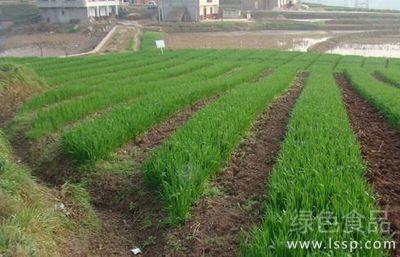
Winter wheat
Winter management of wheat mainly consists of watering the freezing water and applying fertilizer; careful winter management of wheat is an important measure for high yields the following year.
1. Promoting the conversion of weak seedlings into strong seedlings: Common weak seedlings mainly fall into the following situations: drought seedlings, deep-sown seedlings, compacted seedlings, nutrient-deficient seedlings, saline-alkali seedlings, fertilizer-burned seedlings, late-sown seedlings, etc. For deep-sown seedlings, clear the furrows, scrape away part of the covering soil so that the soil covering the tillering node is shallower, or carry out deep intertillage to improve soil aeration, promote development, and make the seedlings grow strong; compacted seedlings are mainly caused by poor aeration, which affects root absorption and slows plant growth, so intertillage and loosening of the soil should be carried out in time to break up the compaction; nutrient-deficient seedlings should be topdressed and watered in time; for saline-alkali seedlings, where conditions permit, heavy watering can be used to leach the alkali, and then intertillage and loosening of the soil can be carried out; fertilizer-burned seedlings are mainly caused by applying undecomposed organic fertilizer or returning straw to the field, and watering measures should be taken; late-sown seedlings are mainly due to insufficient accumulated temperature before winter, so intertillage and loosening of the soil should be the main measure to raise soil temperature and promote their robust growth.
2. Controlling vigorous seedlings: One situation with vigorous seedlings is good fertilizer and water conditions, early sowing, and excessive wheat seedling growth; another is generally average soil fertility, but due to a high sowing rate, too many basic seedlings, too early sowing, and too high temperatures, the wheat seedlings grow excessively and become vigorous seedlings. The effective measures to control vigorous seedlings are pressing and deep intertillage, which help new roots to grow. Through these measures, aboveground growth can basically be controlled and underground growth promoted. At the same time, for vigorous seedlings, the time for watering the freezing water should be delayed.
3. Preventing seedling death: Practice has shown that watering the freezing water at the right time can stabilize soil temperature, prevent cold waves from attacking the wheat seedlings, and protect the wheat seedlings through the winter safely. It prevents early-spring drought and helps cultivate strong spring seedlings; breaking up clods and firming the soil are beneficial to the growth of wheat seedlings. Sandy soil and loamy soil especially need the freezing water, while low-lying land, clay land, damp land, and late-sown wheat fields are all unsuitable for watering the freezing water. Late-sown wheat fields should still be given the freezing water when necessary, and this can be handled flexibly according to specific conditions; in principle, do not water if there is no tillering, so as to avoid waterlogging the seedlings, affecting wheat growth, and causing freezing damage. The time for watering the freezing water should preferably be when it “thaws by day and freezes by night.”
4. Topdressing winter fertilizer: Apply winter fertilizer in combination with watering the freezing water. The application rate should not be too large, and 5-10 kg per mu is appropriate.
⟧ 5. Winter pressing: Winter pressing has the effects of preserving soil moisture, preventing freezing, and breaking up clods. Winter pressing should especially be carried out on low-yield fields. However, because saline-alkali land develops alkali return after pressing and sandy land becomes compacted after pressing, alkali land and sandy land should not be pressed.