Seven measures to implement for winter management of solar greenhouses
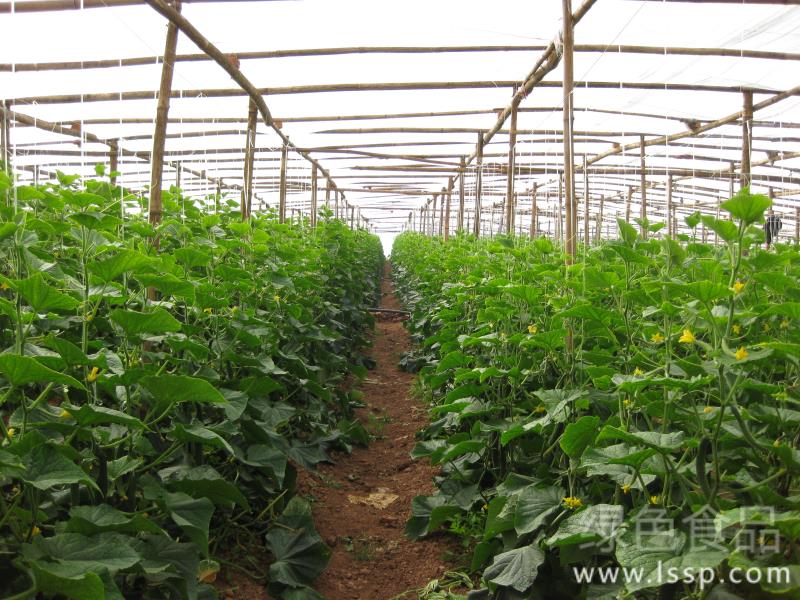
Greenhouse vegetables
In winter production in solar greenhouses, continuous cloudy days or rain and snow weather often cause insufficient light and low nighttime temperatures, which easily lead to various diseases and physiological disorders, resulting in poor product quality, low yields, and serious impact on economic returns. To solve the above problems, the following seven aspects should be noted in management work.
1. Strengthen insulation measures. In low-temperature weather, increase greenhouse covers. At night, straw curtains or corn stalks can be added around the greenhouse, and a cold-proof trench can be dug in front of the shed. A layer of old film from previous years can also be placed over the straw curtains, which both preserves heat and prevents rain and snow from wetting the straw curtains.
2. Strengthen light management. Effective measures should be taken to increase light duration, improve light intensity, and promote vegetable photosynthesis. Frequently clean the film surface to improve the film's light transmittance; under the premise of ensuring temperature, the straw curtains should be uncovered early and covered late, and a roller shutter machine should be installed to shorten the time for rolling and lowering the curtains, so that vegetables receive light early and receive more light, increasing the accumulation of photosynthetic products. If continuous cloudy days occur with no rain or snow, the straw curtains should also be pulled up or pulled up at intervals to increase scattered light. Reflective screens can also be hung indoors, or the back wall can be whitewashed, or incandescent lamps can be installed for artificial supplemental lighting.
3. Timely and scientific ventilation for cooling and dehumidification. In winter, high-efficiency energy-saving solar greenhouses with good performance can reach a maximum indoor temperature above 32°C between 12:00 and 14:00 on sunny days. At this time, opening the skylight for ventilation, because the outside air temperature is low and the temperature difference between inside and outside the greenhouse is too large, often after less than half an hour of ventilation, the temperature has already dropped below 25°C. At this point, the skylight should be closed to allow the greenhouse to store heat and increase temperature. When the indoor temperature rises again to about 30°C, reopen the skylight for ventilation and dehumidification. This ventilation management should be repeated multiple times to maintain the indoor temperature at 20-25°C in the afternoon. Due to repeated heating and ventilation, water vapor in the greenhouse can be effectively removed, carbon dioxide gas can be replenished, the indoor temperature can be maintained within the suitable humidity range for plants, and the development and spread of diseases can be effectively controlled. If ventilation for dehumidification is carried out only once at noon, the next morning the greenhouse will have high humidity and heavy fog, which will aggravate the occurrence of diseases. In winter, after uncovering the straw mats, ventilation for dehumidification should not be carried out immediately. After solar greenhouses are covered with anti-drip film, due to the low outside air temperature, a large amount of mist is often seen floating in the greenhouse after the mats are uncovered. If the skylight is opened immediately for ventilation and dehumidification at this time, cold air below 0°C from outside entering the greenhouse will further accelerate the condensation of water vapor, making the mist heavier and accelerating the infection and spread of diseases. Therefore, except in severe cold seasons, in winter solar greenhouses, ventilation through the skylight to remove moisture after uncovering the mats should generally be carried out only when the minimum outside temperature reaches above 0°C. Generally, a small gap 10-15 cm wide for half an hour is enough to remove the mist from the greenhouse. Multiple ventilations for dehumidification are then carried out at noon to discharge the water vapor in the greenhouse and reduce leaf surface condensation.
4. Scientific watering and fertilization. The relationship between watering and raising ground temperature and reducing indoor humidity should be well coordinated, and full-film mulching should be promoted to reduce water evaporation and lower humidity. When watering, check the weather forecast, check soil moisture, and check the growth of the vegetables. Water on sunny days, not on cloudy days; water in the morning on sunny days, not in the afternoon; water with warm water, not cold water; water in dark water in furrows under the film or use drip irrigation. Formula topdressing should be carried out in combination with watering, and trace fertilizers such as zinc and boron should be used together to enhance the plant's disease resistance and tolerance. In addition, in winter the ground temperature is low and root absorption capacity is poor, so foliar spraying of fertilizer can supplement the plant's growth needs. For example, foliar spraying of rice vinegar can inhibit bacteria and repel insects. Mixed with white sugar and superphosphate, it can not only serve as a foliar topdressing but also increase the sugar content in leaf mesophyll and improve cold resistance.
⟧
5. Timely plant adjustment. Fruit vegetables should be timely hung on trellises, pruned and pinched, and flowers and fruits thinned to improve ventilation and light conditions and the nutritional status of the vegetables.
6. In winter, after a long cloudy period suddenly turning clear, the straw mats should not all be uncovered at once. When continuous cloudy weather suddenly turns sunny, the straw mats should not all be uncovered at once during the day; the method of "uncovering mats in stages" should be adopted, that is, on the first day after turning clear, uncover one third first, then uncover two thirds by 2 p.m., and after another 1 hour uncover all the straw mats. This allows the light in the greenhouse to increase gradually and the temperature to rise slowly, avoiding sudden wilting of seedlings. If all the straw mats are uncovered at once after turning clear, the seedlings in the greenhouse suddenly encounter strong light and high temperature, and the amount of water transpired from the leaf surface exceeds the amount of water absorbed by the root system, which can easily cause the plants to wilt and die.
7. Timely prevention and control of pests and diseases. In winter, prevention and control should mainly use fumigants and dust formulations, and spraying should be minimized to reduce indoor humidity, which is conducive to controlling the occurrence and spread of diseases.