Seven Simple Methods for Preserving Edible Mushroom Spawn
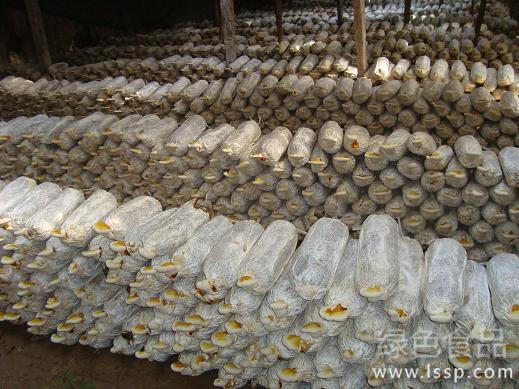
Edible Mushroom Spawn
Because edible mushrooms require low production input and offer high economic returns, a wave of edible mushroom production has sprung up in rural areas in recent years. In production, edible mushroom mycelium multiplies quickly and is prone to aging, making spawn preservation even more difficult. Below are seven simple and easy spawn preservation methods for the reference of farmers:
Distilled Water Method
Suitable for the spawn of oyster mushrooms, enoki mushrooms, and shiitake mushrooms.
1. To preserve oyster mushroom and enoki mushroom spawn, first move the test-tube spawn that is eight-tenths mature and awaiting preservation into an inoculation box; after sterilization, use a syringe to inject distilled water through the test-tube stopper until the entire surface of the culture medium is submerged, up to 2 cm from the tube mouth. Seal the tube mouth with mineral wax and place it upright in a cool, shaded place at room temperature, where it can be preserved for 1-1.5 years.
2. To preserve shiitake mushroom and wood ear mushroom spawn, use 150×15 mm finger-shaped tubes to place solid or semi-solid test-tube spawn cultured to seven-tenths maturity into 25×200 mm large test tubes under aseptic operation in an inoculation box, inject distilled water into the large test tubes up to 1 cm from the tube mouth, seal the opening by wrapping with a rubber stopper, reinforce the seal with mineral wax, and place in a cool, shaded place. Wood ear mushrooms can be preserved for 7-8 months, and shiitake mushrooms for 9-12 months.
This method can also preserve other spawn at natural temperatures.
Urea Temporary Storage Method
Place bagged urea in a light-proof, dry, well-ventilated place, bury the main body of the test-tube spawn in the urea granules with the tube mouth exposed, and the spawn vitality can be preserved for as long as 30 days. This method can be carried out in a constant low-temperature environment.
Liquid Paraffin Preservation Method
Select chemical-grade liquid paraffin, sterilize it under high pressure, then place it in a 40°C constant-temperature incubator for several hours or in a desiccator for several days. Use a sterile pipette or syringe to draw up the liquid paraffin and inject it into the spawn test tube. The injection amount should be about 1 cm above the tip of the slant, and the tube mouth should be plugged with a cotton plug and sealed with paraffin. Stored upright in a clean, dry, cool, low-temperature place, it can be preserved for 5 years.
Wheat Bran Preservation Method
Take a certain amount of wheat bran, add water or nutrient solution, and mix well for later use. Put the wet wheat bran into test tubes, sterilize under high pressure, then mix in the spawn and culture at a suitable temperature. After the mycelium has developed well, place the test tubes at room temperature to dry. Then preserve in a dry place below 20°C, where it can be preserved for 3-5 years.
Physiological Saline Preservation Method
Inoculate the spawn into potato culture solution, with each 250 ml Erlenmeyer flask containing 60 ml of culture solution; culture with shaking or shake 5-10 times a day for 5-7 days. Then draw the formed mycelial pellets into test tubes containing 5 ml of sterile physiological saline, transferring about 4-5 mycelial pellets per tube; plug with a cotton plug and seal the tube mouth with wax. It can be preserved at low temperature for 1 year.
Wheat Grain Preservation Method
Take high-quality wheat, wash it, and soak it in 20°C water for 5 hours; after drying slightly, put it into tubes. The amount loaded should preferably be 1/4 to 1/3 of the tube length. After the wheat-grain tubes are sterilized, shake them apart while hot; after cooling, inoculate the mycelium and culture at a suitable temperature until sparse mycelium appears on most of the wheat grains, then stop culturing. The spawn can be placed in a dry place below 20°C and preserved for 1-2 years.
Refrigerator Preservation Method
Place well-grown test-tube spawn in a refrigerator; stored in the fresh-keeping compartment, it can be preserved for 7 months. The spawn does not degenerate.