Rice Dry-Raised Seedling Technique: Strong Growth Vigor and High Ear-Bearing Rate
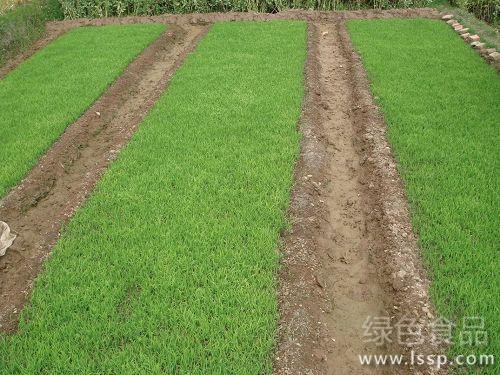
Rice Dry-Raised Seedlings
The rice dry-raised sparse-planting cultivation technique has been widely applied in rice production in our city. Because dry-raised seedlings have relatively high stress resistance, assimilation and absorption capacity, after transplanting to the field they show strong growth vigor, early and rapid tillering, a high ear-bearing rate, a long functional period of leaves in the later stage, and a coordinated source-sink relationship, which is conducive to yield formation. Therefore, this technique has played a major role in increasing grain production in our city. However, in production, improper operation or inadequate application of the technique can lead to poor seedling quality, and cases of seedling rot and dead seedlings occur from time to time. For this reason, the dry-raised seedling technique for early rice is briefly introduced as follows:
1. Site selection and bed preparation: It is advisable to choose flat, wind-sheltered and sunny, fertile, loose-textured dry land (vegetable plots) or idle winter paddy fields as seedling beds. Arrange the seedling bed one week before sowing. Beds can be prepared with a bed width of 1.2 m and a ditch width of 0.3 m, ensuring a level surface and straight ditches. Before sowing, the seedling bed should be watered thoroughly.
2. Sowing date selection: According to the climate characteristics and cultivation conditions of our city, the generally optimal sowing period for early rice is as follows: for hybrid rice, sowing should be completed by the end of early March; for conventional rice, generally mid to late March. Seedling age is 26—30 days, and leaf age is from 4 leaves to the 4-leaf hearting stage.
3. Seed soaking and germination: Before sowing, seed sunning and seed treatment should be done well. Seed disinfectants such as Jinzhongling and strong chlorine preparations can be used for seed disinfection. The seed soaking time for early rice should reach 2—3 days. During germination, the techniques of high temperature (35—38°C) for breaking the hull, suitable temperature (25—28°C) for germination, and normal temperature for hardening sprouts should be mastered.
⟧ 4. Precision sowing: According to farmers' production experience, generally for hybrid rice, sow 90—100 g of sprouted grain per sq m, equivalent to a sowing rate of 30—35 kg per mu; for conventional rice, sow 110—130 g of sprouted grain per sq m, equivalent to a sowing rate of 60—70 kg per mu.
5. Seedling management: In terms of water management, do not water before the seedlings reach the two-leaf-one-heart stage, and keep the soil slightly dry; afterward, water appropriately to keep the soil moist. One day before pulling seedlings, wet the seedling bed to facilitate pulling seedlings in separate clumps with soil. For seedling fertilizer, at the one-leaf-one-heart stage, apply 8—10 kg of urea per mu, and spray 60—80 kg of 300PPM paclobutrazol. 4—5 days before transplanting, apply 12 kg of urea per mu and combine this with carrying pesticides to the field.