Pest and disease control techniques for corn at the ear stage: seize the key period of yield formation
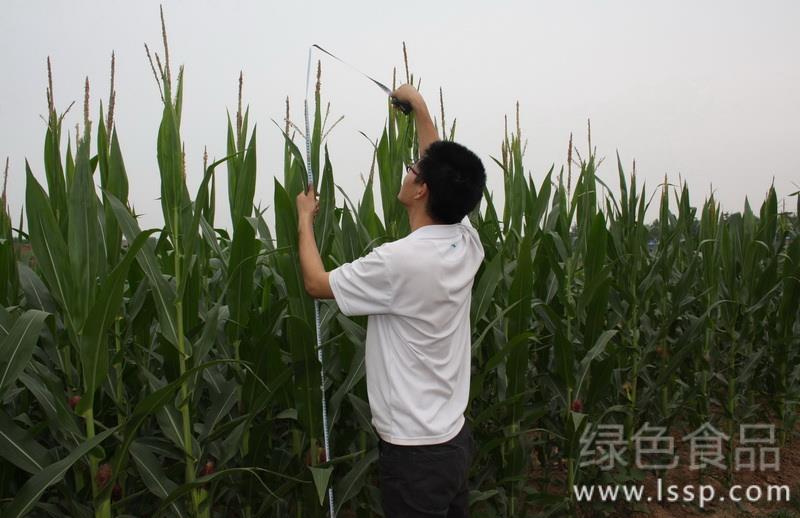
Corn
At present, most of the summer corn in our county has tasseled and silked and entered the ear stage. Corn has moved from the vegetative growth stage to the reproductive growth stage. This is the key period for yield formation, and also the peak period for various pests and diseases. If not controlled in time, it will affect corn yield and quality.
I. Control measures for various leaf spot diseases
Strengthen cultivation management: sow early at the proper time, use reasonable intercropping and relay cropping or wide-narrow row planting, and keep planting density reasonable. When too dense, the disease becomes more severe. Organic fertilizer must be fully decomposed before application. In low-lying land, pay attention to drainage and improve soil permeability.
Chemical control measures: spraying should begin around tasseling and before the disease spreads. When spraying, first remove the diseased leaves at the bottom, and at the same time add foliar fertilizer. Combined with topdressing quick-acting fertilizer, this can both control the spread of the disease and promote vigorous corn growth and enhance disease resistance.
1. Southern leaf blight: use 75% chlorothalonil wettable powder or 50% carbendazim wettable powder, add water to make a 500-fold dilution and spray; once every 7-10 days, 2-3 sprays in total.
2. Northern leaf blight: at the tasseling stage or in the early stage of the disease, spray a 500-fold dilution of 50% carbendazim wettable powder once every 10 days, for 2-3 consecutive treatments.
3. Brown spot: at the initial stage of the disease in corn, spray stems and leaves with a 1500-fold dilution of 25% triadimefon (triadimefon) wettable powder, or spray with a 500-fold dilution of 70% thiophanate-methyl, once every 7-10 days, for 2-3 consecutive sprays.
II. Chemical control measures for various pests
1. Chemical control measures for corn aphids: the control threshold is 10,000 aphids per 100 plants. You can spray a 2000-fold dilution of 10% imidacloprid wettable powder or a 2000-3000-fold dilution of 2.5% beta-cypermethrin.
2. Chemical control measures for armyworms: the control threshold is 120 larvae per 100 plants. Apply the pesticide promptly at the young larval stage. The pesticide can be a 1000-2000-fold dilution of 40% phoxim emulsifiable concentrate, or 4.5% beta-cypermethrin emulsifiable concentrate at 30-60 ml/mu diluted with 50 kg of water and sprayed. Be careful to spray evenly and thoroughly, and spray the weeds at the field edges and roadsides as well.
3. Chemical control measures for corn borers and other ear pests: besides the Asian corn borer, corn ear pests also include cotton bollworm, armyworm, sorghum striped stem borer, and others. The best control timing is after corn pollination, when the silks begin to wither. When 25%-30% of plants are infested, or when there are 40 larvae per 100 ears, immediately apply pesticide control. First, pour pesticide solution into the tassel: commonly used pesticides include an 800-fold dilution of 50% dichlorvos emulsifiable concentrate, 90% trichlorfon crystals, and others. These solutions are poured into the tassels of corn at the emerging tassel stage at 10 ml per plant. Next is dripping pesticide solution onto the silks: put an 800-fold dilution of 50% dichlorvos emulsion into a bottle with a thin plastic tube, drip a few drops of the solution at the base of the silks at the top of the female ear to fumigate and kill the larvae. Or use a 1500-fold dilution of 4.5% beta-cypermethrin to spray directly on the silks.
When the above pests and diseases occur together, the above insecticides and fungicides can be mixed and applied to control both pests and diseases at the same time. In terms of control strategy, take pest control as the main focus, control both pests and diseases, strengthen ecological control, and supplement with chemical agents to regulate pests and diseases, so as to comprehensively and effectively control corn pests and diseases, ensure the safety of corn production, and promote increased agricultural output and higher farmers' income.