Sowing Methods Matter: Key Points of Corn Sowing Techniques
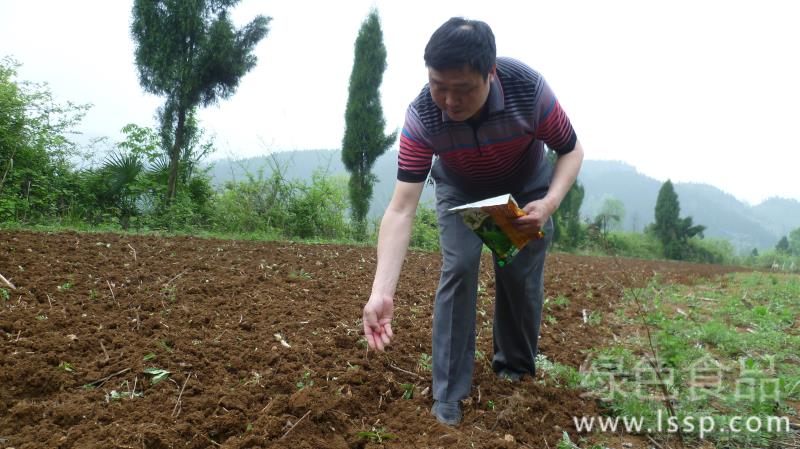
Corn sowing
As yields increase, the role of sowing techniques in yield gradually strengthens. Sowing techniques include seed treatment selection, soil moisture preparation, reasonable density, sowing method, sowing rate and sowing depth, etc.
1. Seed treatment: sunning seeds. Corn seeds that have been sunned in sunlight absorb water quickly after sowing, germinate early, emerge uniformly, have a high emergence rate, and produce sturdy seedlings.
2. Seed soaking and seed dressing. Soaking seeds in clean water mainly supplies moisture and promotes germination. Chemical soaking mainly uses potassium dihydrogen phosphate and trace elements, but if the soaking concentration is too high or the soaking time is too long, the seeds are prone to poisoning and damage, reducing the germination rate. Dressing seeds with pesticides can prevent and control pests and diseases. Seed coating is wrapping a layer of chemicals around the seed. Coated seeds after sowing have the ability to resist disease, resist pests and promote rooting and germination; pesticides should be chosen according to the local pests and diseases.
3. Careful moisture preparation: soil moisture is the key to affecting the quality of seed emergence. With good moisture and level land, the sowing depth is easily consistent, and seedlings emerge neatly and uniformly. An important part of pre-sowing moisture preparation is adjusting soil moisture. After the wheat harvest, seasonal drought often occurs and worsens the moisture conditions at corn sowing, so in production, watering at wheat yellowing is commonly used to supplement the subsoil moisture.
4. Reasonable dense planting and determining the sowing rate: reasonable density should take into account the characteristics of the variety. Next, if soil fertility is good and fertilizer application is large and reasonable, the suitable density is greater. In areas prone to drought and without irrigation conditions, the planting density should be thinner.
5. Determining sowing depth: sowing depth is generally 5cm-6cm. In clay soil with good moisture, sowing should be appropriately shallow, 4cm-5cm. In loose sandy loam, sowing should be appropriately deep, 6cm-8cm. If soil moisture is high, deep sowing is not suitable, while if the soil is dry, appropriately deep sowing is suitable.
6. Pressing after sowing: after covering with soil after sowing, appropriate pressing should be done; press heavily in drought, but do not press when there is too much soil moisture.
7. Appropriate application of starter fertilizer: applying an appropriate amount of starter fertilizer can supply sufficient nutrients for seedling development, promote growth during the seedling stage and enhance resistance to adverse factors such as drought, low temperature and disease. Starter fertilizer includes a small amount of nitrogen fertilizer, phosphate fertilizer, potassium fertilizer and trace element fertilizer. The amount used should be controlled and the starter fertilizer should be separated to avoid burning seedlings. Generally, applying 5kg-8kg of diammonium phosphate per mu gives good results.
If after sowing there are missing plants and few seedlings, but there is no obvious phenomenon of missing rows or broken ridges, when thinning to a stand, double plants can be left in the neighboring hills of the missing plants to make up the density; crops with stronger shade tolerance such as soybeans and potatoes can also be planted in areas with serious missing rows and broken ridges. If only half emerge, intercropping crops can be sown. If less than half emerge, it is recommended to destroy the crop and replant.