Key technical points of mechanized corn harvesting are an important guarantee for a bumper harvest
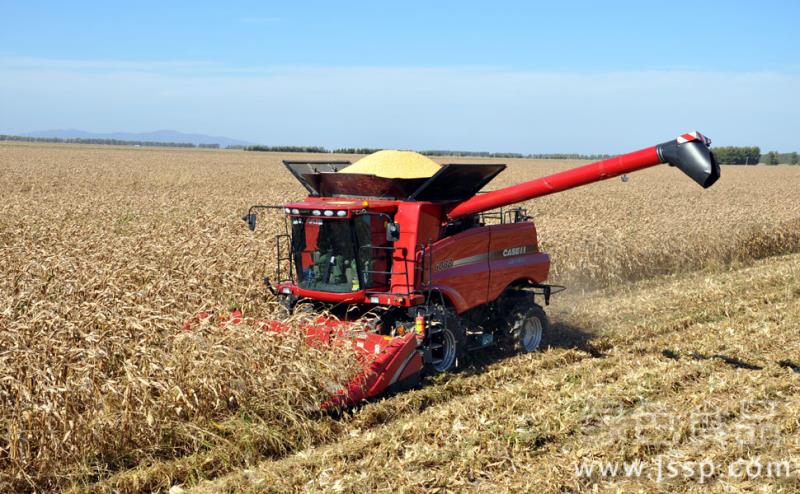
Mechanized harvesting
Corn is the second largest crop in agricultural production in the reclamation area. Mechanized corn harvesting technology is an important link in the whole-process mechanization of corn production and an important guarantee for a bumper corn harvest.
This year, the corn sown area in the reclamation area is more than 10 million mu. Due to rainy and low-temperature conditions in spring, and the effects in some areas of periodic summer drought, wind damage, hail damage, etc., the corn growth period has been delayed. In addition, autumn land preparation and autumn fertilization still need to be carried out, so the autumn corn harvest time is tight, the task is heavy, and the pressure is great. Therefore, farmers should, according to corn growth conditions and maturity periods, classify fields and adopt multiple harvesting methods to make a good autumn harvest plan.
I. Corn harvest period
Corn should be harvested at the proper time so that the nutrients remaining in the stalks are transported to the kernels, giving full play to after-ripening, increasing yield, improving quality, and enhancing quality. Generally, it should be harvested after the full-ripe stage. The maturity characteristics of corn are mainly shown as leaves turning yellow, husks white, soft in texture, and spreading open, a black layer appearing at the base of the kernels, the milk line of the kernels disappearing and the kernels becoming hard, and the kernels showing the grain shape and color inherent to the variety. Harvest usually begins around October 1.
II. Harvest methods
1. Standing-stalk drying and direct mechanical harvesting.
For some fields where early-maturing varieties are used, because this type of corn has the characteristics of early maturity and fast dehydration, when the kernel moisture is below 25%, a corn combine harvester can be used for direct threshing and harvesting, reducing the pressure of drying management and storage.
Standing-stalk husk peeling and drying. This method can speed up dehydration, reduce moisture by 3%-6%, increase maturity, and raise 100-kernel weight, increasing yield by 5%-7% per mu. The timing of standing-stalk husk peeling and drying must be appropriate, neither too early nor too late. Too early affects grain filling and reduces yield; too late loses the meaning of standing-stalk husk peeling. The best time is in the early full-ripe stage, when the kernels have formed a hard cap. The method is to open the husks by hand so that the kernels are all exposed to light and fully dried. However, when peeling and drying, do not use too much force, so as to avoid breaking the ear peduncle and causing losses.
2. Mechanical ear picking and segmented harvesting
For fields planted with mid- to late-maturing varieties and late-sown late-maturing fields, the corn kernel moisture is generally above 30%. The harvest method of mechanical ear picking and drying ears on the drying yard should be adopted. When the moisture of the kernels on the corn ears drops below 25%, mechanical threshing can then be used.
3. Mechanical swathing and mechanical pick-up threshing
For fields with a relatively high lodging rate, the harvest method of mechanical swathing and mechanical pick-up threshing is suitable. After the corn is cut down, it is placed in small swaths. The suitable kernel moisture content for swathing is 30%-32%, but in years with a lot of autumn rain, do not use swathing harvest technology.
III. Harvest precautions
1. Half a month before harvest, conduct field investigations on the maturity, lodging degree, planting density and row spacing, ear drooping degree, and lowest ear-bearing height of each corn field, and formulate an operation plan in advance.
2. Five days in advance, level the ditches and channels in the fields, and set up obvious markers on inconspicuous obstacles such as water wells and guy wires of utility poles, so as to facilitate safe operation.
3. Harvester maintenance. Before operation, a trial harvest should be carried out, and the machinery should be adjusted. Only after meeting agronomic requirements can formal operation begin. Corn combine harvesters all harvest along rows. During operation, the cutting path should be aligned with the corn rows to reduce losses from dropped ears.
4. Before mechanical operation, the gap of the snapping rolls (or snapping plates) should be properly adjusted to reduce kernel breakage; during operation, pay attention to the smoothness of the ear lifting and conveying process to avoid jamming and blockage; observe the fullness of the ear tank at all times and unload the ears promptly to avoid overflow after the tank is full or blockage during unloading.
5. Correctly adjust the operating height of the straw returning machine to ensure that the stubble height is less than 10 cm, so as to avoid damage to the returning blades caused by hitting soil.
6. If a stubble removal machine is installed, ensure the soil entry depth of the stubble removal blades and keep the stubble removal depth consistent, so as to ensure operation quality.