The King of Melons - Cultivation Techniques for Hami Melon in Spring Greenhouses
Hami melon is loved by the public for its rich nutrition, sweet taste, and cooling and heat-relieving effects. Hami melon has always been grown in the remote ** region, but now Hami melon has settled in many southern regions. New Hami melon varieties that are better adapted to the climate characteristics of southern regions have now been introduced, along with a relatively mature set of greenhouse cultivation techniques for Hami melon. The following are the spring cultivation techniques for greenhouse Hami melon.
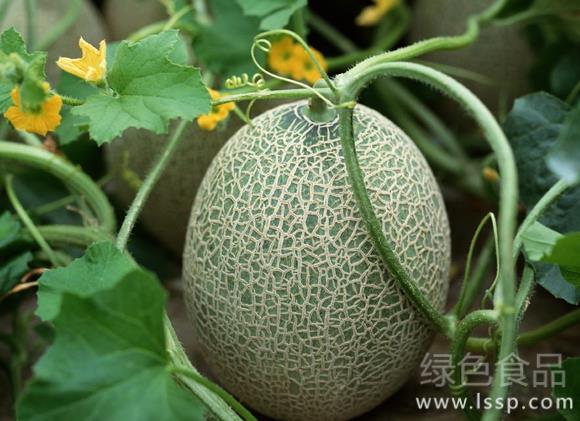
Hami melon
I. Variety Selection
Hami melon varieties that are suitable for the climate characteristics of the south and have strong disease resistance should be selected. The main Hami melon varieties promoted in the south are: Xuelihong, Xianguo, 98-18 (green-skinned and yellow-skinned), etc.
II. Field Selection
Melon stubble and continuous cropping plots are major taboos for cultivating Hami melon. Rice stubble fields that have not grown any melon crops within 3 years, are high and well-drained should be selected. The preferred soil for planting Hami melon is sandy soil rich in organic matter and with good permeability.
III. Land Preparation, Bed Making, and Fertilization
One month before transplanting, the Hami melon field should be plowed to a depth of 25-30 cm. At the same time, supporting ditch systems such as perimeter ditches around the greenhouse, main open ditches, and operation ditches should be opened. Sufficient base fertilizer should be applied once throughout the entire plowed layer, generally about 1000 kg of commercial organic fertilizer per mu, 30 kg of potassium sulfate-based ternary compound fertilizer (N:L:K=15:15:15), and 50 kg of superphosphate. When making field beds, high ridges and high beds must be used, and the bed surface should be made into a turtle-back shape, with an arch height of 25-30 cm; plastic film (transparent plastic film in spring) should be used to fully cover the bed surface, which helps preserve soil moisture, reduce humidity, and prevent weeds.
Hami melon
IV. Seedling Raising and Transplanting
1. Seed treatment: Dry treatment can be used for disinfection and sterilization. Bake dry seeds in a constant-temperature drying oven at 60-69°C for about 3 days. If there is no constant-temperature drying oven, the seeds can be exposed to strong sunlight for 2 days.
2. Sowing: Early to mid-January is the spring sowing period for Hami melon. Heat preservation and disease prevention are key to raising seedlings in spring. Use multiple layers of film to cover the Hami melon seedling bed, and lay electric heating wires on the ground. The seedling bed temperature follows the principle of two highs and two lows. Before emergence, the seedling bed temperature should be controlled at 28-30°C to promote uniform emergence; before the first true leaf of the Hami melon unfolds, the seedlings are most prone to spindly growth, so the temperature should be lowered, with the daytime bed temperature maintained between 23-25°C and the nighttime temperature at 18-20°C. As the Hami melon seedlings grow and the outside temperature rises, the greenhouse ventilation openings can be appropriately enlarged and the ventilation time lengthened. One week before transplanting, the Hami melon should undergo low-temperature hardening so that the seedlings gradually adapt to external conditions. For disease prevention during the seedling stage, Amistar can be sprayed 1-2 times. The spring seedling age is about 30 days, and transplanting is done at the 3-leaf stage.