Four key points for summer kiwifruit management: pinching, pollination, fruit thinning, pest control
Kiwifruit is thick and juicy, fragrant and delicious, pleasingly sweet and sour, and keeps well. To achieve high kiwifruit yields and good returns, you need to do a good job in all aspects of kiwifruit management. Today, the editor will introduce the four key points of summer kiwifruit management:
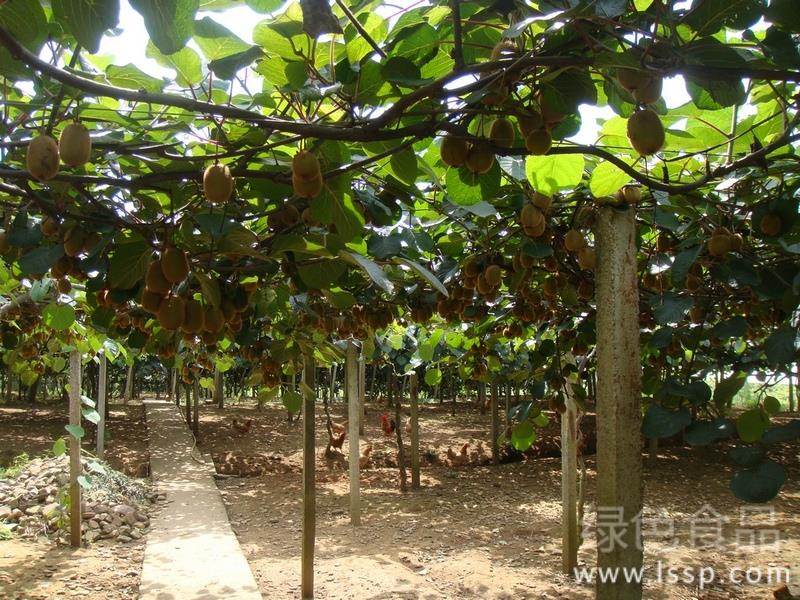
Kiwifruit
I. Bud rubbing and pinching
According to the kiwifruit management principle of "rub buds early, pinch at the right time, short-cut long shoots", and in line with the tree's vigor, the plants should be pruned several times during the growing season to achieve high and stable kiwifruit yields. During bud break, rub off misplaced or overly dense buds early. For vigorous fruiting canes on mature plants, pinch them at 8-10 leaves above the kiwifruit fruiting position. For the second growth flush that sprouts after the first pinching on the plant, pinch at 3-4 leaves; for the third growth flush that sprouts after pinching on the kiwifruit tree, pinch at 2-3 leaves; for water sprouts or vegetative canes that can be trained on the plant, pinch at 10-15 leaves. Generally, remove diseased, pest-damaged and weak thin canes from the base.
II. Pollination during flowering
The early flowering stage is in late April, full bloom in early May, and the late flowering stage in late May. If continuous overcast and rainy weather occurs during the flowering period, pollination will be poor, so hand pollination is needed. The specific method is: collect kiwifruit male flower buds in advance during the flowering period, remove the pollen sacs and place them indoors at room temperature 25°C; the pollen sacs will open after about one day and night, and the pollen can be collected. During the female flowering stage, pollinate the kiwifruit in two batches; flowers pollinated on the day they open have a better effect.
III. Timely fruit thinning
Fruit thinning should be carried out 10-15 days after flowering, following the principle of "keep the good and remove the poor, keep the large and remove the small, keep the sparse and remove the dense, keep the middle and remove the base", removing deformed fruit, small and weak fruit, overlapping fruit, and diseased or pest-damaged fruit. Generally, short fruiting branches keep 1-2 fruit, medium fruiting branches keep 3-5 fruit, and long fruiting branches keep 4-6 fruit.
IV. Disease prevention and pest control
Flower bud maggots mostly occur from April to May, causing heavy flower and fruit drop in kiwifruit. You can use 50% triflumuron suspension concentrate at 8000-10000 times dilution, or 5% flufenoxuron emulsifiable concentrate at 1000-1500 times dilution, spraying once every ten days for three consecutive sprays. From June to September, spray 80% mancozeb M45 wettable powder at 800 times dilution, 40% flusilazole emulsifiable concentrate at 6000-8000 times dilution, or 1% zhongshengmycin aqueous solution at 200 times dilution to control kiwifruit soft rot, brown spot disease, and so on.