Reasons Why Spring Greenhouse Cucumbers Do Not Set Fruit and Their Control Methods
Many vegetable growers are troubled: they originally thought that greenhouse cucumbers would fill the gap in the spring cucumber market and bring good returns, but the greenhouse cucumbers in their own vegetable plots simply refuse to set fruit. Which part of the management has gone wrong? Today, the editor will explain the reasons why greenhouse cucumbers do not set fruit and their control methods.
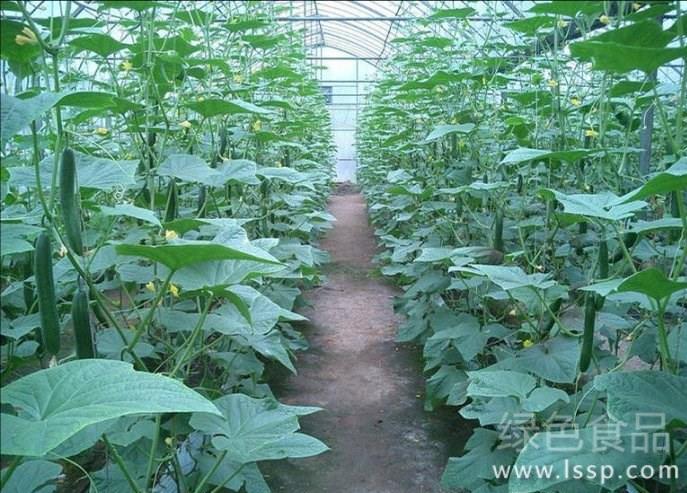
Greenhouse cucumber
I. Causes
1. Too many fruits are left on the plant. Every cucumber that can set is kept, and excess female flowers are not removed.
2. Improper fertilization. Excessive use of compound fertilizer raises the concentration of the soil solution in which cucumbers are grown, weakens the absorption capacity of cucumber roots, and affects the normal growth of cucumber plants.
3. Excessive pesticide application. The vast majority of vegetable growers focus only on chemical control to prevent insect pests while neglecting agricultural measures. They overuse fungicides, with short intervals between applications and seriously excessive concentrations, causing pesticide damage. Added to this is the blind use of hormone-type pesticides, which causes physiological disorders in cucumbers, so of course cucumbers cannot grow normally.
4. Improper watering. Regardless of weather conditions and without following the growth pattern of cucumbers, watering is done blindly. If watering is followed by unfavorable weather such as consecutive overcast days, strong cold waves and low temperatures, in an environment where the ground temperature is below 12°C and the relative soil humidity exceeds 85%, cucumbers are prone to root rot. Once the root growth of cucumbers is inhibited, cucumbers cannot set fruit because of insufficient nutrient supply.
5. Untimely harvesting. In order to wait for a high price, cucumbers that have already grown to size are left on the vines, causing "vine dragging". The result is that the balance between vegetative growth and reproductive growth of the plant is broken, and excessive organic nutrients in the cucumber plant are consumed.
Cucumber
II. Preventive Measures
1. Lowering the vines should be done appropriately. Lowering cucumber vines too low is not conducive to the normal growth of cucumbers. After lowering the vines, keep the cucumber plant height at about 1.5 m, and ensure that the cucumber plant has more than 15 functional leaves, so that it can carry out normal photosynthesis and maintain normal growth.
2. Pay attention to flower and fruit thinning. For cucumber plants that have set many fruits, the fruits should be thinned appropriately. Never keep every cucumber you see, otherwise it is easy to cause the cucumber plants to rest in the middle and late stages. Remove yellowing leaves at the bottom in time to reduce consumption.
3. Strengthen light management for cucumbers during consecutive overcast days. On overcast days, pull open the straw mats near noon, then ventilate appropriately for 2 hours; the temperature inside the greenhouse will not drop but will instead increase by 2°C. After consecutive overcast days suddenly turn clear, do not abruptly uncover all the straw mats at once; instead, "uncover the mats in stages" to avoid the "seedling flash" phenomenon.
4. Pay attention to fertilizer and water management. When the temperature is low and the light is weak, cucumbers should not be watered too frequently. Generally, watering cucumbers once about every 20 days is sufficient, and flood irrigation should not be used. Also note that after watering, cucumbers should only be ventilated after the temperature inside the greenhouse rises above 30°C, and the ventilation openings should be opened from small to large; opening them too wide all at once can easily cause the seedling flash phenomenon. Fertilizer should be applied by flushing with water, and fertilizers containing humic acid or amino acids should be used because they are easily absorbed by cucumbers; the amount used should be appropriate.
5. Strengthen disease control. Because ventilation is not timely, cucumbers in greenhouses are highly prone to pesticide damage after spraying, so the concentration of pesticides used must be strictly controlled. Do not mix multiple pesticides, so as to reduce the occurrence of pesticide damage.