High-yield cultivation techniques for summer rice with late sowing and a short growth period
Summer rice prefers warmth and light, and has the characteristics of late sowing and a short growth period. Attention should be paid to selecting suitable rice varieties, sowing early, planting at a reasonable density, controlling pests and diseases, and harvesting at the right time.
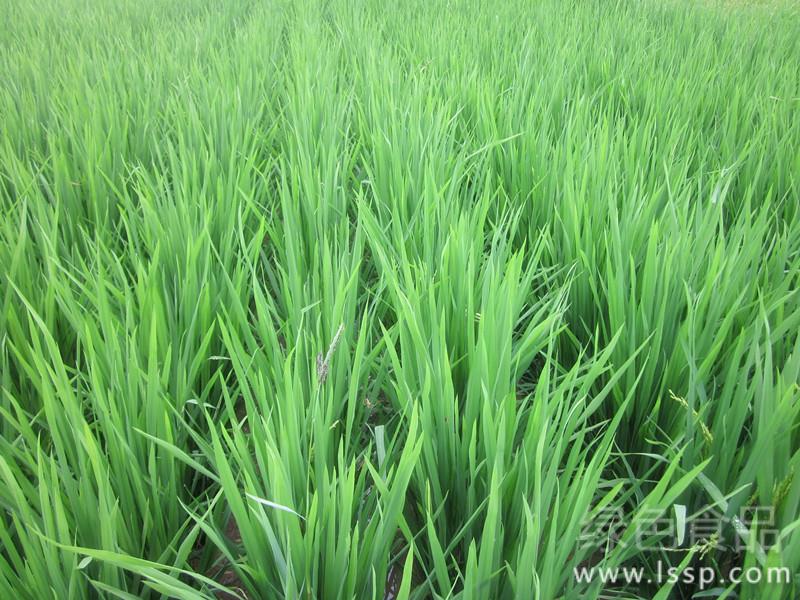
Rice
1. Select suitable varieties
In summer-sowing rice areas, rice varieties such as Zhangzagu 8, Jigu 18 and Jigu 19 are more suitable.
2. Water to store soil moisture and sow early
"In spring, fight for each day; in summer, fight for each hour." With late sowing, the rice is prone to low-temperature damage in the later stage. In order to save time, the soil should be watered to store moisture during the later stage of the previous crop, which helps sow rice in time after the crop is harvested, so as to ensure the effective accumulated temperature needed for summer rice growth. Sow as early as possible; deep ploughing may be omitted, and sowing can be done after harrowing or directly without harrowing, removing stubble as soon as the crop is harvested and sowing as soon as the land is prepared, followed by careful management after the rice emerges. The best sowing time for rice is five days before and after June 20. Before sowing, the seeds should be washed with clean water to remove blighted grains and fungal spores on the seeds, or treated with 35% metalaxyl at 0.3%-0.5% of the rice seed weight to control downy mildew; to control smut, treat the seeds with 50% carbendazim at 0.5% of the seed weight; to control soil-dwelling pests, treat the seeds with phoxim at 0.1%-0.2% of the seed weight. At the same time, thin and set the seedlings early; there is a folk saying, "Thin millet by an inch, better than manure." Generally, thinning and setting of seedlings should be carried out at the 3-5 leaf stage together with intertillage.
3. Improve sowing quality and increase planting density
Where the subsoil moisture is good but the surface soil moisture is poor, remove the dry soil and sow the rice seeds on moist soil; where the moisture is relatively poor, apply moistened organic fertilizer into the soil before sowing so as to sow by using the stored moisture; if drought occurs when the rice sprouts are pushing through the soil, roll once with a roller to raise moisture and ensure a full stand. Summer rice is sown relatively late, has a short growth period, small panicles and short straw, so the planting density should be reasonably increased to strive for yield. The rice density should be about double that of spring rice. For Zhangzagu 8, leave 20,000-30,000 rice seedlings per mu; for Jigu 18, leave 40,000 rice seedlings per mu; for Jigu 19, leave 35,000-40,000 rice seedlings per mu.
Rice
4. Strengthen soil, fertilizer and water management
The stages of emergence, jointing, booting, flowering and grain filling in summer rice are relatively close together. Therefore, fertilizer and water management should be strengthened. When harrowing, apply about 2,000 kg of organic fertilizer as base fertilizer. After seedling setting, topdress 4-5 kg of urea per mu to promote seedling growth. At the jointing stage, earth up the rice together with deep intertillage, and at the same time topdress 5-7 kg of urea, 10-15 kg of diamine compound fertilizer and 10-15 kg of potassium fertilizer per mu; before heading, topdress 15-17 kg of urea per mu; for rice entering the grain-filling stage, spray the rice leaves with a 2% urea aqueous solution to extend the functional period of the leaves. Water after topdressing, using furrow irrigation rather than flood irrigation to prevent lodging, and also pay attention to preventing waterlogging and lodging in the later growth stage of rice.
5. Control pests and diseases
The main insect pest of summer rice is the millet stem borer, which has two generations a year. In mid-June, the first-generation larvae bore into the stems, and from late July to early August, the second-generation larvae bore into the stems, causing the rice plants to have dead hearts and to break and lodge easily in the wind. To control the millet stem borer, after seedling setting and at the jointing stage, spray the rice with pyrethroid insecticides; before the millet stem borer causes stem-boring damage at the end of May and in early July, dust 1.5-2 kg of 2.5% trichlorfon powder per mu.
The main disease of summer rice is panicle blast. During the grain-filling stage, rice shows white dried-up symptoms, and in severe cases becomes dead panicles that cannot set grain, causing yield reduction. It is most damaging under overcast and rainy or foggy weather, humid air and a temperature of about 25°C; excessive nitrogen fertilizer aggravates the disease. To control rice blast, from after heading to before flowering, spray 65% zineb solution at 500-600 times dilution, or thiophanate-methyl at 200-300 times dilution on the leaves, or spray 80 ml of Fuji-One pesticide per mu.
6. Harvest at the right time
Harvesting should not be too early, lest the rice grains be immature and become blighted, reducing yield; nor too late, to prevent birds from eating them, grain shattering from panicle grains rubbing against each other in strong wind, and sprouting of panicle grains in rain. Generally, harvest at the late dough stage or early full-ripening stage of rice, when the panicle grains have the inherent color of the variety and the grains have hardened, which is the most suitable time for harvest.