Summer pruning of pomegranate to increase yield: remember these pruning precautions
Pruning pomegranate in summer helps reduce nutrient loss in the pomegranate, increase the number of female flowers (tubular flowers), and raise pomegranate yield.
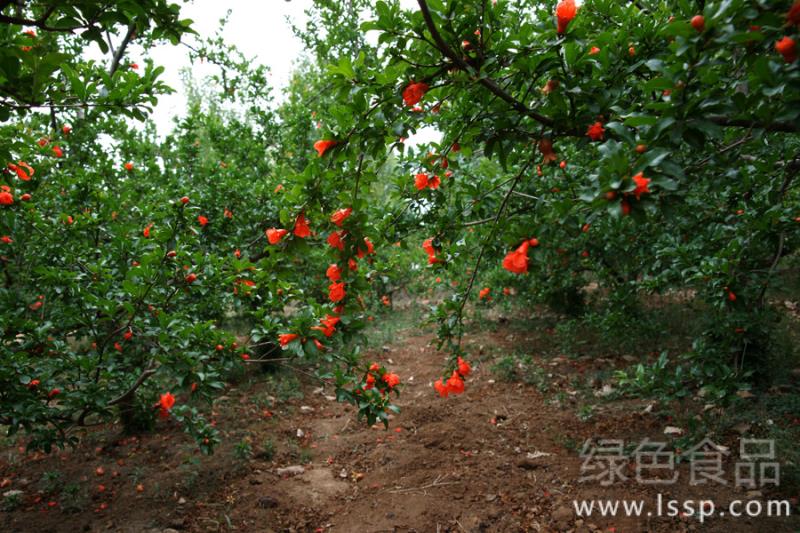
Pomegranate
Thin flowers and fruits.Carry this out from late May to late June, when pomegranate female flowers and male flowers (bell-shaped flowers) can be clearly distinguished. When pruning, keep early-fruiting flowers as much as possible, selectively keep second-crop pomegranate fruits, and use third-crop fruits to appropriately fill gaps.
Shorten branch groups.After the pomegranate has set fruit, according to the growth position and vigor of the pomegranate branch groups, first shorten the branch groups on the underside and sides of the pomegranate plant, then shorten the dominant branch groups on the upper side of the pomegranate plant. When the pomegranate tree is excessively vigorous, it must not be shortened, otherwise it will produce rampant shoots. In addition, during pruning, large branches must not be removed, so as to reduce large wounds.
Remove branch tips.After the pomegranate has set fruit, promptly thin out rampant shoots, overly dense branches, diseased and pest-infested branches, thin and weak drooping tips, and sprouts at the base and in the inner canopy, so as to reduce consumption, concentrate nutrients, and promote pomegranate fruiting.
Open the angle.That is, open the angle of each scaffold branch; according to tree vigor, the basal angle can be opened to 70-90 degrees, so as to moderate tree vigor and balance the pomegranate's vegetative growth and reproductive growth.
Drop the head and open the center.When the pomegranate canopy reaches a certain height, drop the head and open the center to resolve the conflict between light and pomegranate growth vigor.