Eggplant fruit cracking affects appearance and value; what are the prevention and control methods?
In summer, when eggplants crack, the seeds are exposed, and the fruit stops expanding. In severely cracked eggplants, both yield and market value are seriously threatened. In some cases, eggplant cracking is caused by uneven watering. In the early stage of eggplant development, soil drought causes the skin to become lignified; later, when heavy rain or excessive watering occurs, the inside of the fruit expands rapidly, but the skin cannot grow correspondingly and splits open. However, most eggplant cracking is due to calcium deficiency. The 5 causes of calcium deficiency in eggplant:
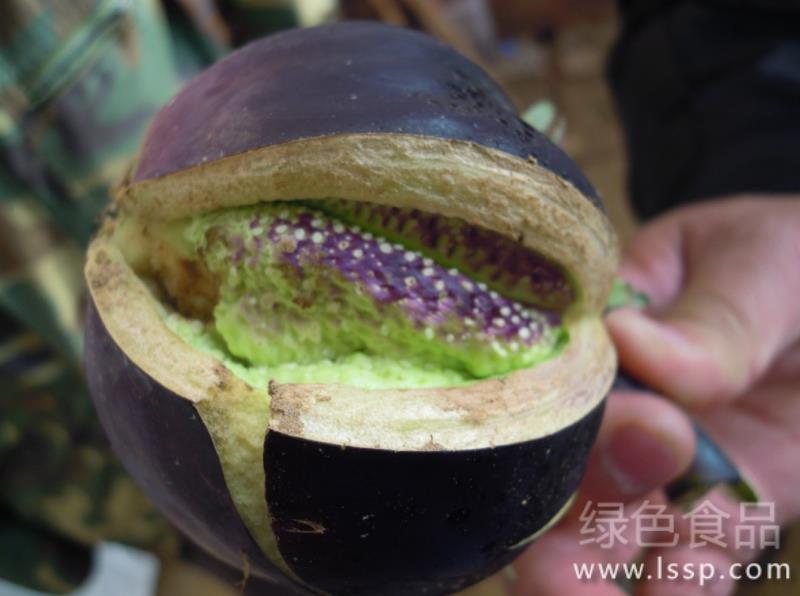
Eggplant fruit cracking
1. Calcium deficiency in the soil. This is especially true in plots where eggplant is grown continuously, where calcium fertilizer is not applied attentively, resulting in calcium deficiency. This phenomenon is more prominent in greenhouses and plastic tunnels.
2. Excessive watering or leaching by heavy rain. Available calcium in the soil is washed away, causing calcium deficiency. It occurs severely during rainy summers.
3. Excessive application of nitrogen fertilizer in the soil. Using too much nitrogen fertilizer leads to excessive accumulation of ammonium nitrogen, which inhibits calcium uptake.
4. Obstruction of water circulation in the eggplant plant. There are two cases: first, soil drought and lack of water mean calcium cannot be absorbed; second, after heavy summer rain or excessive watering, air humidity becomes extremely high, inhibiting transpiration in the eggplant plant, so water and calcium cannot be absorbed normally by the roots.
5. In the late growth stage, due to negligent management and severe pests and diseases, especially in eggplant plants infected by Verticillium wilt, Fusarium wilt, root rot, root-knot nematode disease, and Phytophthora blight, as well as excessive fruiting and plant aging, the absorptive function of the eggplant root system is reduced, causing calcium deficiency.
Summer calcium deficiency is mainly caused by soil calcium deficiency, leaching by heavy rain, excessive nitrogen fertilizer, excessively high air humidity, and severe disease, among other reasons.
The measures to prevent and control top cracking in eggplant are:
(1) Apply more calcium fertilizer: apply calcium fertilizers with high calcium content such as ammonium calcium magnesium;
(2) Water appropriately: water promptly during drought, but do not overwater. Drain promptly on rainy days to prevent flooding and waterlogging.
(3) Strengthen management: besides preventing and controlling pests and diseases, spray natural brassinolide liquid once every 20 days to promote eggplant root growth and development and improve absorption capacity;
(4) Foliar fertilization: during the rainy season when air humidity is relatively high, use 0.3% ammonium calcium magnesium liquid for foliar topdressing of eggplant once every 3~7 days.