Open-field eggplants like water but cannot tolerate waterlogging. How should they be managed in summer?
After open-field eggplants are planted out, they soon encounter the rainy and hot weather of July and August. Eggplants like water but cannot tolerate waterlogging, and such weather threatens their normal growth and also increases the difficulty of manual management. Therefore, summer management of open-field eggplants requires special attention to the following three aspects: proper water control, rational fertilization, and timely prevention and control of pests and diseases.
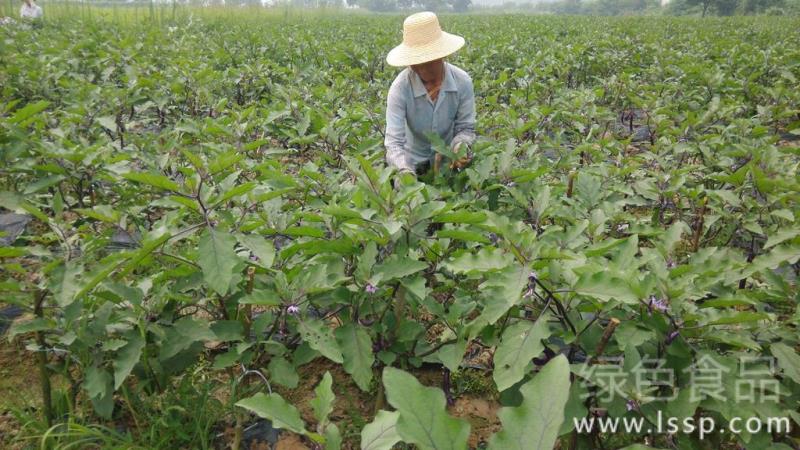
Eggplant management
First, attention should be paid to proper water control.
As for cultivation conditions, it is best to choose higher-lying, moist sandy loam soil for growing eggplants. A lack of water in the soil will slow the growth of eggplant plants and cause flower and fruit drop. Therefore, when setting the roots, water thoroughly with the "root-setting water" so that the eggplant roots grow quickly. In the early harvest period, water heavily once to promote rapid swelling of the eggplants; during the intermediate growth stage, simply keeping the soil moist is enough.
Second, attention should be paid to rational fertilization.
Eggplants have a long growth period, so a heavy application of base fertilizer is essential, along with timely topdressing. Eggplants have a high demand for nitrogen fertilizer, but nitrogen fertilizer should not be used too much in the hot season. Excessively high temperatures cause ammonia fertilizer to volatilize, which may cause ammonia poisoning in eggplants, so it can be applied in furrows. Eggplant leaves are large, so foliar topdressing is recommended when necessary; potassium dihydrogen phosphate works well, but the concentration should be carefully controlled.
Third, attention should be paid to timely prevention and control of pests and diseases.
Summer is hot and humid, and eggplant pests and diseases occur frequently, especially Verticillium wilt and Phytophthora blight. Verticillium wilt, commonly known as "half-side madness," is one of the main diseases of open-field eggplants. To treat Verticillium wilt, use Solanum torvum as the rootstock at the seedling stage and use the cleft grafting method to solve it through grafting. For eggplant plants that have already developed the disease, 77% wettable powder of Keshaide can be used at 800-1000 times dilution for root irrigation, generally once every 10 days, for 2-3 consecutive times. Of course, in particularly severely affected plots, the diseased eggplant plants should be pulled out in time, and after pulling them out, sterilizing quicklime should be spread at the site of the diseased plants.
Since eggplants like water but cannot tolerate waterlogging, field drainage should be done well to ensure there is no standing water after rain, and diseased leaves and fruits should be removed promptly to reduce contagion. Cultivation should also be strengthened, and phosphorus and potassium fertilizers should be applied more to improve the disease resistance of the plants.