How to prevent and control pepper seedling death in summer high temperature and heavy rain
Vegetable growers with experience in pepper cultivation all know that when planting peppers, in hot seasons, peppers are prone to seedling death. There are many causes of pepper seedling death, such as climate, soil, pests and diseases, etc. So how should vegetable growers prevent and control pepper seedling death?
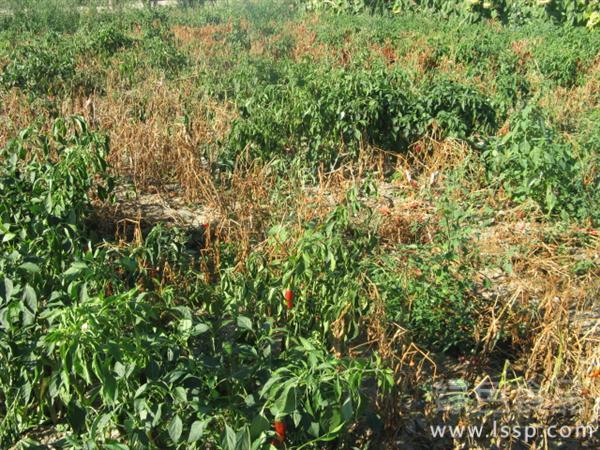
Pepper seedling death
1. Choose varieties:Choose medium-to-late maturing pepper varieties that are heat-tolerant, disease-resistant and have a long growth period. Generally speaking, small-fruited pepper varieties are more heat-tolerant and disease-resistant than large-fruited ones, and pepper varieties with smaller leaves are more heat-tolerant than large-leaved varieties, so for summer pepper planting it is best to choose red peppers, line peppers or pointed peppers with smaller leaves.
2. Seed treatment:Soak the pepper seeds in warm water at 55°C for 15-20 minutes, then soak them in room-temperature water for 6-8 hours. After the pepper seeds have absorbed water and become plump, drain the water, wrap them in a wet cloth, and carry out germination. After 80% of the pepper seeds have sprouted, sow them. This can kill some pathogens.
3. Reasonable crop rotation:Avoid continuous cropping with melons and solanaceous vegetables; a 2-3 year rotation can be carried out with rice, cruciferous crops, legumes, etc. If the previous crop is not rice, it is best to machine-rake the field level and soak and ret it for about one month to kill pathogens in the field. Also, when preparing the field, spread 25-30 kg of lime per mu, which can reduce diseases and prevent seedling death.
4. Strengthen field management:Plant on high beds, with reasonable close planting and reasonable water use. After rain, drain waterlogging in time and loosen the soil by intertillage to prevent excessively high humidity. On the basis of applying sufficient base fertilizer, increase the application of phosphorus and potassium fertilizers, and avoid partial application of nitrogen fertilizer, thereby improving the disease resistance of pepper plants.
5. Cover the bed surface with grass:After peppers flower, evenly spread rice straw about 2-5 cm thick over the ground surface, which can lower temperature and preserve moisture, prevent rain erosion, improve soil physical and chemical properties, increase soil aeration, promote microbial activity, increase available soil nutrients, help pepper plant roots grow, and reduce death.
6. Change the irrigation method:Promote drip irrigation, sprinkler irrigation and subsurface irrigation to reduce soil and air humidity, keep the soil in a dry state, and enhance the disease resistance of pepper roots; when the weather is hot, if large-scale flooding irrigation is used, the soil moisture is saturated and permeability is poor, pepper roots suffocate and die, and the aging of pepper plants is aggravated. Pathogens also spread through flowing water, and the susceptibility of pepper plants to disease increases.
7. Chemical control:In seasons of high temperature and high humidity, use pesticides in time for control. Use 50% metalaxyl-mancozeb wettable powder at 700 times dilution or 50% metalaxyl-copper wettable powder at 700 times dilution, etc., to prevent and control pepper Phytophthora blight.