Ginger rot is a devastating disease, how can it be effectively controlled?
Ginger rot, commonly known as ginger blast, is one of the common devastating diseases of ginger. After ginger plants are infected by the pathogen, the leaves first droop and lose their luster, then turn withered and yellow from the bottom up, and finally the leaf margins curl and the ginger dies; when the stem is affected, the stem base first becomes water-soaked, then turns yellow, and finally the leaves wilt and die, and the ginger breaks off at the stem base and lodges; when the rhizome is affected, it first appears water-soaked, then gradually softens and rots, and when the diseased part is squeezed, a dirty white juice flows out, giving off a foul odor.
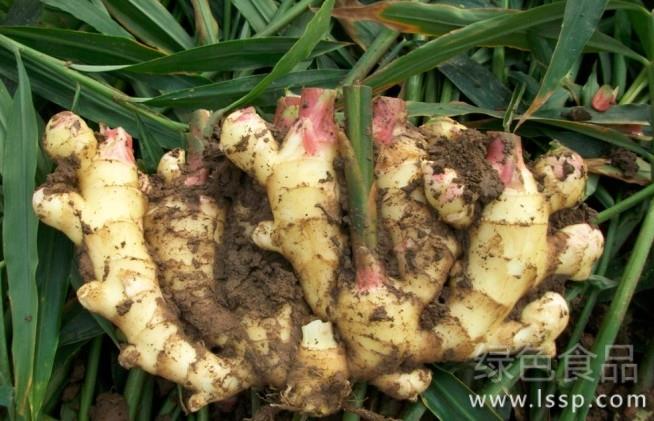
Ginger cultivation
1. Crop rotation and changing plots:Crop rotation and changing plots is an important way to cut off soil-borne pathogens. Practice has proved that with rotation of more than 4 years, the use of disease-free ginger seed, and combined with careful management, ginger rot can be effectively controlled.
2. Use disease-free ginger seed:Before harvest, select seed in disease-free ginger fields, choosing robust ginger plants with strong growth, many branches, and no disease symptoms, and harvest and store them separately; before planting the next year, first strictly select and remove seed ginger carrying the pathogen.
3. Site selection and land preparation:Choose a sandy loam plot with high, dry terrain and good drainage as the ginger field. When preparing the land, the ground should be level, and the ginger trenches should not be too long, preferably 15-20 m. To prevent water accumulation in the field, drainage ditches should be set up in the ginger field.
4. Apply clean fertilizer:The fertilizer used in ginger fields should be kept as free of pathogens as possible. Therefore, homemade farmyard manure and organic fertilizer must be fully decomposed before use.
5. Irrigate with clean water:It is best to irrigate ginger fields with well water to prevent water source contamination. It is strictly forbidden to throw diseased plants into canals or wells. When watering, control the amount of water, and never flood-irrigate.
6. Remove diseased plants in time:After diseased plants are found, they should be removed in time, along with the healthy plants within 0.5 m around the diseased ginger plants, and the pathogen-carrying soil should be dug out. Disinfectants such as lime or bleaching powder should be scattered in and around the diseased holes, then covered with sterile soil, and the watering channels should be changed in time.
7. Chemical control:(1) Before breaking apart the ginger, soak the seed for 6 hours with 40% formalin at 100 times dilution or 30% copper oxychloride at 800 times dilution, or soak the seed for 20 minutes with 1:1:100 Bordeaux mixture. (2) At the early stage of disease onset, pull out the diseased plants in time, then drench the roots with 5% copper sulfate solution or 5% bleaching powder solution or 72% agricultural streptomycin soluble powder. (3) Spray the leaves with 20% yekuning at 1300 times dilution, or 30% copper oxychloride at 800 times dilution, or 1:1:100 Bordeaux mixture, spraying once every 10-15 days for 2-3 consecutive times, which can effectively control the continued occurrence of ginger rot.