Grape powdery mildew spreads easily under high temperature and high humidity; how to control it
Hot, stuffy summer weather creates conditions for grape powdery mildew to breed. Generally, July to August is the peak period of the disease, when it develops fastest, and with high temperature and high humidity it causes an epidemic and spreads. How well control is carried out at this stage affects the overall quality and yield of grapes, so grape growers are advised to monitor strictly and deal with the disease promptly once it is found.
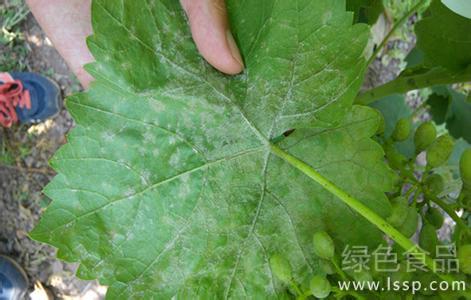
Grape powdery mildew
Powdery mildew most easily attacks all the green parts of the young, tender tissues of the grapevine. It generally produces irregular chlorotic or small yellow spots on grape leaves, and a layer of white powdery substance can be seen on both the front and back of the lesions. Powdery mildew infection gradually causes the leaves to curl, wither and even fall off, makes the fruit stems brittle, and hinders the growth of shoots. “Grape powdery mildew peaks from mid-to-late June to late July. Greenhouse-cultivated grapes are most prone to powdery mildew and to epidemics. The main reasons: drought, over-dense planting, excessive nitrogen fertilizer, and failure to prune branches in time.
Carrying out scientific control of grape powdery mildew is crucial before the grapevines bear fruit. It is recommended that the vineyard be thoroughly cleaned up to the greatest extent possible to destroy the environment needed for the spread of powdery mildew pathogens, and that affected grape leaves, branches and diseased fruit stems be pruned in time. Residual branches and rotting leaves must not be left in the vineyard; they should be carried out of the field and disposed of in a centralized way. In time, pinch the tips and tie the vines, cut off secondary shoots, and thin flowers and fruit, to keep the vineyard well ventilated and exposed to light. In addition, the amount of nitrogen fertilizer applied should be controlled, and phosphorus and potassium fertilizer should be applied heavily at the right time, thereby enhancing the disease resistance of the grapevines.
On the basis of agricultural control, attention should be paid to chemical control. The basic agents for controlling grape powdery mildew are sulfur formulations, including lime sulfur mixture, sulfur powder, and sulfur suspension concentrate. Protective fungicides must be sprayed consistently. These agents are used at the key periods before and after grape flowering, have a long residual effect, and can also be used after the grapevines develop the disease in combination with therapeutic agents. Protective fungicides include chlorothalonil, Nongkang 120, and wuyimycin. The number of applications depends on the specific condition of the grapes, spraying once every 7-10 days.