Pomegranate fruit cracking affects appearance and quality, how to effectively prevent and control it
In pomegranate cultivation, fruit cracking often causes losses to the appearance and economic value of pomegranates. Here are several effective ways to prevent pomegranate fruit cracking, for growers' reference.
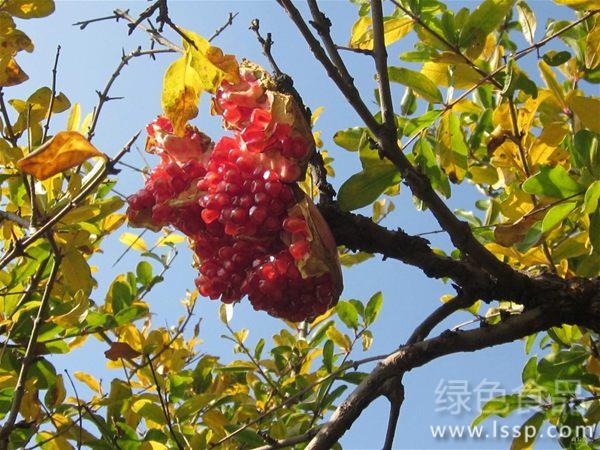
Pomegranate fruit cracking
1. Water reasonably, control temperature and preserve moisture. Water has a high heat capacity and can regulate pomegranate temperature, prevent sunscald and sudden chilling. Therefore, during the growth and development period of pomegranates, you should seize the right time, water reasonably, and keep the soil moist and the temperature suitable. Especially before pomegranates are near ripening, if the soil moisture is moderate, there is no need to water. If it is really very dry, water should also be applied gently in small amounts; never use flood irrigation, so as to avoid excessive soil moisture. After the rainy season, cover the whole orchard with grass, 15-20 cm thick, which can also control temperature and preserve moisture.
2. Prune reasonably to enhance the permeability of the pomegranate tree canopy and prevent branches and fruit from being rubbed and damaged. During winter pruning, remove or cut back some of the larger crossing branches and overlapping branches, adjust the subordinate relationships of the scaffold branches at all levels, and thin out and cut back dense fruiting branches and slender, weak, drooping branches on the periphery. Summer pruning mainly consists of bud removal, pinching and twisting shoots. Remove useless and crowded buds and shoots early, thin out useless water sprouts, and branches with space can be transformed into fruiting branches by pinching and twisting.
3. Control insect pests in time, mainly the peach fruit borer and the peach fruit moth. First, carry out concentrated control during the key periods of overwintering larvae emerging from dormancy, adult emergence, and egg and larval hatching. To control overwintering larvae, before the larvae emerge from dormancy, broadcast phoxim granules. During the adult occurrence period, spray 90% trichlorfon 1000-fold solution or 50% phoxim 1000-fold solution, or pyrethroid insecticides 2000-3000-fold solution for control. During the egg and larval hatching period, spray 50% fenitrothion or 90% trichlorfon 1000-fold solution for control, with good results. Pick up and remove damaged pomegranate fruits in time and dispose of them to reduce the source of insects. Second, plug the calyx tube with medicated mud. Before the larvae bore into the fruit, mix 0.5 kg of 50% phoxim or 90% trichlorfon with 100 times soil and 10 kg water, stir into medicated mud, form small mud balls, and plug the calyx tube. Third, remove paired fruits and pinch off the leaves at the base of the pomegranate, which can also prevent larvae from boring into the fruit. Fourth, bag the pomegranates. Bagging before pests lay eggs can not only prevent larvae from boring into the fruit, but also control various diseases and improve pomegranate quality.