Oyster mushroom deformities are mostly caused by improper management; how can they be effectively prevented and controlled?
Deformed mushrooms are a common physiological disease of oyster mushrooms, seriously affecting yield and quality, and can even cause oyster mushrooms to completely lose their commercial value. Deformed mushrooms are mainly caused by improper management, and in a few cases by strain degeneration, mutation, or viral infection.
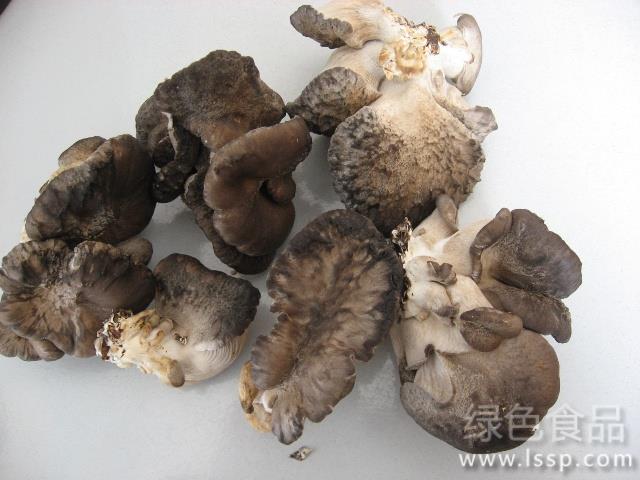
Deformed oyster mushrooms
Types of deformed mushrooms: 1. Long-stemmed mushroom: the cap is small, differentiation is poor, and the stem is relatively long. The cause is that during the primordium formation and differentiation stage of the oyster mushroom, the mushroom house is poorly ventilated, light is insufficient, and the temperature is on the high side, so the normal differentiation and development of the cap are affected. Prevention and control method: strengthen ventilation, and adjust light and temperature.
2. Nodular-capped mushroom: there are many granular protrusions on the edge of the cap, the color is pale, the cap is stiff, and growth is slow; in severe cases, cap differentiation is poor and the shape is irregular. The cause is that the temperature is too low during the development of the oyster mushroom and lasts for a long time, leading to imbalanced growth between the inner and outer layers of cells. Prevention and control method: keep the mushroom house temperature above the minimum temperature limit for oyster mushroom growth, and maintain a certain temperature difference to promote the growth, development, and differentiation of the fruiting bodies.
3. Cauliflower mushroom: the mushroom looks like a cauliflower, with many branches; in the early stage the primordium is egg-shaped, swells, bulges, and does not differentiate. In the later stage there are many branches. The cause is that before or during fruiting, a high-concentration pesticide, especially “dichlorvos”, was sprayed on the mushroom bed or in the mushroom house; young mushrooms are extremely sensitive and are prone to disease. It may also be caused by excessively high carbon dioxide concentration or the presence of sulfur dioxide, etc. in the mushroom house. Prevention and control method: use pesticides cautiously in the mushroom house, and when using them, the concentration must not be high. Especially during the fruiting period, dichlorvos must absolutely not be used; strengthen ventilation and air exchange to expel harmful gases.
4. Shrunken mushroom: the mushroom body is normal at first, then during the expansion stage it turns yellow, becomes water-soaked or shriveled, and stops growing, finally becoming soft and rotting. The cause is excessive humidity or a large amount of water sprayed directly on young oyster mushrooms, causing the mushroom tissue to absorb water and affecting respiration and metabolism, which leads to the oyster mushroom stopping growth and dying. The shriveled form is due to relatively low humidity and excessively strong ventilation, with wind blowing directly on the oyster mushrooms, causing them to lose water and die. Or the nutrient composition of the oyster mushroom substrate is imbalanced; after a large number of primordia form, some grow rapidly while the rest stagnate due to insufficient nutrient supply. Prevention and control method: control humidity at 80-85%, do not spray water directly on young oyster mushrooms, and do not let wind blow directly on the oyster mushrooms. Use a reasonable proportion of ingredients in the substrate.
5. Coral mushroom: the oyster mushroom primordium differentiates abnormally, is loose, and has many fine branches, shaped like coral. The cause is that when the primordium forms, ventilation is seriously poor, light is extremely weak, and the nitrogen source is lacking. Prevention and control: strengthen ventilation and light, adjust the carbon-to-nitrogen ratio, and add a nitrogen source.