Control Methods for Citrus Foot Rot That Causes Leaf Drop, Tree Decline and a Vinasse Smell
Citrus foot rot, also known as skirt rot, is a fungal disease that mainly affects the root crown and root system of citrus, and often occurs at the junction between the main trunk and the ground. In affected citrus, the cortex at the base of the main trunk rots, the branches and leaves turn yellow and withered, tree vigor declines, and citrus yield and quality drop; in severe cases, the whole plant dies. When the disease occurs, the affected cortex becomes brown wet rot with a vinasse smell and often exudes gum, and the main trunk and root mass rot; if the climate is dry, the affected part dries and cracks, and expansion is slow. In mild cases, the leaves turn yellow and gradually fall off; in severe cases, after leaf drop, the tree body dries up. Its control methods:
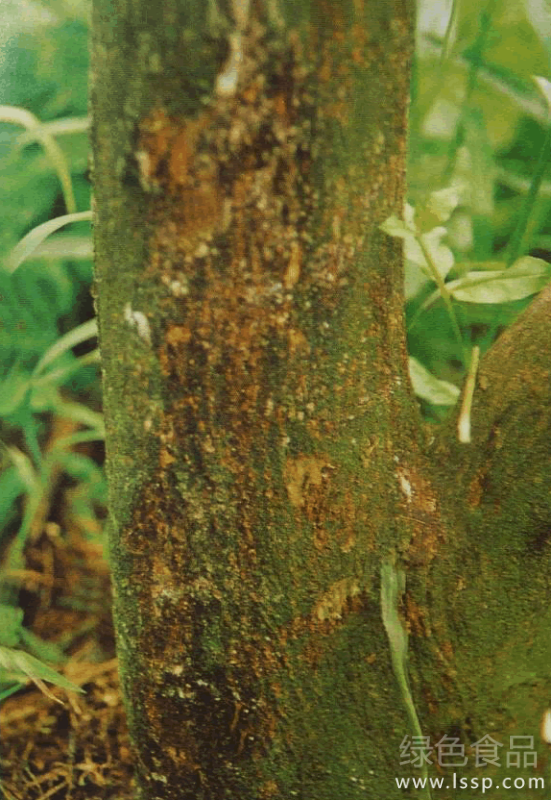
Citrus foot rot
1. Select disease-resistant rootstocks. Use disease-resistant rootstocks such as trifoliate orange (Poncirus trifoliata); the grafting position of citrus can be appropriately raised, more than 10 cm above the ground. Avoid using rootstocks such as lemon, sweet orange, and mandarin to reduce the chance of disease.
2. Strengthen cultivation management. When planting young trees, keep the graft union exposed above the ground; for citrus in low beds or with a high groundwater table, pay attention to drainage to prevent long-term waterlogging; when weeding and fertilizing, rake the soil in the tree basin level to prevent water accumulation; often wash the trunk to keep the main trunk clean; apply fully decomposed bran water and human and animal manure, and do not pour it around the trunk. Strictly prevent citrus bark borers and longhorn beetles.
3. Drug treatment. When diseased plants are found, dig away the soil at the root crown of the diseased plant, use a sharp knife disinfected with alcohol to scrape off the rotten cortex and the xylem that has already changed color, then scrape another layer of healthy tissue, wash with alcohol, and apply 1:1:100 Bordeaux mixture or copper sulfate 30-50 times solution, or 20% metalaxyl, 65% Sandofan, and 80% fosetyl-aluminum wettable powder each at 100-200 times solution, or 25% Ridomil wettable powder 400 times solution, or 70% carbendazim-mancozeb mixture 300 times solution. After applying the medicine, replace the original old soil and bury loose sandy loam instead to promote new root growth.
4. Rootstock grafting to replace roots. For citrus trees with a large area of cortex rot and wounds that are difficult to heal, trifoliate orange (Poncirus trifoliata) seedlings can be planted beside the trunk and approach grafting can be used to enhance the tree's nutrient absorption. In this way, citrus trees infected with foot rot will show a “rejuvenation” phenomenon and regain high and stable yields.