When transplanting bell peppers, pay attention to shading and cooling, and to preventing and controlling pests and diseases
Many vegetable growers still use flat beds to cultivate and transplant bell peppers, but bell peppers have weak root systems, and under the same conditions, the survival rate of flat bed cultivation is not as high as that of ridge cultivation. Therefore, ridge transplanting is recommended, but the weather is hot, and when transplanting on ridges, the ridges should not be high, to prevent high temperatures on the ridges from affecting bell pepper growth; small ridges are more suitable (a height of 5-8 cm is enough), which can prevent bell peppers from root drowning and dying after watering. In addition, the practice of watering first and transplanting bell peppers after the water has seeped away is unscientific. Watering first and then transplanting easily turns the soil into thin mud; after the soil dries, it easily becomes compacted, soil aeration is poor, and bell peppers easily die, so it is recommended to transplant first and then water.
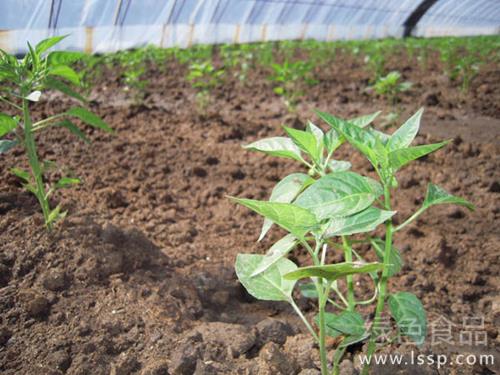
Bell pepper transplanting
After bell peppers are transplanted, the daytime temperature in the greenhouse is 32°C and the nighttime temperature is 18°C. However, if shading measures are not taken at present, the temperature in the greenhouse on sunny days can reach above 40°C, which is not suitable for bell pepper growth and can cause problems such as seedlings being scorched by strong light, so shade nets should be used to lower the temperature. Note that when using shade nets, do not consider it troublesome; it is best to leave a gap between the shade net and the greenhouse film for a better cooling effect. In addition, when there is no sun, do not cover with a shade net, otherwise it will affect bell pepper growth.
After transplanting, bell pepper death is mainly caused by root diseases, excessive watering, and rainwater flooding into the greenhouse leading to root drowning.
1. Death caused by root diseases. The root diseases that cause bell pepper death mainly include pepper phytophthora blight, root rot (phytophthora root rot and pythium root rot), bacterial wilt, and so on. Root diseases are devastating diseases of bell peppers; once they occur, death is severe and very difficult to control. For these diseases, prevention should be the main approach. It is recommended that before planting, for each mu of bell peppers, use 1 kg of Duoning + 1 kg of thiophanate-methyl mixed with soil and spread in the transplanting furrow, then mix evenly with the soil, which can prevent and control bell pepper root diseases.
2. Death caused by root drowning. Death caused by root drowning results from watering too much at one time or from rainwater flooding into the greenhouse. Generally speaking, after the transplanting water for bell peppers is sufficient, watering may be avoided during the seedling recovery period, so as to prevent excessive soil moisture from causing bell pepper root diseases. Therefore, if the soil is extremely dry after bell pepper transplanting and watering is needed, be sure to water lightly in the early morning or evening. In addition, rainfall increases during the main flood season, and bell pepper root systems are relatively weak, so management during this period must prevent rainwater from flooding into the greenhouse. It is recommended to close the greenhouse ventilation openings before heavy rain, especially the ventilation openings at the front face of the greenhouse; even if it is light rain, they should also be closed to avoid rainwater entering and causing bell pepper death. If protection is improper and rainwater floods into the greenhouse, drain the rainwater promptly, water once with clean water, and combine with hoeing to increase soil aeration; if necessary, apply Previcur and similar products by irrigation to prevent bell pepper root diseases.