How to prevent and control papaya mosaic disease? Early prevention and treatment of the yellow-green mottled symptoms on young leaves
Papaya ringspot mosaic disease is generally called mosaic disease, and it occurs in all major papaya growing areas.
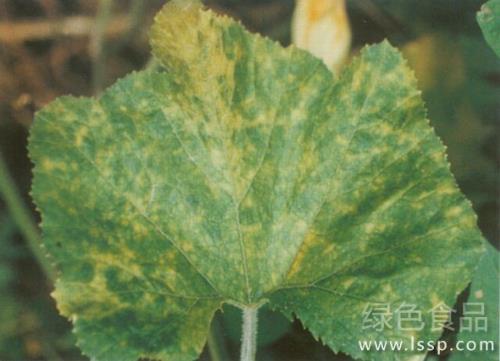
Papaya mosaic disease
I. Symptoms:At the early stage of the disease, water-soaked spots appear on the stems, leaf veins, and between the branch veins of young leaves. Subsequently, yellow-green mottled or dark green and light green alternating mosaic disease symptoms appear on the young leaves of papaya, and water-soaked circular spot rings also appear on the skin of infected papaya fruit, with several circular spots connecting into large irregular lesions. During low-temperature periods, most leaves of diseased plants fall off, and young leaves become deformed.
II. Pathogen and transmission:The pathogens of papaya mosaic disease are papaya mosaic virus, papaya ringspot virus, and papaya distortion mosaic virus. The green peach aphid and cotton aphid are natural transmission vectors of papaya viruses, with high transmission rates. The virus is easily transmitted by friction; in the field, infection can occur after the leaves of diseased plants contact and rub against the leaves of healthy plants.
III. Disease conditions:1. Climatic conditions. In warm and dry years, the occurrence is severe. Therefore, in the Guangzhou area, there are two peak disease periods and one greening-up period for diseased plants each year. From April—May and October—early November, when the monthly average temperature is 20-25°C, the number of diseased plants is the highest and the symptoms are the most obvious; from July—August, when the average temperature is 27-29°C, it is the greening-up period for diseased plants, and symptoms disappear or ease. High temperatures can inhibit this disease virus. When diseased plants are heated to 40°C for 4 hours continuously for 4 days, the diseased plants clearly turn green again and the lesions disappear, but after stopping for a few days, the symptoms reappear.
2. Orchard location. Because papaya mosaic disease is mainly transmitted by aphids, papaya plants adjacent to old orchards or diseased plants develop the disease quickly and have a high incidence rate. In papaya orchards planted continuously for years, the disease occurs early and the incidence rate is high.
3. Growth stage and growth condition of papaya plants. Papaya can be infected by ringspot mosaic disease throughout its entire growth stage.
IV. Prevention and control methods.At present, there is no cure, and only comprehensive preventive measures based mainly on cultivation practices can be adopted. 1. Select disease-tolerant varieties. 2. Strengthen cultivation management, improve papaya cultivation and management measures, and enhance the disease resistance and tolerance of plants. 3. Dig out and remove diseased plants in time. 4. Eliminate sources of disease and provide appropriate isolation. 5. Use chemicals to kill aphids. Spray chemicals regularly to kill aphids, and inspect and spray in time during peak aphid migration periods, especially in dry seasons. Weeds around papaya orchards where aphids like to shelter should be cleared away.