Apple bitter pit prevention and control methods: what to do about sunken spots on the peel and spongy flesh
In apple production, due to differences in region, climate, cultivation conditions, management and technical level, some apple orchards develop severe bitter pit, which affects fruit quality and causes losses to fruit growers. The editor now discusses the causes and control measures of apple bitter pit for the reference of fruit growers.
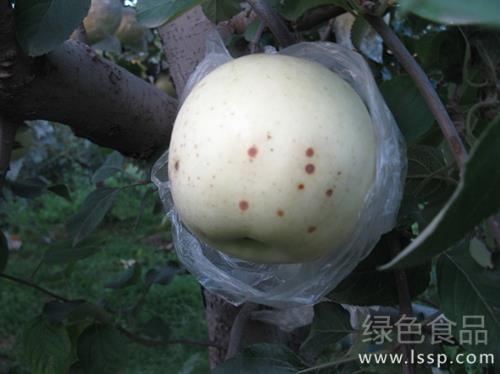
Apple bitter pit
I. Symptoms:
The root tips of the apple tree stop growing and the cortex is thick. In severe cases, new roots cluster at the root tips, forming spherical thick root clusters; the terminal buds of new shoots stop growing, the young leaves at the tip turn chlorotic or develop necrotic spots, and the leaf tips and leaf margins curl downward; nearly round sunken spots about the size of a soybean appear on the apple surface. When the diseased part is cut open, the flesh turns brown and spongy. On yellow-green apples, the epidermis of the diseased part is dark green; on red apples, the epidermis of the diseased part is dark red. The browned flesh extends as deep as 5-10 mm, and the flesh of the diseased part tastes bitter. In the later stage, the diseased part dries up, the epidermis necroses and turns brown, and other molds easily attach to the lesions, causing apple rot.
II. Control measures:
1. Apply more organic fertilizer and improve the soil environment. Organic fertilizer can use crop straw, leaves, weeds, various manures, farmyard manure and green manure. Measures such as growing grass between rows, pressing grass under the tree canopy, and applying various manures and farmyard manure can be adopted. For apple trees in full fruit period, the annual amount of organic fertilizer applied, calculated as chicken manure, should be no less than 3 cubic meters per mu. Through the above measures, the soil organic matter content is gradually increased by 1-2%, providing a good soil environment for apple trees.
2. Balance nutrition without antagonism. Balance fertilization and balance nutrition so that the content of each nutrient in the soil exactly matches what apples need, which both increases yield and avoids antagonism. Generally, for large-fruited apple trees, the amounts of pure nitrogen, phosphorus and potassium absorbed per 100 kg of apples are 1.12 kg, 0.48 kg and 1 kg, and other trace elements amount to 150 g.
3. Supplement calcium where it is deficient, with key adjustments. For apple orchards where bitter pit has already occurred, special adjustments are needed for the effect to be obvious. ① Control during the growing period. Use calcium nitrate, amino acid calcium, etc. For trees in full fruit period, apply 40-50 kg of calcium nitrate per mu. The application method and timing can follow the calcium uptake pattern of apples; 3-6 weeks after apple flowering is the peak period of calcium demand, accounting for 90% of the annual calcium requirement. Before and after apple flowering, broadcast calcium nitrate, shallow hoe and water, and spray 300-fold amino acid calcium 3 times consecutively after flowering. When apples are close to maturity (late September to October), there is another peak of calcium demand, so 300-fold amino acid calcium should be sprayed 2 times consecutively. ② Control during storage. During storage, showering apples with a 600-fold potassium chloride aqueous solution can suppress bitter pit in the late storage period. Through calcium supplementation and adjustment, apple orchards with severe bitter pit are basically brought under control.
4. Reduce load. Reducing the load can also alleviate bitter pit. For trees in full fruit period, the yield per mu should be controlled at 2500-3500 kg.
5. Use less girdling to enhance calcium absorption. Girdling not only weakens the apple tree, worsens fruit rot, and lowers the internal and external quality of the fruit, but also causes massive death of the young roots (capillary roots) that absorb calcium fertilizer, so calcium in the soil cannot be absorbed either. Therefore, for apple trees that have entered the fruiting stage, move from wide girdling to narrow girdling, from girdling to scoring, and gradually stop using girdling.