Wheat autumn sowing: control pests and diseases, improve sowing quality, build a good framework for high yield
The quality of wheat autumn sowing determines whether a good framework for high yield can be built. Adopting integrated pest, disease and weed control technical measures during autumn wheat sowing is the foundation for achieving high wheat yields. Recently, the Agricultural Bureau of Yunyang District, Shiyan City promptly provided farmers with integrated control techniques for wheat pests and diseases during autumn sowing.
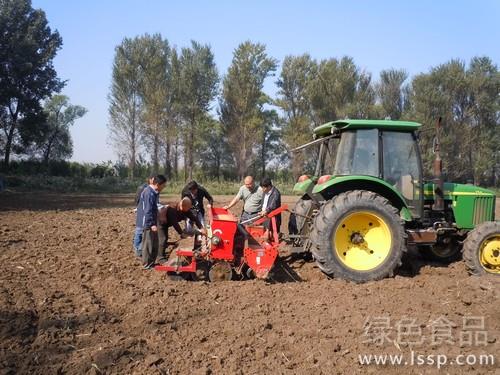
Wheat autumn sowing
I. Agricultural control techniques
1. Fine land preparation. According to the growth requirements of wheat, plow deep and harrow level, break up clods, achieving "deep, thorough, fine, firm, level," remove field weeds and crop residues, and keep the field clean.
2. Select good varieties. Choose high-quality, high-yield, disease-resistant varieties. The Emai series, Yumai series, and Chuanmai series are all wheat varieties suitable for our county.
3. Sow at the right time. According to differences between mountainous and flat areas, townships at high altitude above 300m have a suitable sowing period from October 5 to 15, and those at low altitude below 300m have a suitable sowing period from October 20 to November 5. Timely late sowing can delay the occurrence of wheat stripe rust.
4. Reasonable close planting. With high land preparation quality, good soil moisture, high seed germination rate, strong germination vigor, the recommended seeding rate within the suitable sowing period is 18-22 jin/mu.
5. Formula fertilization. Follow the principles of fertilizing according to soil conditions, determining fertilizer by target yield, stabilizing nitrogen and increasing phosphorus and potassium. The general base fertilizer standard is: 50kg ammonium bicarbonate, 25kg superphosphate, 10kg potassium chloride as base fertilizer, and 5kg urea as seed fertilizer.
6. Open good furrows and beds. The "bed furrow, waist furrow, and surrounding furrow" three-furrow system can prevent wheat sheath blight, fusarium head blight, and powdery mildew. For paddy fields, the bed surface is 3.3 m, with a waist furrow every 15-20 m; for dry land, the bed surface width is 5 m. The bed furrow should be more than 20 cm deep and 30 cm wide; the waist furrow should be deeper than the bed furrow, and the surrounding furrow should be deeper than the waist furrow, ensuring the three furrows are connected and allow both irrigation and drainage.
II. Seed dressing techniques with chemicals:
Using the seed dressing method to control wheat pests and diseases has the advantages of saving chemicals, saving labor, costing less, and being effective. In particular, dressing seeds with Likerxiu or triadimefon can control wheat stripe rust, powdery mildew, smut, sheath blight, and so on. Dry the seeds in the sun and winnow them clean. For every 100 jin of wheat seed, mix in 70 g of 15% triadimefon wettable powder, mix thoroughly, pile and cover for 12 hours, then sow. Method: Put the wheat seed into a plastic bag, pour in 15% triadimefon wettable powder, and roll it up and down until evenly mixed. For every 100 jin of wheat seed, use 150 ml of 50% phoxim diluted with 6-8 jin of water for seed dressing to control underground pests such as wireworms.
Wheat weed control
III. Weed control techniques:
1. To control Alopecurus aequalis, wild oat, and so on, use 40-60 ml of 6.9% Puma per mu diluted in 45 kg of water and spray evenly. The dosage per mu must be less than 100 ml, otherwise there will be phytotoxicity.
2. To control broadleaf weeds such as cleavers, chickweed, speedwell, and corn cockle, at the 2-3 leaf stage of wheat, use 20 ml of 48% Banvel or 10 g of 10% tribenuron-methyl or 1 g of 75% Express per mu diluted in 45 kg of water and spray evenly.