The stems and leaves of water chestnut dry up and turn yellow, and the plants die. How can stem blight be prevented and controlled?
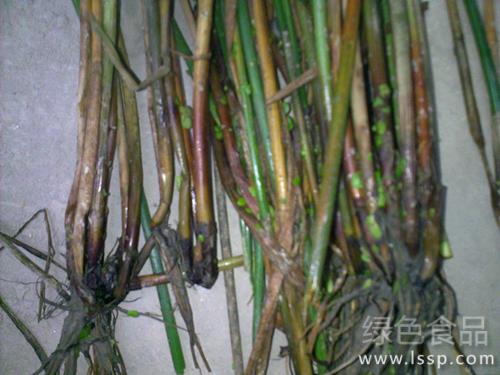
Water chestnut stem blight
Water chestnut stem blight mainly damages the leaf sheaths, stems, and leaves. On infected leaf sheaths, dark green irregular water-soaked spots first appear at the base, then spread to the entire leaf sheath; after the diseased part dries, it turns grayish white and is accompanied by short streak-like black dots. When the stem is infected, it becomes water-soaked and dark yellow, softens and becomes sunken, and black dots or short linear spots appear. As the disease progresses, the lesions extend upward into long strip-shaped blight-yellow large spots, causing the stems and leaves to dry up and turn yellow. In severe cases, the entire stem dies.
The pathogen overwinters as mycelium in the soil and on diseased water chestnut residues. In new production areas, infected water chestnut corms serve as the primary source of infection. Spores spread through wind and rain and irrigation water. Frequent rain and high rainfall make the disease likely to occur. In addition, water chestnut fields that are low-lying, close their rows early, have poor ventilation and light transmission, are excessively supplied with nitrogen fertilizer, grow too luxuriantly, and have tender stems are more severely affected.
For water chestnut fields where stem blight occurs, spray foliar medicine promptly at the early stage of the disease. You can use 25% carbendazim wettable powder at 250 times dilution or 50% thiophanate-methyl wettable powder at 800 times dilution; once every 7-10 days, for 3-4 consecutive times, to control the spread of the disease. In addition, fertilize reasonably, apply more phosphorus and potassium fertilizer and farmyard manure, especially silicon-containing phosphate fertilizer, to ensure sufficient nutrients, improve physiological metabolic function, increase the siliceous thickness of the seedling epidermis, and enhance the disease resistance of water chestnut plants.