How to Prevent and Control Bitter Pit, Skin Wrinkling and Water Core in Apples Caused by Calcium Deficiency
In recent years, the symptoms of apple bitter pit, skin wrinkling, water core and black skin softening have become severe. Especially in years with prolonged rainy weather before harvest, red spots, black spots and black scars are fairly common, affecting the commercial value of apples. The cause of all of these is severe calcium deficiency or the influence of climatic factors on calcium transport.
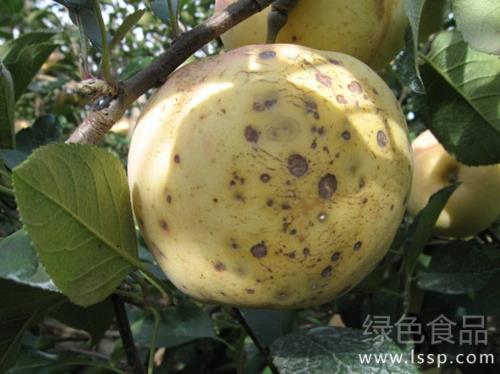
Calcium Deficiency in Apples
Symptoms:
In early bitter pit, the area under the apple skin is spongy but does not rot. The red spots and black spots that form before harvest should be distinguished as either infectious disease or physiological disorder. Red spots and black spots formed by infectious disease rapidly expand and penetrate deep into the flesh, causing the apple to rot. Red spots and black spots formed by calcium deficiency are sunken, dry and shriveled into black scars but do not rot, and are also called bitter pit. If you pare off the skin with a knife and the area beneath is spongy, that is a calcium deficiency symptom formed during the apple's swelling stage. If the flesh beneath the skin is normal, that is a calcium deficiency symptom formed during the apple's ripening stage. Apples deficient in calcium are also prone to bitter pit, water core, black skin softening and other symptoms during storage.
Causes:
① In orchard fertilization, chemical fertilizers dominate, and the available secondary and trace elements in the soil are on the verge of depletion, with calcium already severely deficient. ② Heavy application of nitrogen, phosphorus and potassium fertilizers inhibits calcium uptake. ③ Severe drought, with soil moisture dropping below 50% of maximum field water-holding capacity, causes leaf wilting and weakened transpiration, affecting calcium transport. ④ Waterlogging from accumulated water causes calcium and other element deficiencies to appear at the same time. ⑤ During the rapid swelling stage of apples before harvest, prolonged continuous rain without sunlight affects calcium transport, and calcium deficiency symptoms such as red spots, black spots and black scars appear.
Prevention and Control Measures:
1. Move away from the mistaken approach of relying on chemical fertilizers. Apply base fertilizer in autumn, mainly farmyard manure and high-quality organic fertilizer, with 30-40 kg of silicon-calcium fertilizer such as calcium-magnesium phosphate fertilizer or superphosphate per mu. By increasing soil organic matter and secondary and trace elements, build up soil fertility and raise the calcium content in the soil. Because calcium ions transport slowly within the tree, the effect may not be obvious in the same year. But with persistence over several years, the calcium deficiency problem can be fundamentally solved.
2. Soil calcium supplementation. March is the early period of the apple tree's first root growth peak, so apply 20-25 kg of calcium nitrate per 6 mu as a top dressing.
3. Foliar calcium supplementation. During the apple bud break stage, before flowering, at flowering, at the young fruit stage and after bag removal, spray 5-6 times with 300-fold amino acid calcium solution or other chelated calcium liquid fertilizer. This is a shortcut for calcium supplementation and takes effect in the same year.
4. Through pruning, create good light conditions for the inner canopy and lower branches.
5. When drought occurs, water promptly. For apple orchards without irrigation conditions, use straw mulching or hole-stored fertilizer and water so that the soil is always kept at 60-70% of maximum field water-holding capacity.
6. Thicken the soil layer under the canopy, and build proper drainage ditches inside and outside the apple orchard. When the rainy season arrives, drain promptly to prevent waterlogging under the trees.